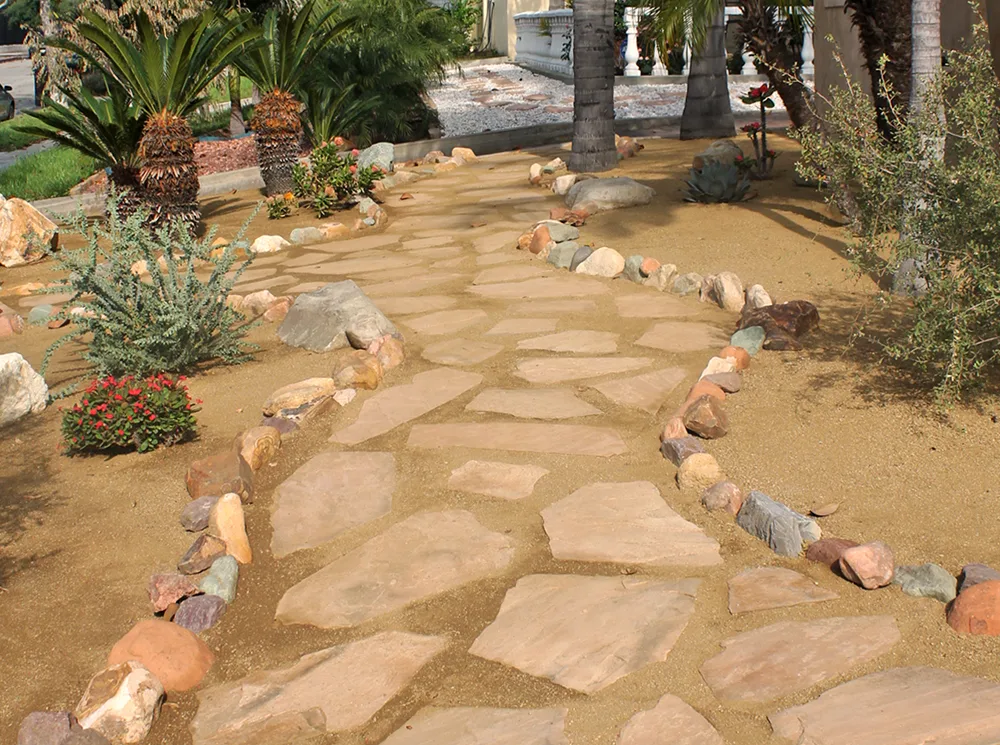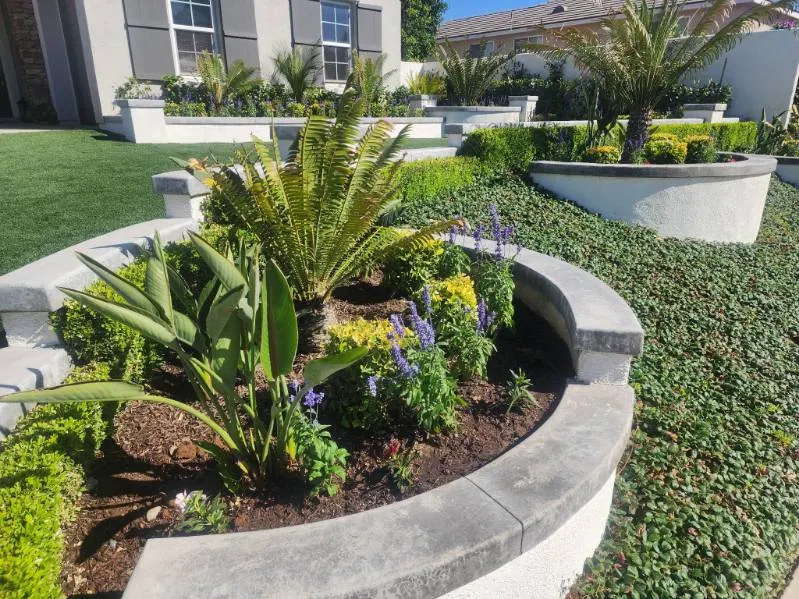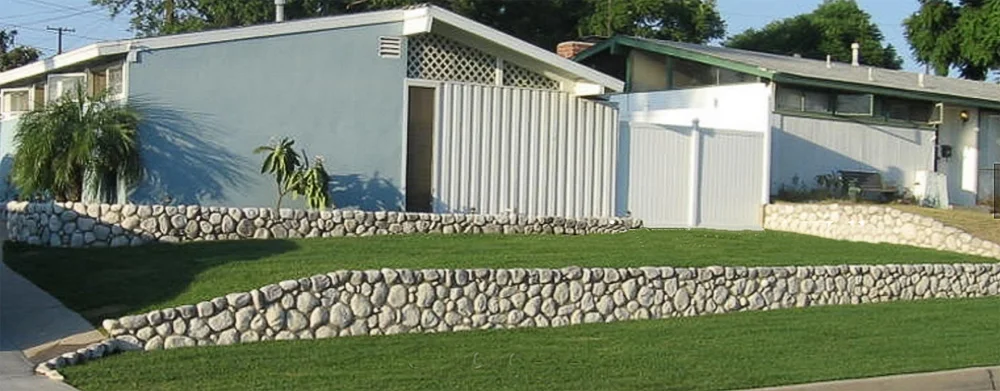
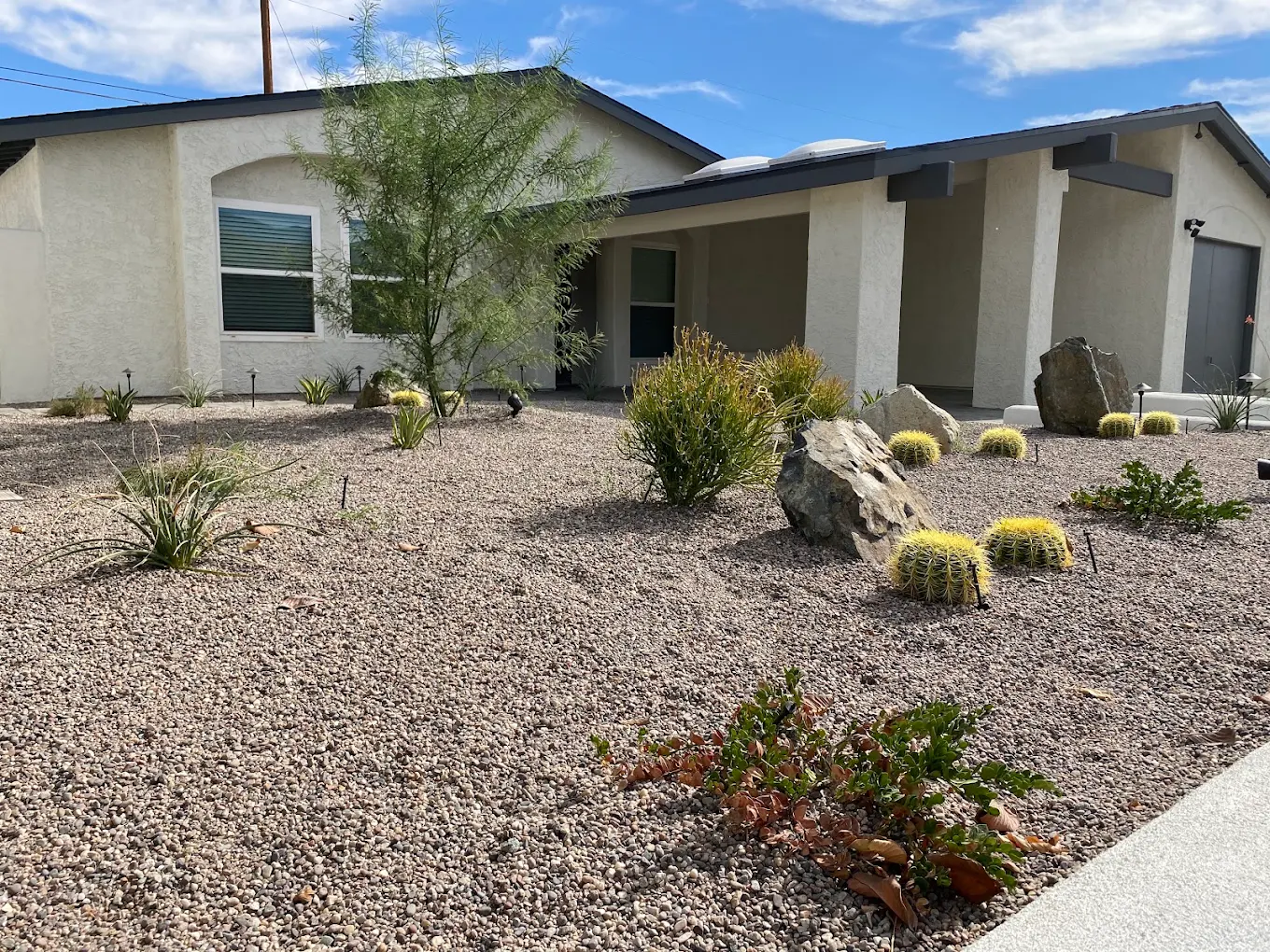
Low-water does not mean gravel and three agaves. San Diego has one of the best climates on earth for plant diversity — the trick is choosing by role, not by photo.
Structure plants (the bones)
These hold the design year-round and carry the winter garden.
- Agave attenuata (coastal) and Agave 'Blue Glow' (inland)
- Westringia fruticosa — the low-water alternative to boxwood
- Rhaphiolepis and dwarf olive for evergreen mass
- Yucca rostrata and Dasylirion for sculptural accents
Color and movement
Layer these in drifts of three to seven, never as one-offs.
- Salvia clevelandii, 'Bee's Bliss' and Salvia leucantha
- Kangaroo paw (Anigozanthos) for vertical color
- Leucadendron and Grevillea for architectural bloom
- Muhlenbergia rigens and Festuca 'Siskiyou Blue' for movement
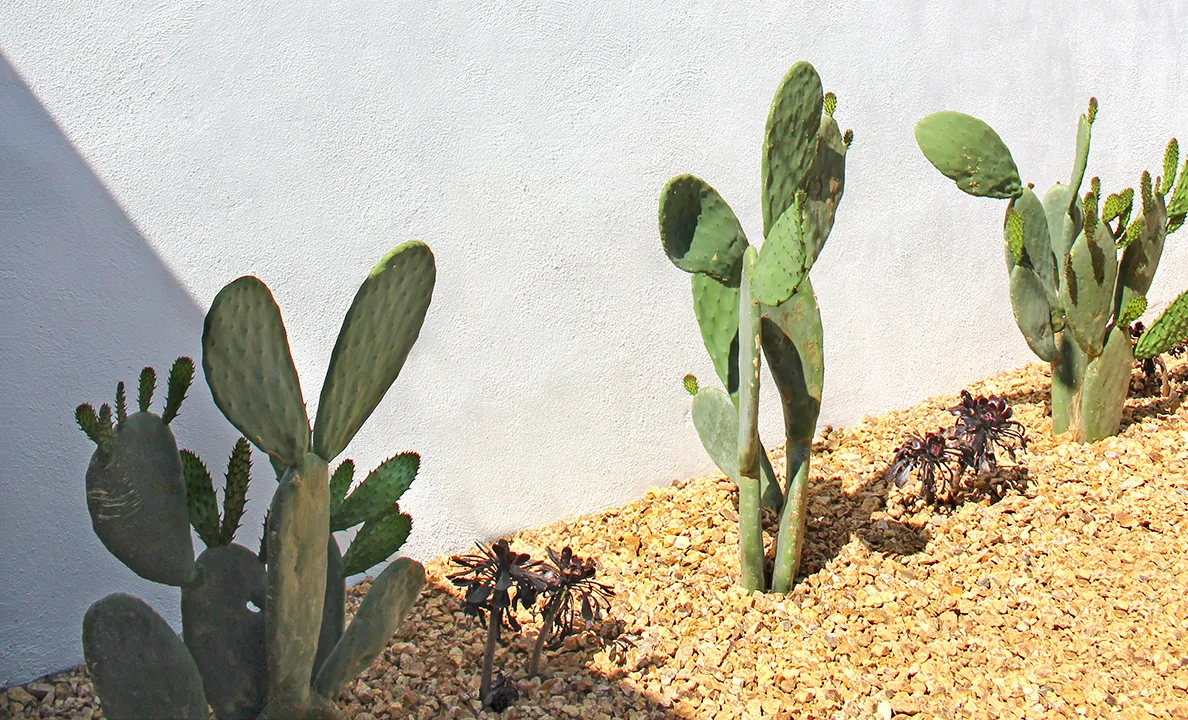
Groundcovers that beat bare mulch
Dymondia margaretae, creeping thyme, Myoporum parvifolium, Senecio mandraliscae and Baccharis 'Pigeon Point' will all knit together within two seasons and cut weeding dramatically.
Coastal gardens in Ocean Beach, Point Loma and Cardiff can push tender succulents; inland yards in Santee or Lakeside need the tougher, heat-rated versions of the same palette.
Building a palette that looks designed
The difference between a low-water garden that looks intentional and one that looks abandoned is almost always repetition. Three to five species repeated in drifts will always read better than twenty single specimens.
- Pick two structure plants and repeat them the length of the bed
- Add one grass or movement plant in drifts of three to seven
- Add one or two bloom plants for seasonal colour
- Cover the floor with a knitting groundcover, not mulch alone
- Give every mass a clean edge — steel, masonry or decomposed granite
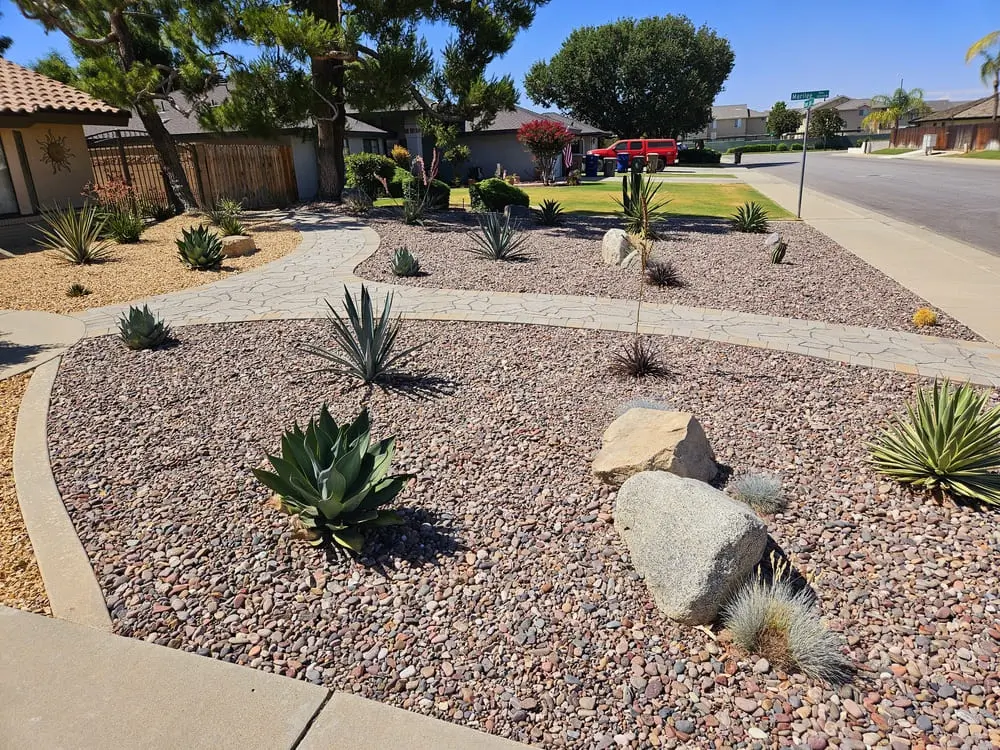
Coastal versus inland versions of the same palette
Most of these plants have a coastal and an inland form of the same idea. Getting this right is what keeps a garden from scorching in Santee or rotting in Ocean Beach.
| Role | Coastal | Inland |
|---|---|---|
| Sculptural accent | Agave attenuata | Agave 'Blue Glow', Yucca rostrata |
| Evergreen mass | Westringia, Rhaphiolepis | Dwarf olive, rosemary |
| Groundcover | Dymondia, Senecio | Myoporum, Baccharis 'Pigeon Point' |
| Colour | Kangaroo paw, Leucadendron | Salvia leucantha, Cleveland sage |
Frequently asked
- Do drought-tolerant plants need irrigation?
- Yes — for the first one to two years to establish, then far less. Design the drip system for establishment, then dial the controller back.
- When is the best time to plant?
- October through February. Winter rain does the establishment work for you.
- How much mulch?
- Three inches, kept off plant crowns. Mulch is a water-savings device, not decoration.
- What are the best drought-tolerant plants for San Diego?
- Westringia, agave, dwarf olive and Rhaphiolepis for structure; salvias, kangaroo paw, Leucadendron and Grevillea for colour; Dymondia, Myoporum and Senecio for groundcover.
- Will a drought-tolerant garden look bare in winter?
- Not if evergreen structure plants carry the design. Winter is exactly why we set the bones with evergreen mass before adding seasonal colour.