Decomposed granite is the best value surface in San Diego landscaping — around $8–$16 per square foot installed — and the most commonly botched.
The four details that matter
Everything else is preference.
- Depth: 3 inches of DG over 2 inches of compacted base for walkable paths
- Stabilizer: a resin or organic stabilizer mixed in, not sprayed on top
- Edging: steel, masonry or concrete band — DG without containment migrates
- Compaction: wet, roll and compact in lifts, never dump-and-rake
Where DG shines and where it doesn't
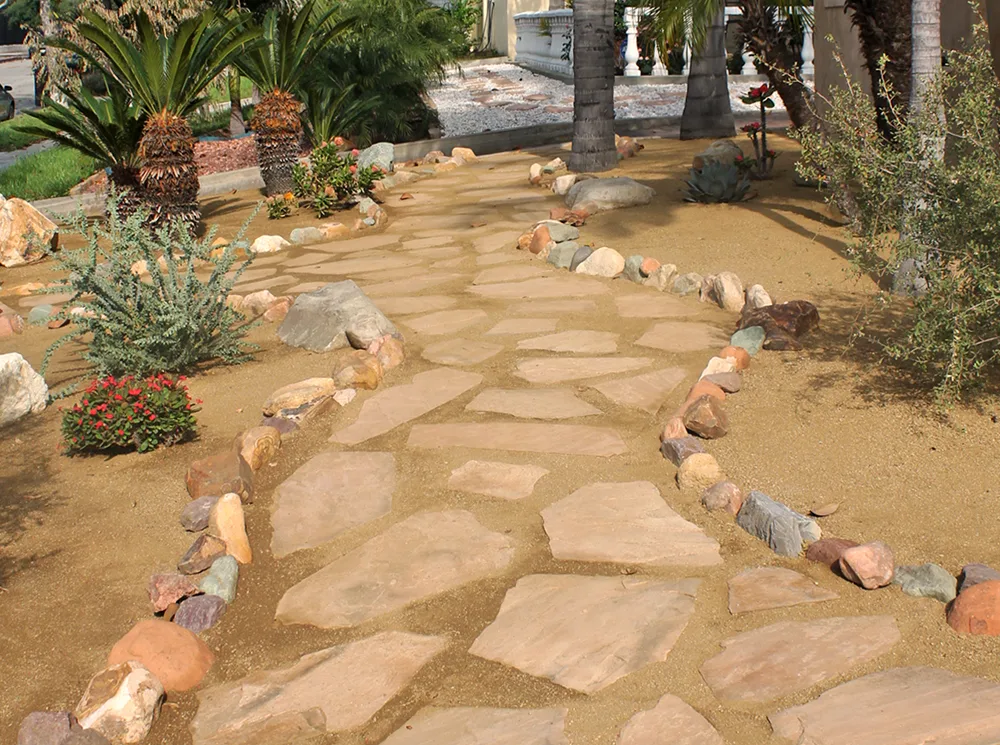
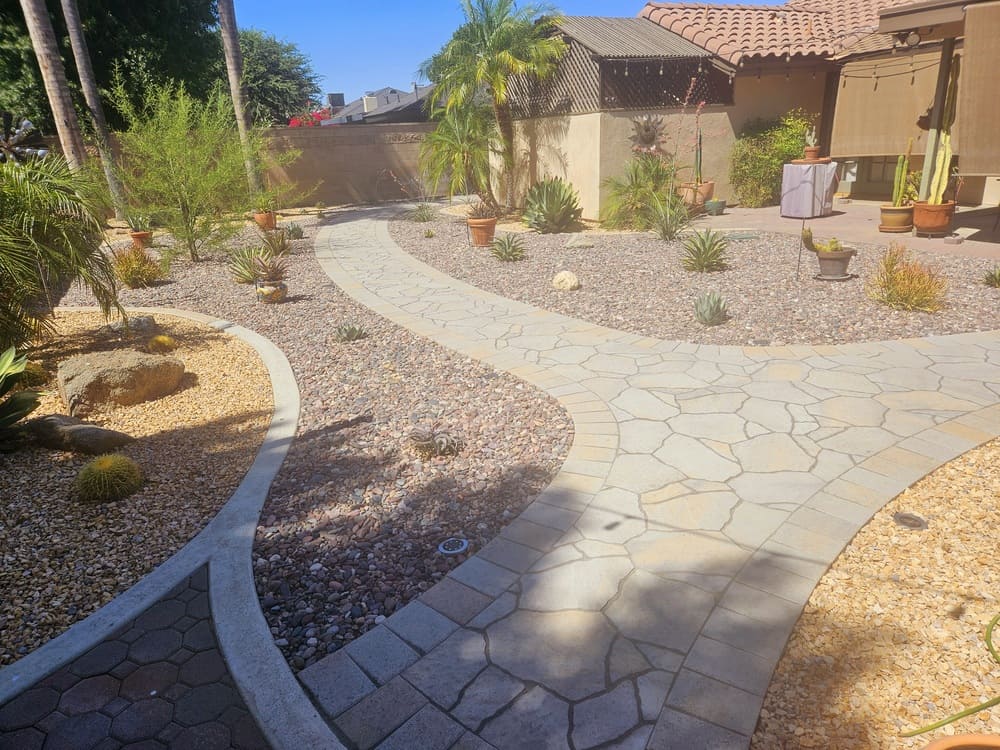
It is excellent for garden paths, side yards, dining pads under trees, dog runs and decomposed-granite courtyards in Mediterranean and coastal cottage designs.
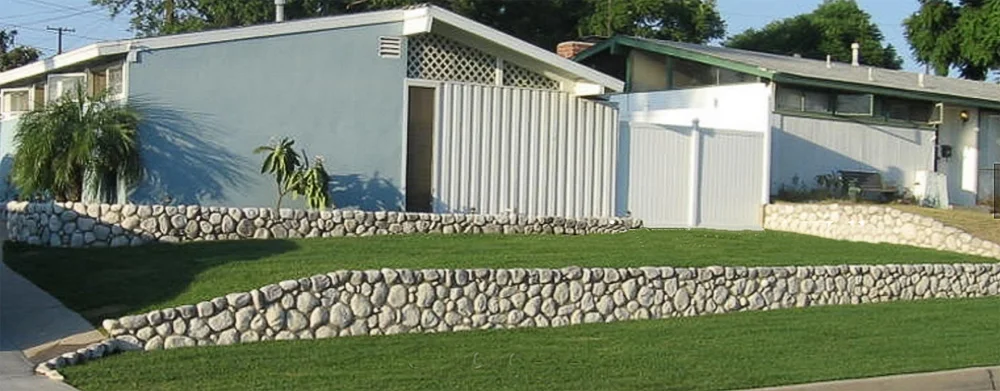
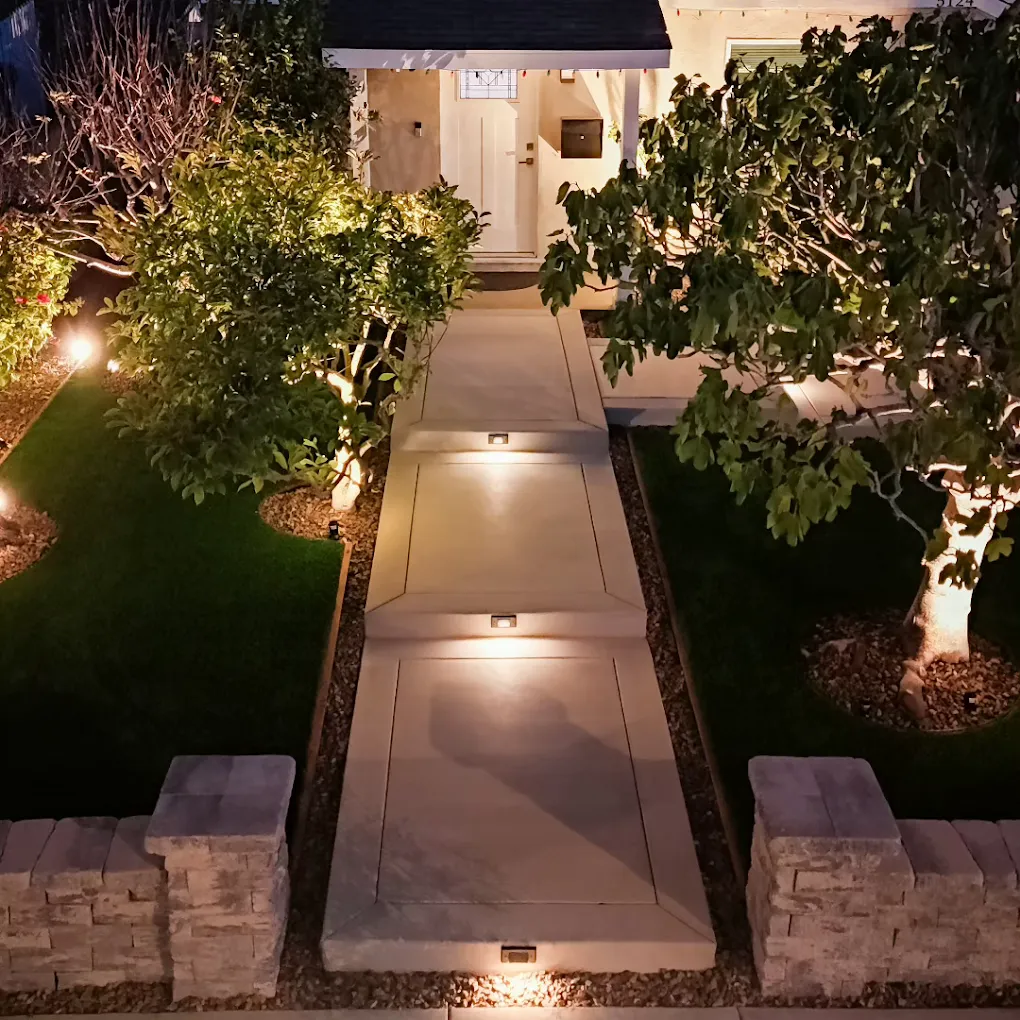
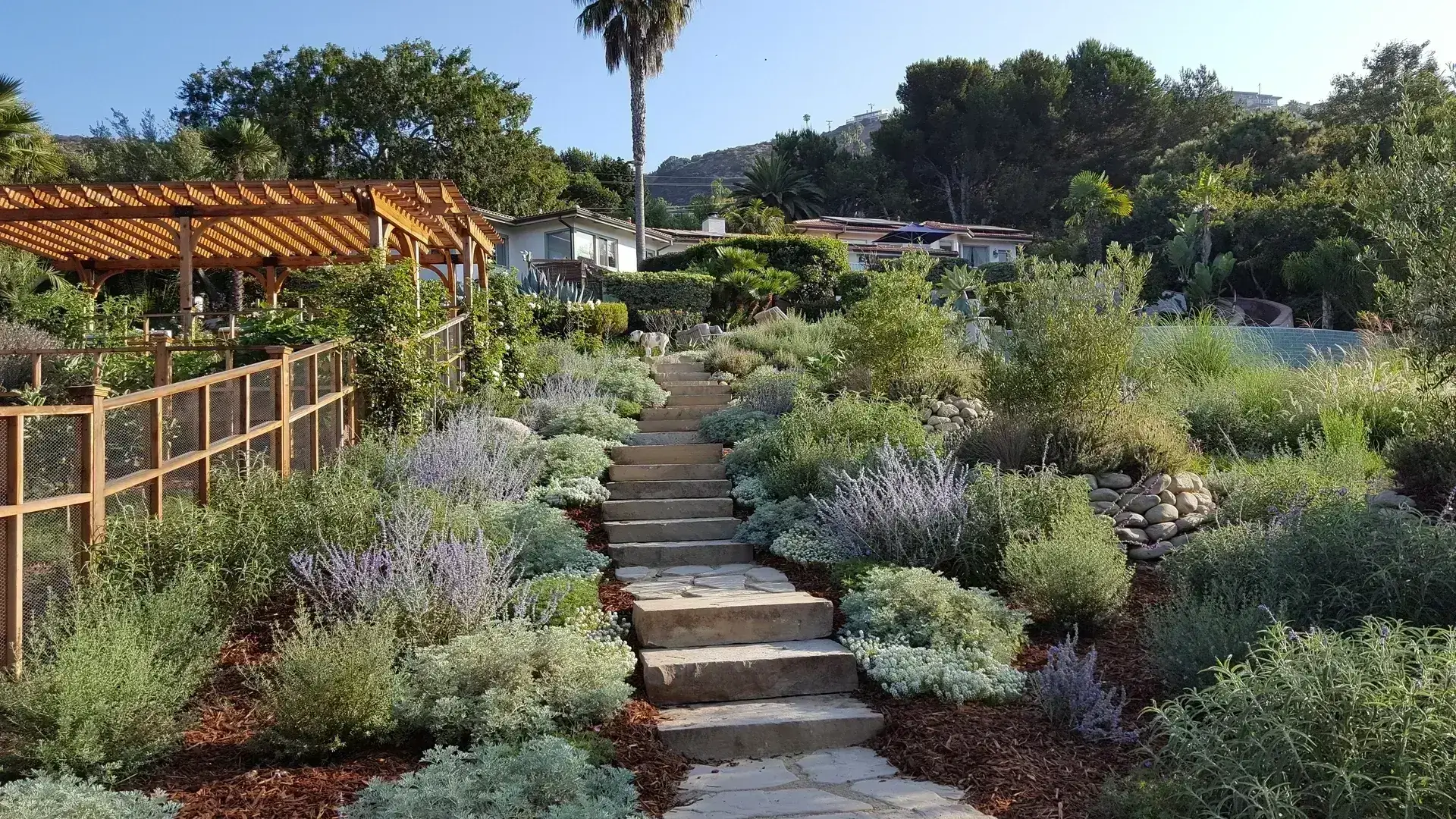
It is poor on slopes over about 8%, in heavy-runoff channels, directly against a pool, or at doorways where it tracks indoors. On slopes, break the run with stone or timber risers and switch to a bound surface where water concentrates.
Maintenance you should expect
Even a good DG path needs a light top-dress every 3–5 years and occasional re-compaction after heavy rain. That is normal, cheap and quick — nothing like resetting a failed paver field.
Where DG belongs and where it does not
DG is the right material for informal paths, garden walks, seating nooks and native or Mediterranean planting areas. It is the wrong material immediately outside a back door, on steep runs where it washes, and anywhere wheels are dragged across it daily.
- Good: garden paths, decomposed granite seating areas, side yards, native gardens
- Risky: steep grades, entries into the house, heavy wheeled traffic
- Always: a compacted base, a defined edge and correct compaction in lifts
Frequently asked
- Is DG ADA-accessible?
- Stabilized DG can meet firm-and-stable requirements when installed and maintained correctly, but poured surfaces are safer for strict compliance.
- Does it get muddy?
- Stabilized and properly graded DG sheds water. Unstabilized DG in a low spot will absolutely puddle.
- What color options exist?
- Locally common tones include gold, California gold, sunset red and gray granite — check the sample dry and wet.
- Does decomposed granite need edging?
- Yes. Without a steel, masonry or header edge, DG migrates into beds and onto adjacent paving, and the path loses its shape within a season.