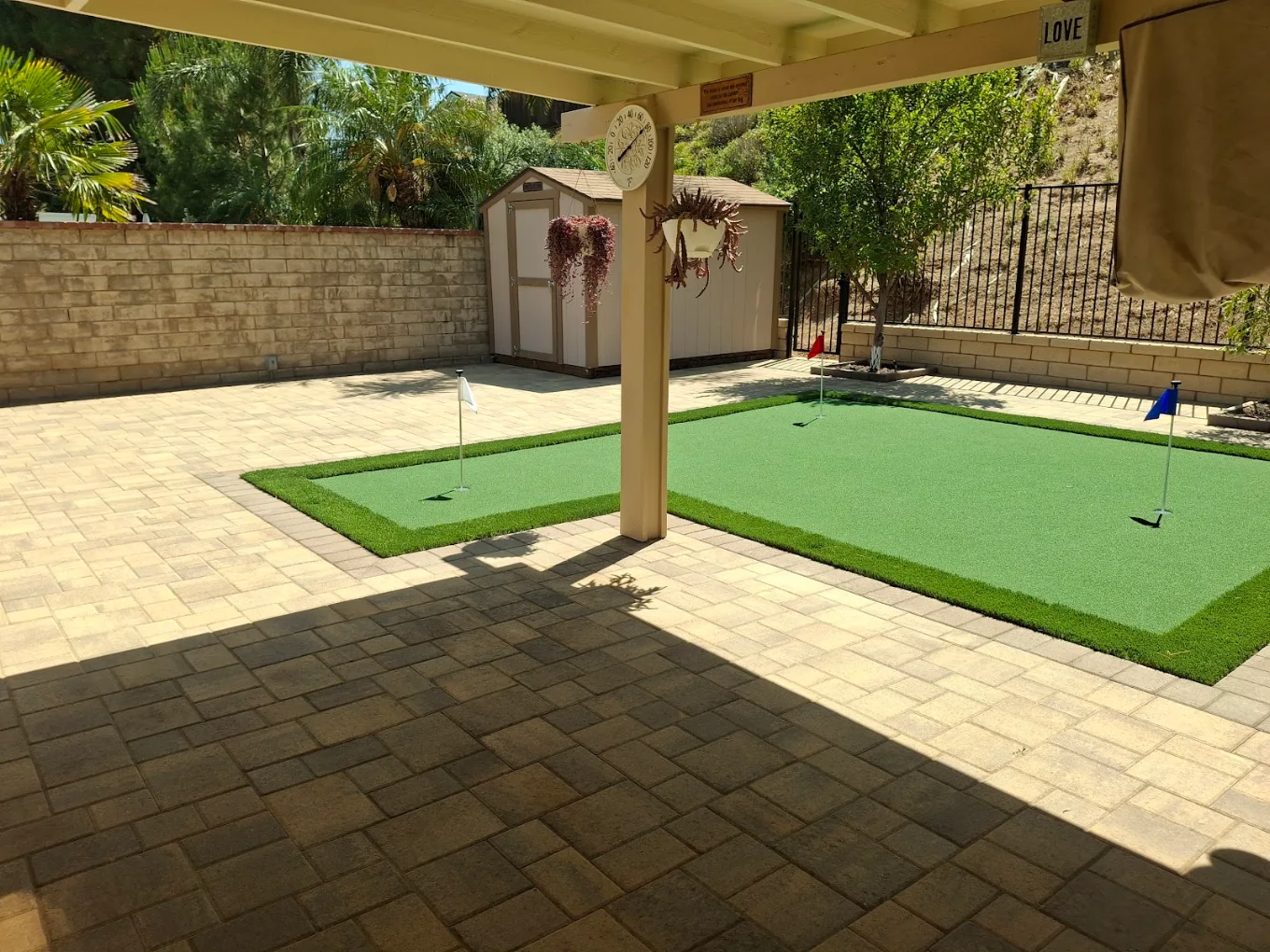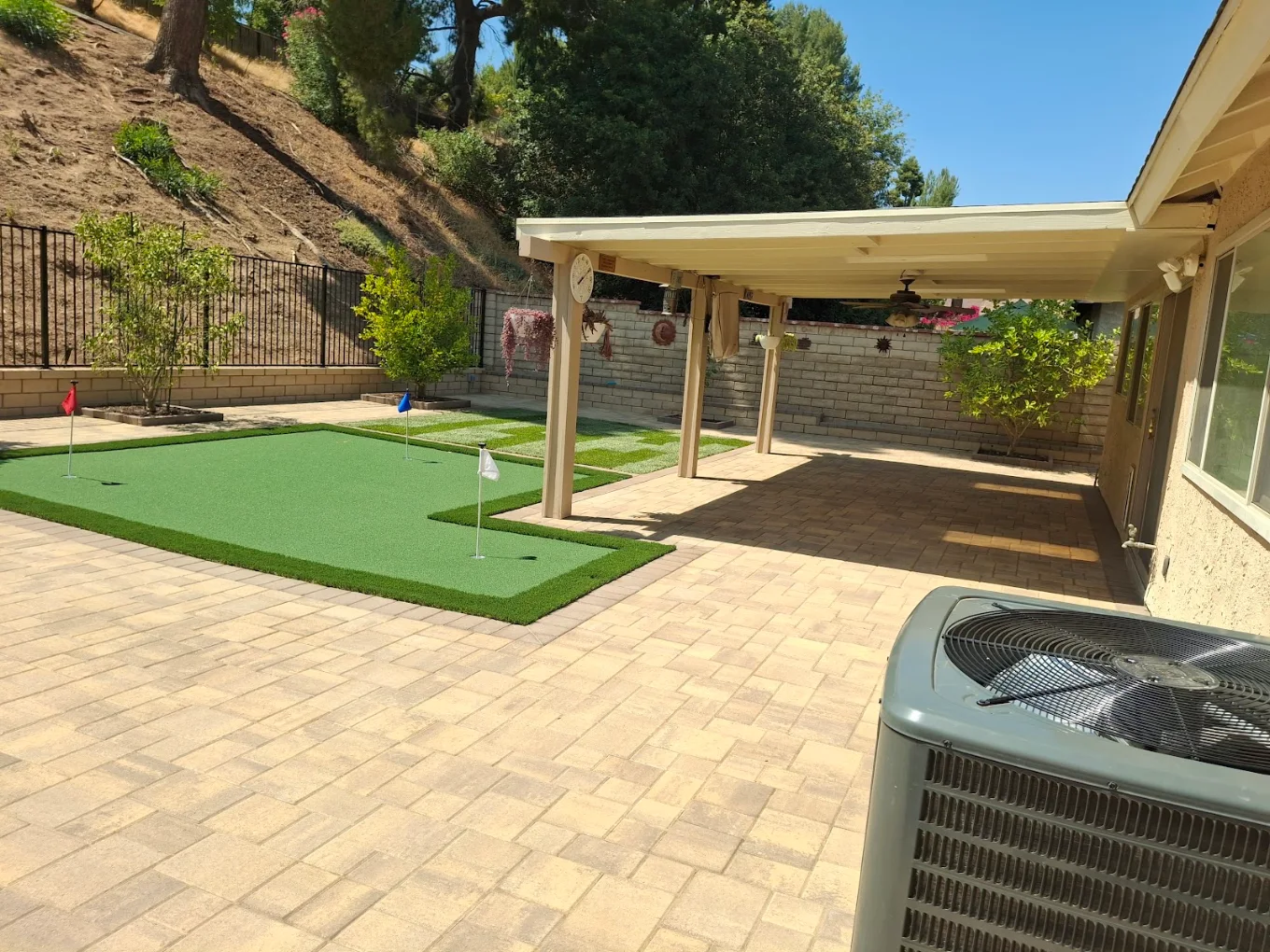
We install both, and we have no religion about it. The right answer depends on your soil, your budget horizon and how much you care about repairability.
Cost and lifespan
Poured concrete runs about $12–$22 per square foot installed with a broom or light finish; stamped and colored concrete lands $18–$30. Pavers run $22–$45. Concrete is cheaper day one; pavers are usually cheaper across 20 years because they can be lifted and reset.
How each behaves in local soil
Much of inland San Diego sits on expansive clay that swells and shrinks with the wet season. Concrete resolves that movement by cracking at whatever line it chooses. Pavers, being a flexible system of individual units, absorb movement in the joints.
Coastal sandy soils are kinder to both, but coastal salt air and irrigation overspray will etch a poorly sealed decorative concrete finish faster than most people expect.
- Choose concrete for: budget-driven projects, clean modern slabs, driveways with heavy vehicle loads and good subgrade.
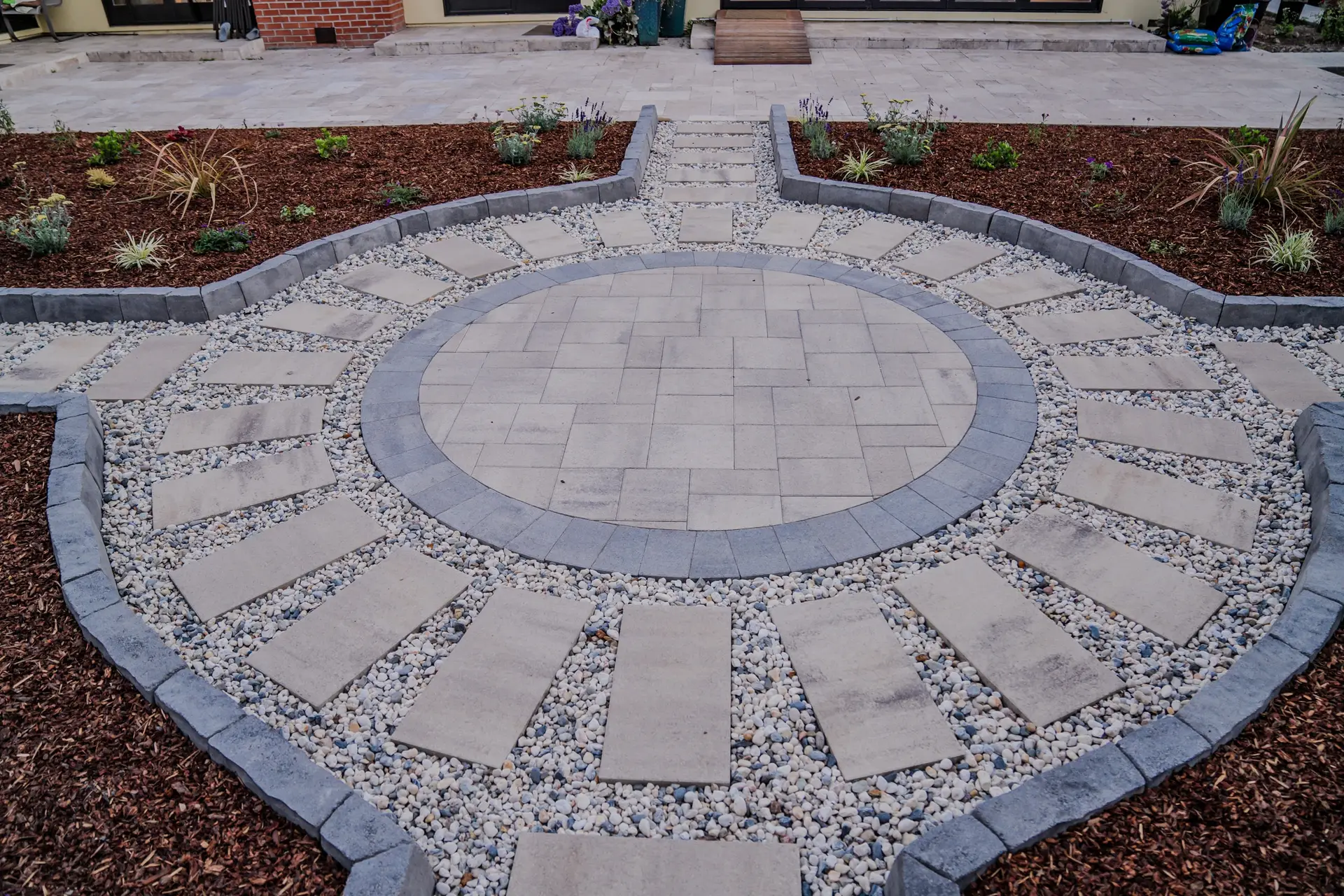
- Choose pavers for: patios you want repairable, permeable options, curved layouts, and anything over utilities you may need to access.
The hybrid most people end up loving
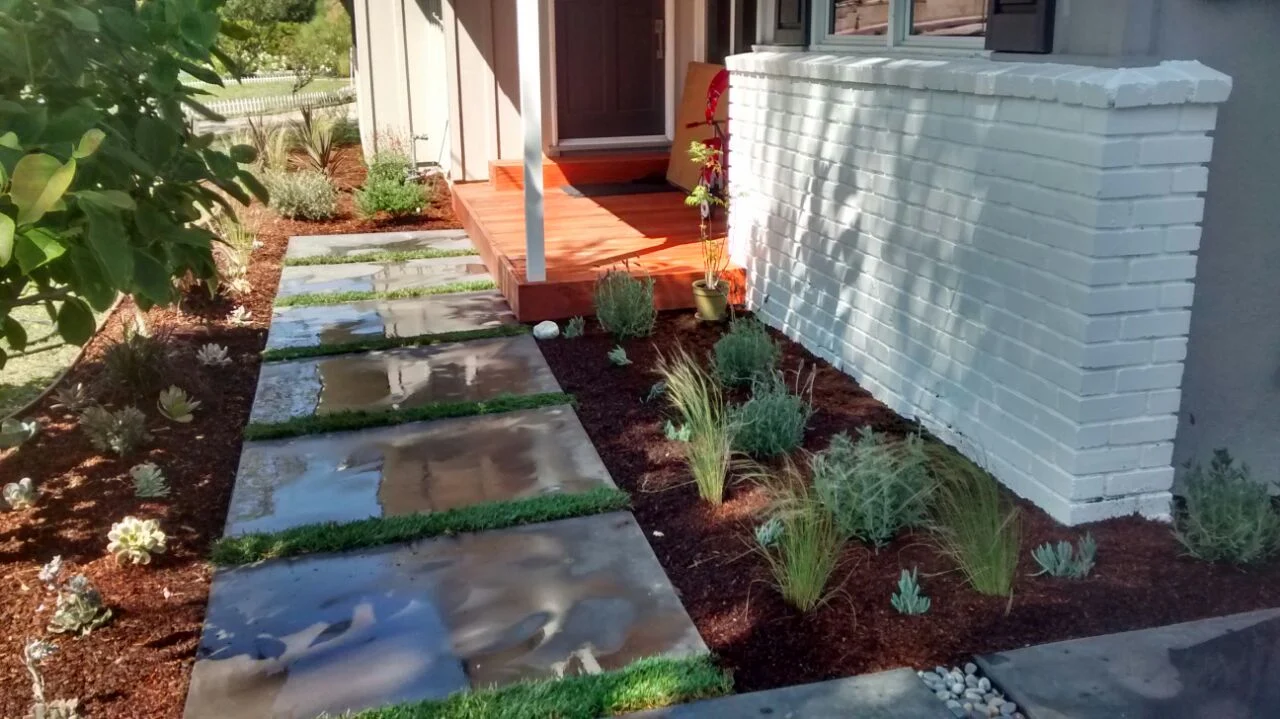
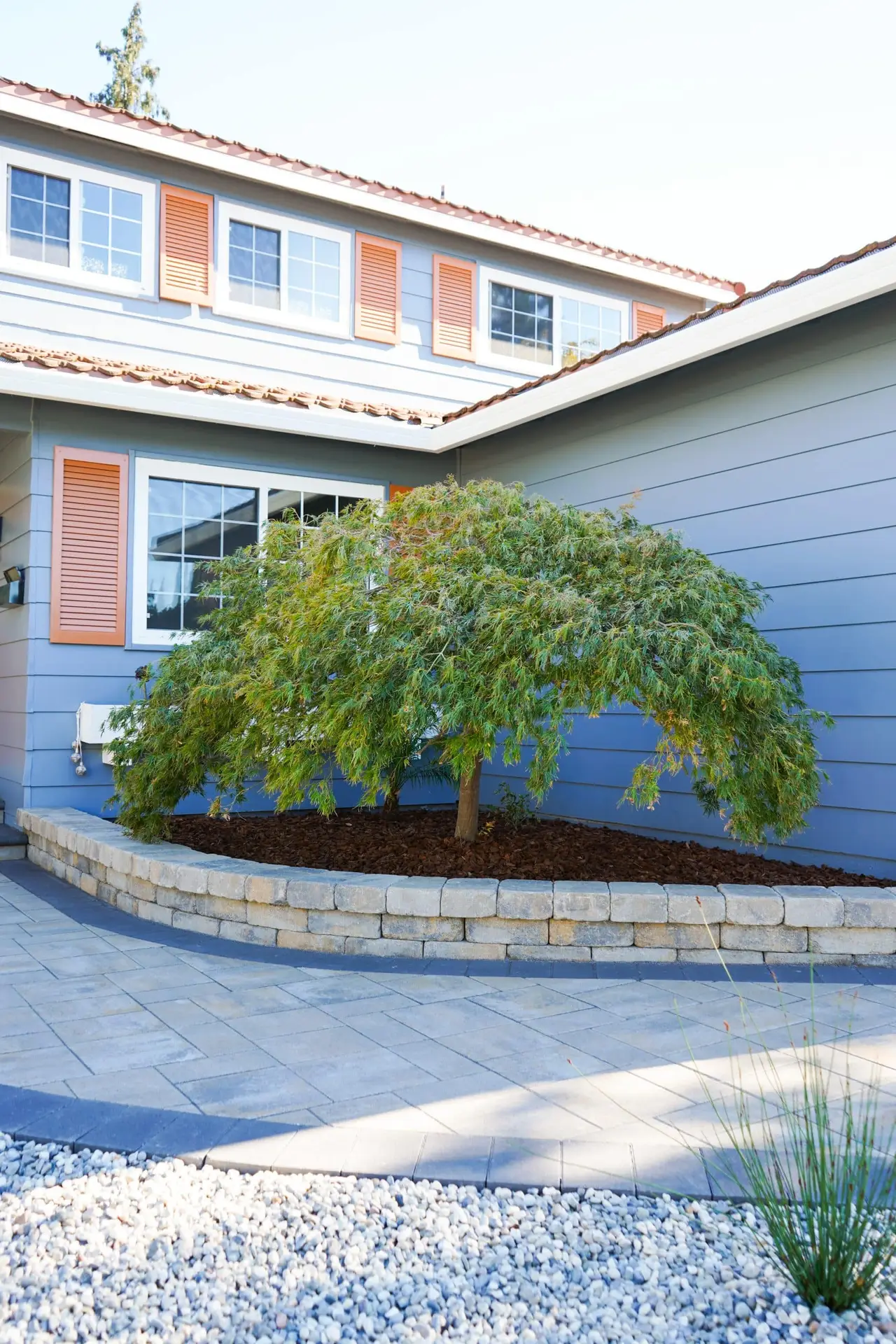
Large-format concrete pads with paver, gravel or groundcover joints give you the modern look of a slab with the movement tolerance of a jointed system. It is our most-requested treatment in Bay Park, North Park and South Park remodels.
Side by side
The short version of everything above, in one place.
| Poured concrete | Pavers | |
|---|---|---|
| Day-one cost | Lower | Higher |
| Movement in clay soil | Cracks at its own line | Absorbed in the joints |
| Repair | Patch or replace the slab | Lift and reset individual units |
| Utility access | Cut and re-pour | Pull up and relay |
| Permeable option | Limited | Yes, with open-graded joints |
| Curves and patterns | Formwork cost | Cutting labour only |
Driveways are a different decision
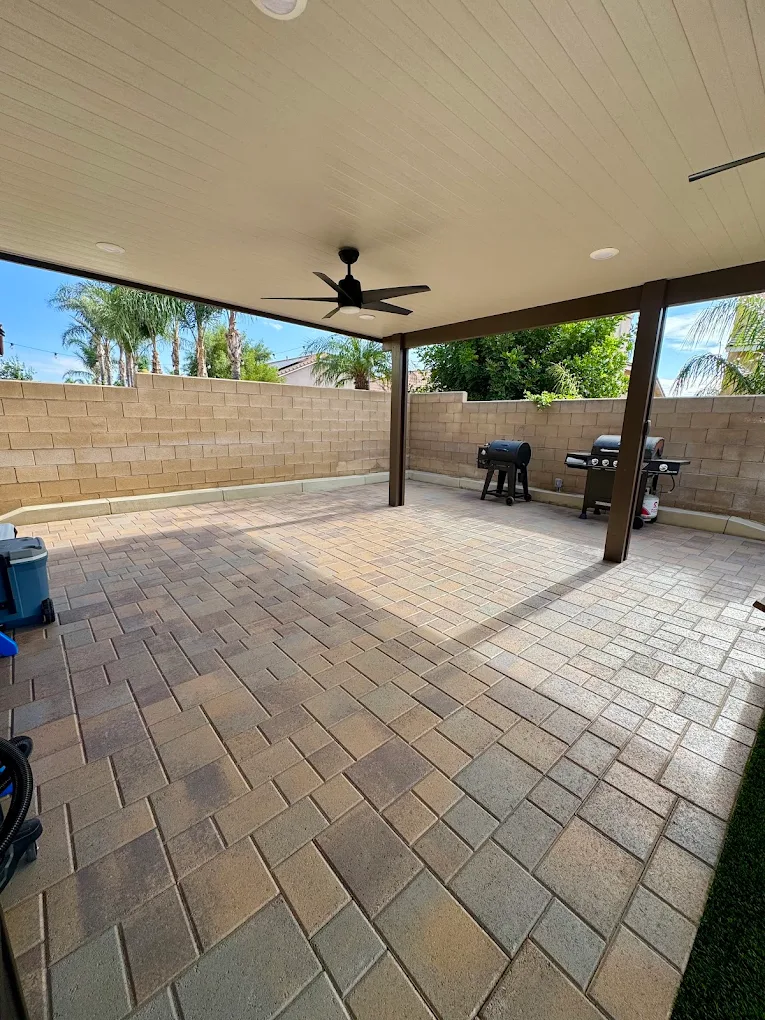
Vehicle loads change the calculation. A driveway needs a thicker section and a properly compacted subgrade regardless of surface, and the failure mode differs: concrete cracks across the drive, pavers rut where the tyres track if the base was thin.
Either can work well in San Diego. What matters is that the base is engineered for the load and that water is not running under the surface.
Frequently asked
- Will concrete crack no matter what?
- Assume yes eventually — control joints decide where. Proper subgrade, thickness and reinforcement control severity.
- Do pavers get weeds?
- Polymeric joint sand and a solid edge restraint keep it minor. Weeds in pavers usually mean joints were never fully filled.
- Which is better for resale?
- Both, if executed well. Buyers notice cracking and settling far more than material type.
- Are pavers or concrete better for San Diego clay soil?
- Pavers, generally. Expansive clay moves seasonally, and a jointed system absorbs that movement while a slab relieves it by cracking.
- Can pavers be laid over existing concrete?
- Sometimes, if the slab is sound, drains correctly and the added height does not create a step or a door clearance problem. We check those three things before recommending it.