Flagstone is the material people fall in love with in photos and misunderstand in practice. There are two very different ways to build it, and they age nothing alike.
Stone choices that work here
San Diego yards mostly use these three, and heat tolerance matters.
- Arizona sandstone (buckskin, oak, peach): warm, classic, softer underfoot, runs hot in full sun
- Slate: darker, tighter grain, dramatic in shade gardens, can flake if low grade
- Quartzite: hardest and priciest, sparkling finish, excellent around pools
Dry-set vs. mortar-set
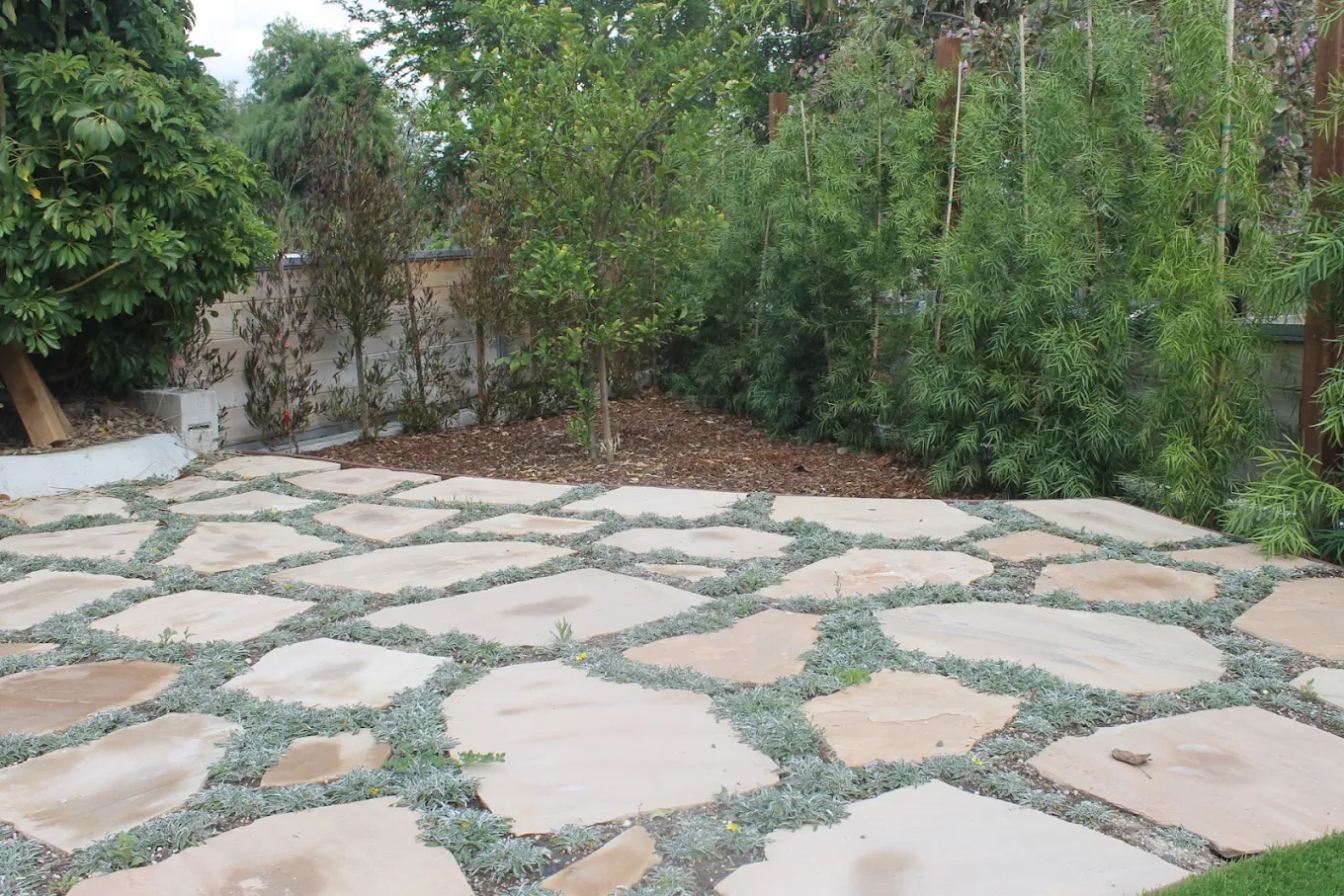
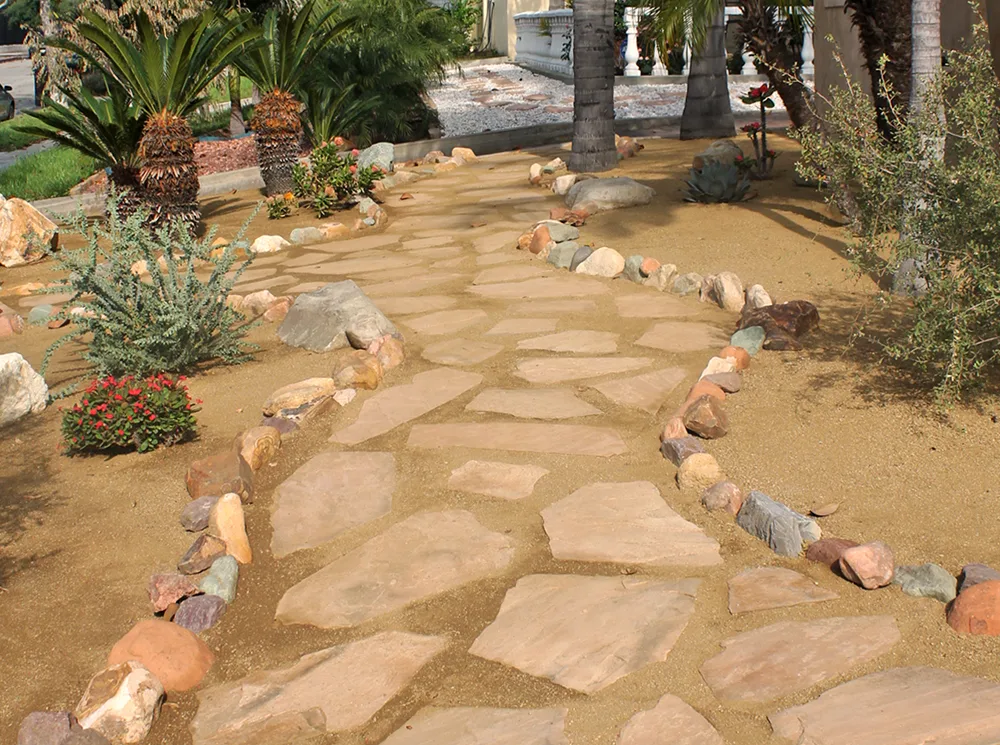
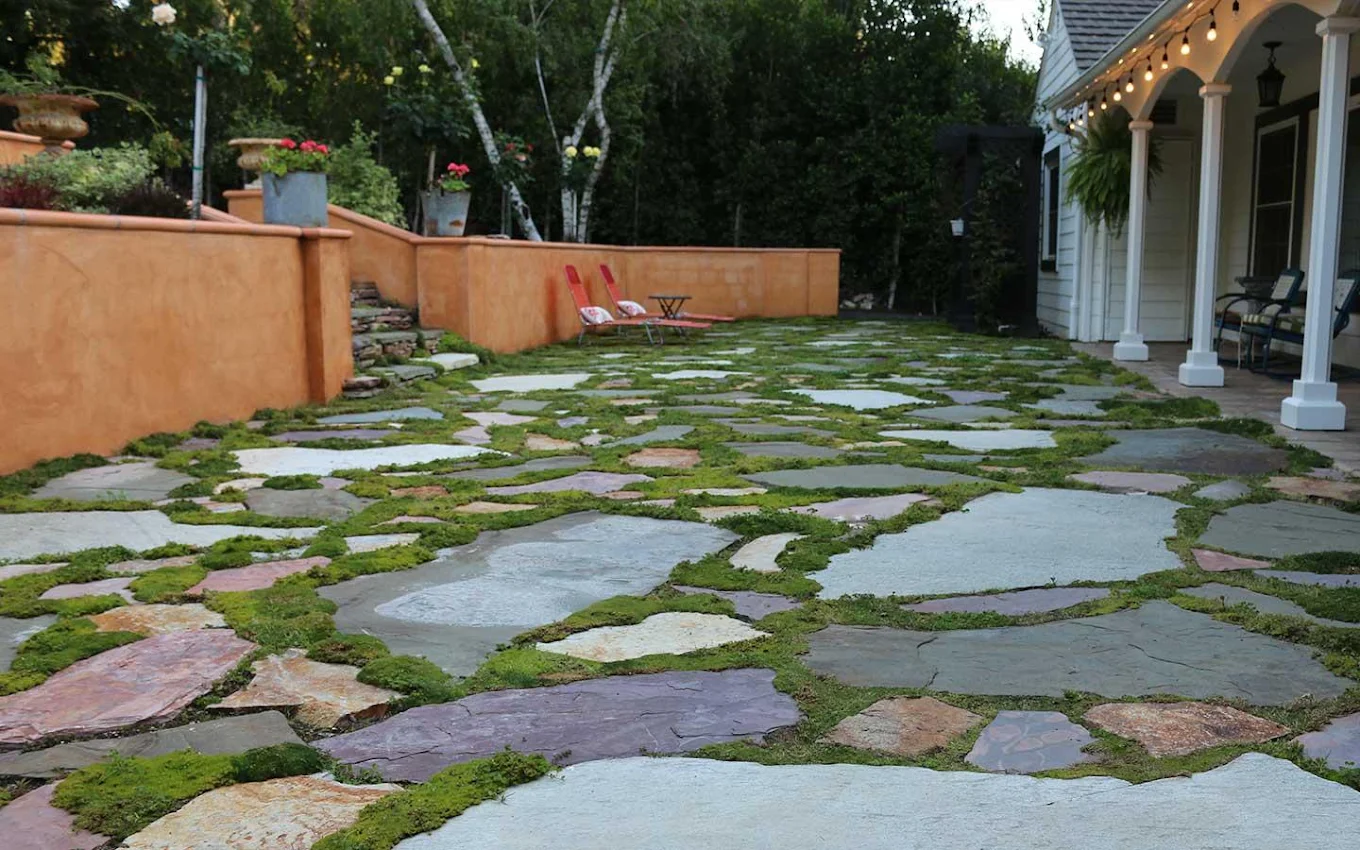
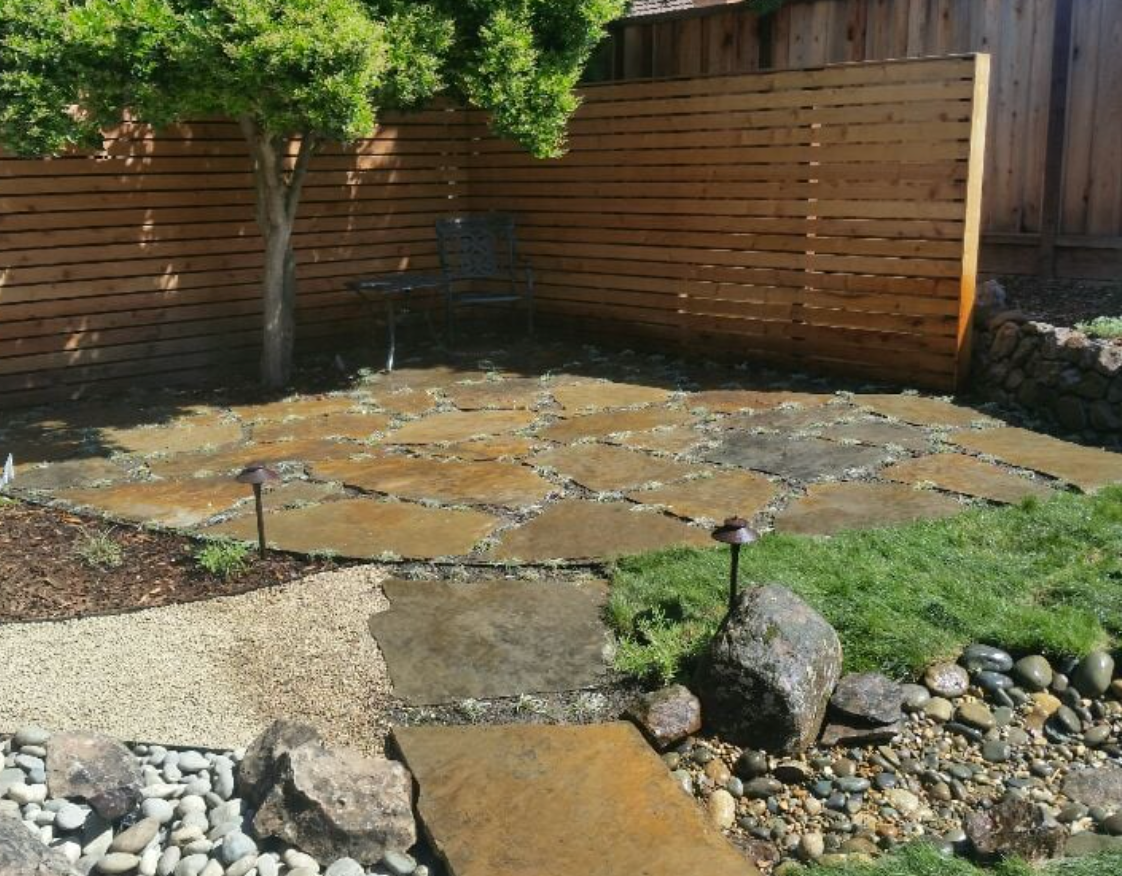
Dry-set flagstone sits on compacted base and bedding, with sand, decomposed granite or groundcover joints. It is more forgiving, permeable, and easy to repair — our default for garden patios and paths.
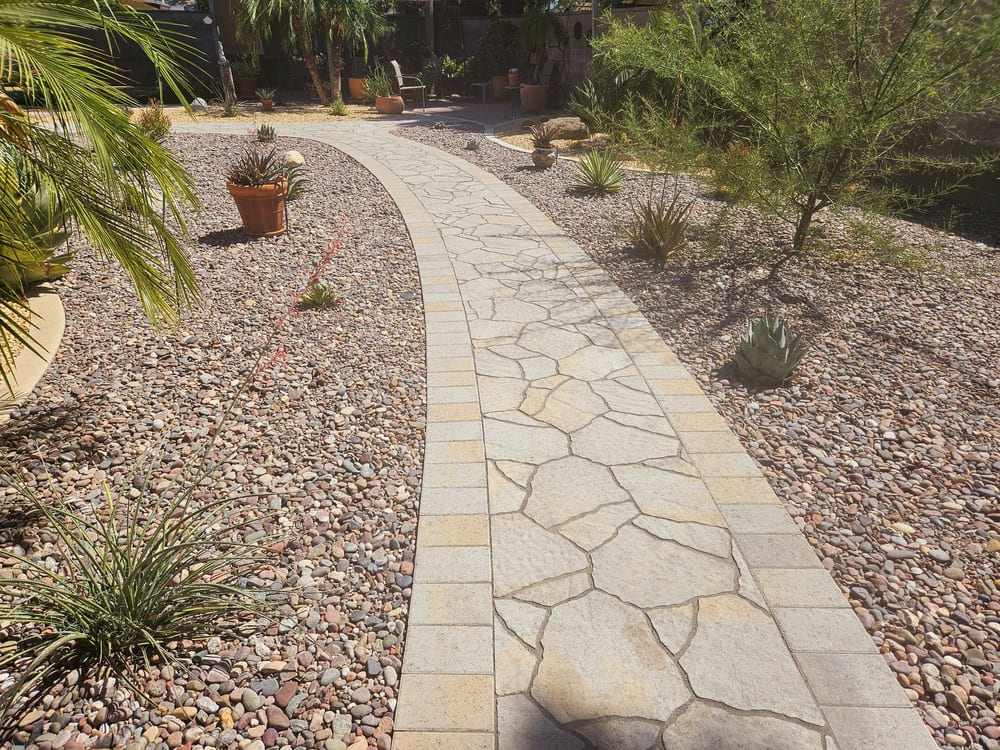
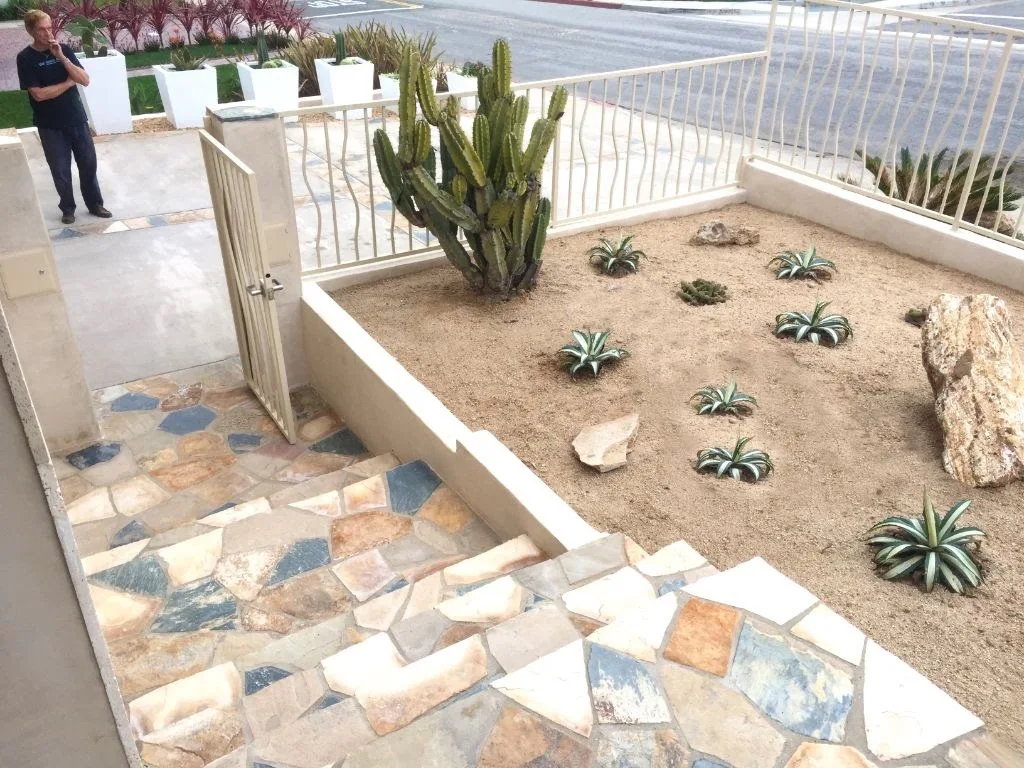
Mortar-set flagstone requires a concrete slab underneath and grouted joints. It is the cleaner, more formal look and the right call for entries, pool decks and high-traffic patios. It also cracks along the grout if the slab beneath is undersized, so the slab work matters more than the stone.
Cost expectations
Dry-set flagstone typically runs $28–$45 per square foot installed. Mortar-set over a new slab runs $40–$70. Irregular hand-fit flagstone costs more than cut rectangular pieces because of layout labor, not material.
Dry-set versus mortar-set
This single decision changes the cost, the feel underfoot and how the patio ages.
| Dry-set on base | Mortar-set on slab | |
|---|---|---|
| Cost | Lower | Higher — includes the slab |
| Surface | Slightly irregular, natural | Flat and formal |
| Joints | Sand, gravel or groundcover | Mortar |
| Repair | Lift and reset a stone | Cut out and re-mortar |
| Drainage | Permeable | Surface runoff, needs pitch |
Choosing and laying stone that looks right
Thicker stone survives dry-set installation far better than thin split pieces, and consistent thickness is what lets a mason keep the surface level. Order from one lot where possible so the colour range is consistent.
Layout matters as much as the stone: vary the piece sizes, keep joints tight and roughly even, and avoid four corners meeting at one point. That is the detail that separates a designed patio from a puzzle.
Frequently asked
- Should flagstone be sealed?
- Sandstone benefits from a breathable penetrating sealer, especially near pools. Avoid film-forming sealers that trap moisture and turn cloudy.
- Is flagstone slippery?
- Natural cleft finishes have good traction wet. Polished or heavily sealed surfaces do not.
- What can grow in the joints?
- Dymondia, creeping thyme, elfin thyme and blue star creeper all handle San Diego joint conditions with light irrigation.
- Should flagstone be set on sand or concrete?
- Dry-set on a compacted base is permeable, cheaper and repairable. Mortar-set on a slab is flatter and more formal, and it is the better choice under dining furniture.
- Is flagstone slippery when wet?
- It depends on the stone and finish. A natural cleft surface has grip; a smooth, sealed stone can be slick, which matters most on steps and pool surrounds.