Everyone wants privacy yesterday. The plants that deliver it fastest are often the ones you will fight for the next twenty years, so here is the trade-off list.
Reliable screens by height
Choose for the space you actually have, measured at maturity.
- 6–10 ft: Podocarpus 'Icee Blue', Pittosporum tenuifolium, Rhaphiolepis 'Majestic Beauty'
- 10–18 ft: Podocarpus gracilior columns, Ligustrum japonicum, Elaeocarpus decipiens
- 18–30 ft: Arbutus 'Marina', Tristaniopsis laurina, Magnolia 'Little Gem'
- Grasses and clumping bamboo: Bambusa multiplex for fast, narrow screening — clumping only, never running
What to avoid on small lots
Ficus nitida screens beautifully and destroys hardscape, sewer lines and neighbor relations. Eucalyptus drops limbs. Italian cypress hits spider mites and becomes a brown wall. Running bamboo is a legal argument waiting to happen.
If you already have one of these, screening can often be rebuilt in phases behind the existing plant so you never lose privacy during the transition.
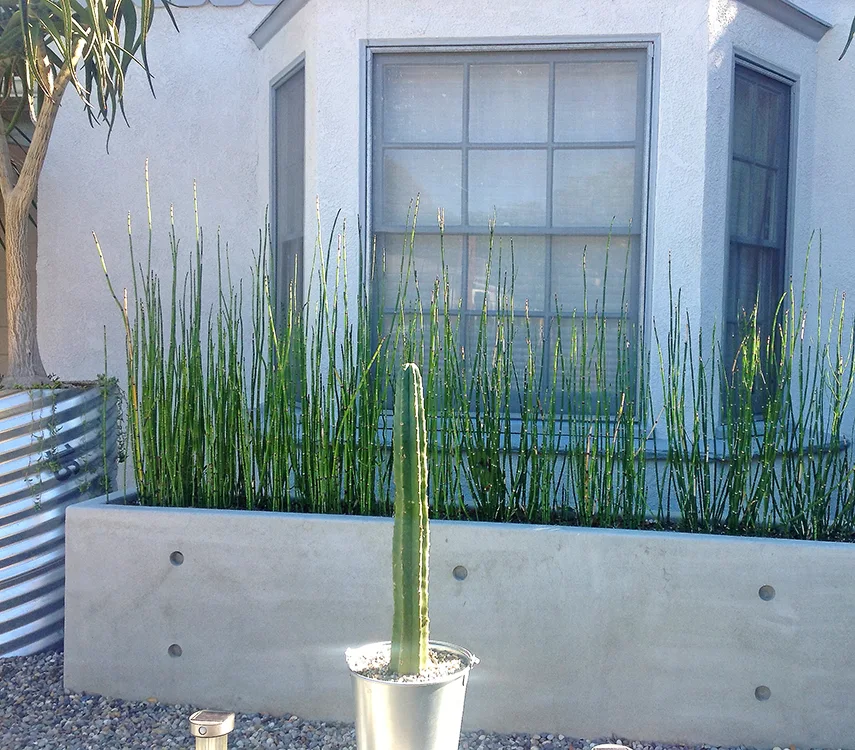
Spacing and speed
Plant columnar screens at 3–4 feet on center, broader shrubs at 5–6 feet. Buying 24-inch box instead of 15-gallon buys you roughly one to two years of growth — sometimes worth it at a bedroom window, rarely worth it along an entire fence line.
Screen the actual sightline, not the whole fence
Stand where you sit and look at what you want to hide. Most yards need eight to twelve feet of screening in one or two places, not a hedge around the entire perimeter.
Screening only where it is needed costs less, uses less water, and leaves the rest of the garden open — which is what makes the yard feel larger rather than walled in.
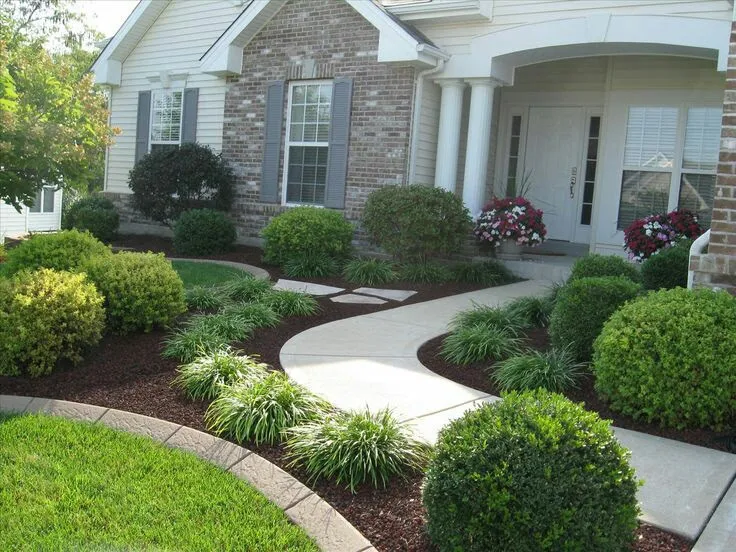
Getting screening to stay dense
Most failed privacy plantings were planted correctly and then managed badly.
- Give each plant its mature width; crowding thins the base within a few years
- Prune lightly from year one instead of shearing hard later
- Water deeply during establishment, then taper — drought stress opens gaps
- Combine a fast plant with a long-lived one if you need coverage now and structure later
- Check HOA and city height rules before planting anything intended to reach a second storey
Frequently asked
- How fast will I get privacy?
- With 15-gallon stock and good irrigation, expect meaningful screening in 18–30 months for most species.
- Can I plant right against the fence?
- Leave at least 2–3 feet so the plant can develop full form and you can maintain both sides.
- What about a green wall instead?
- Vines on cable or trellis — Ficus repens, star jasmine, bougainvillea — give screening in tight side yards where trees won't fit.
- What is the fastest-growing privacy plant for San Diego?
- Fast growers close a gap quickly but often need the most pruning and the shortest replacement cycle. We usually pair one fast plant with a slower, longer-lived screen behind it.
- How far from the fence should privacy plants go?
- Far enough to reach their mature width without pressing against the fence — otherwise the back thins out and the fence takes the damage.