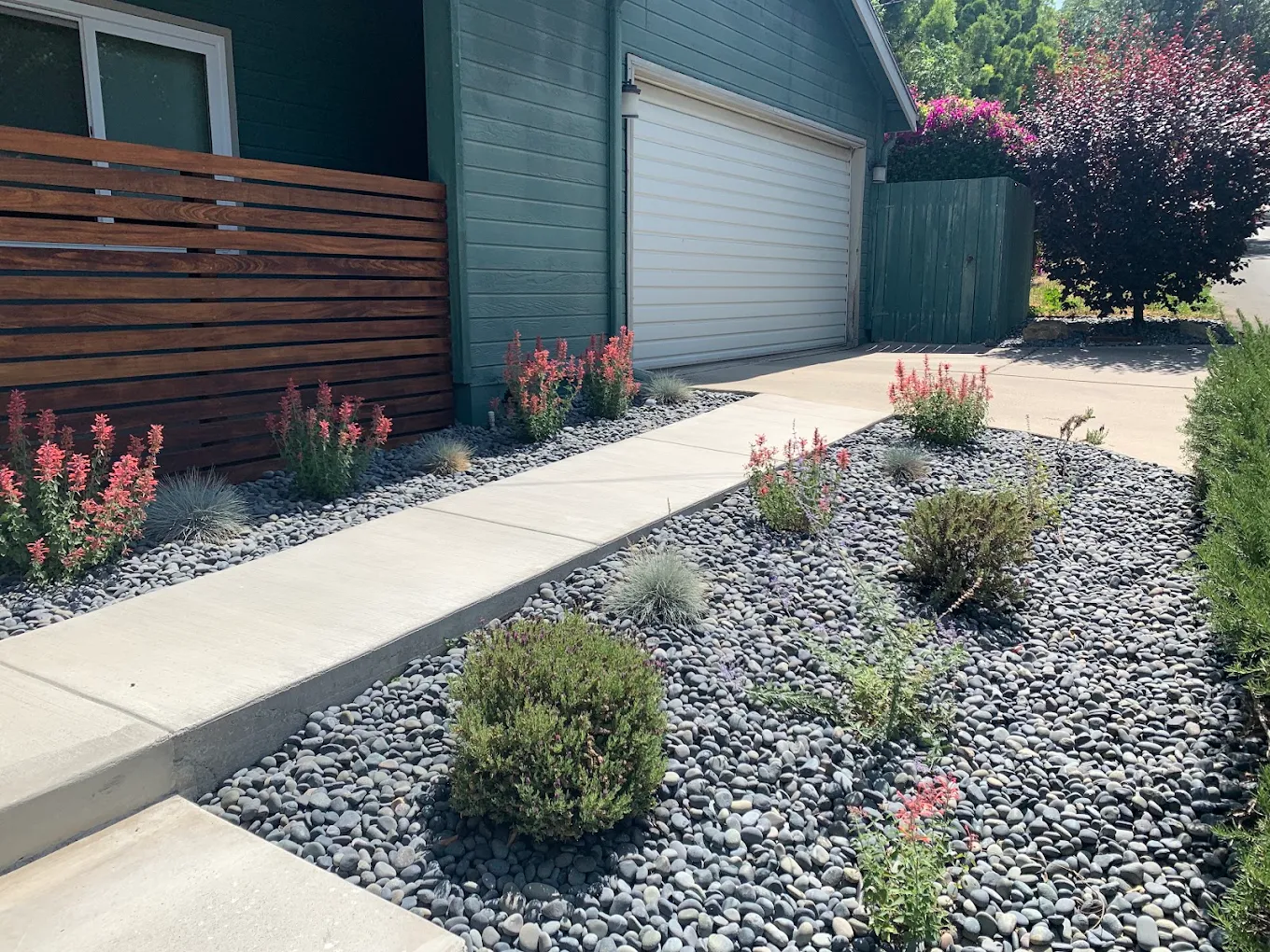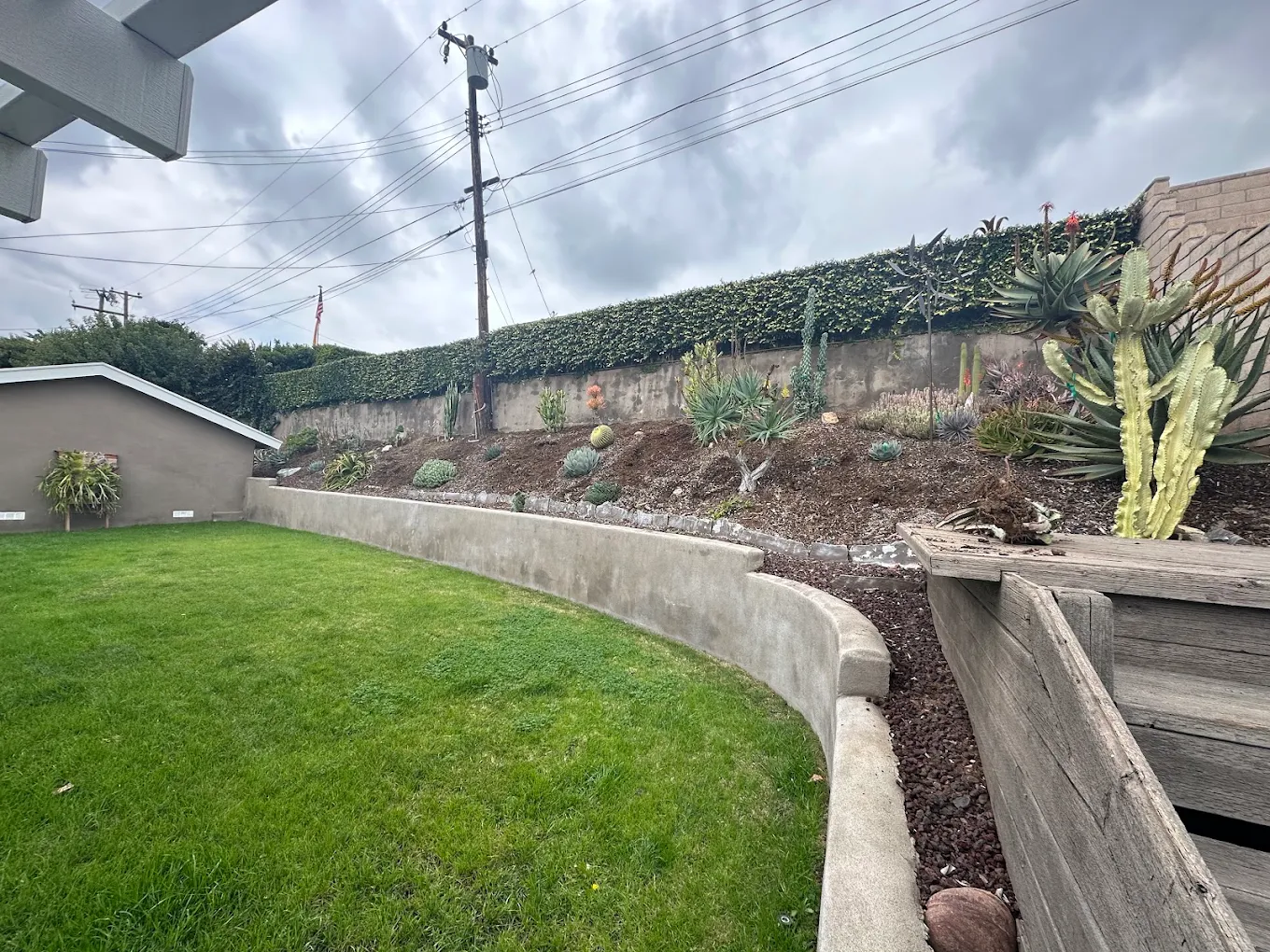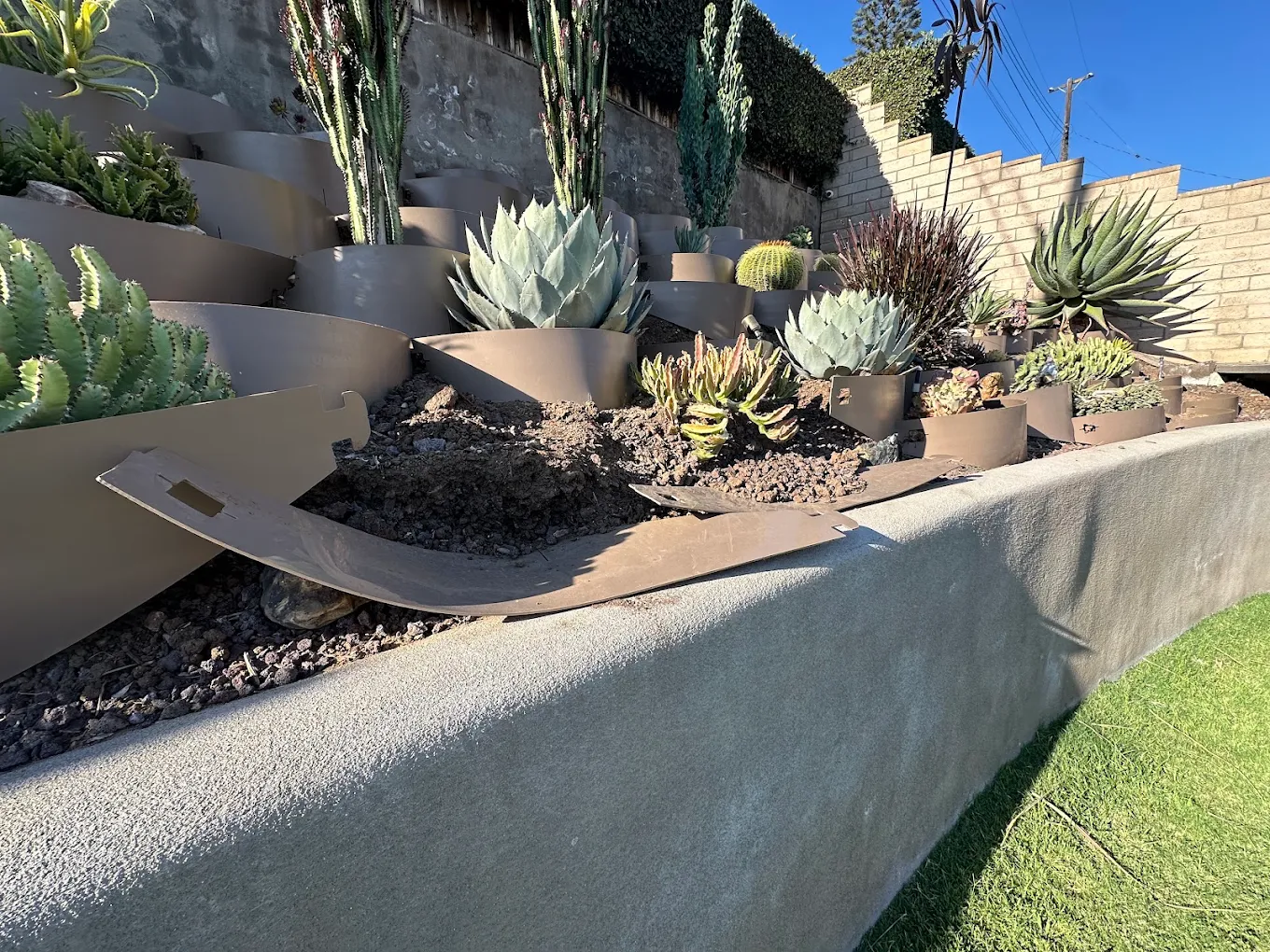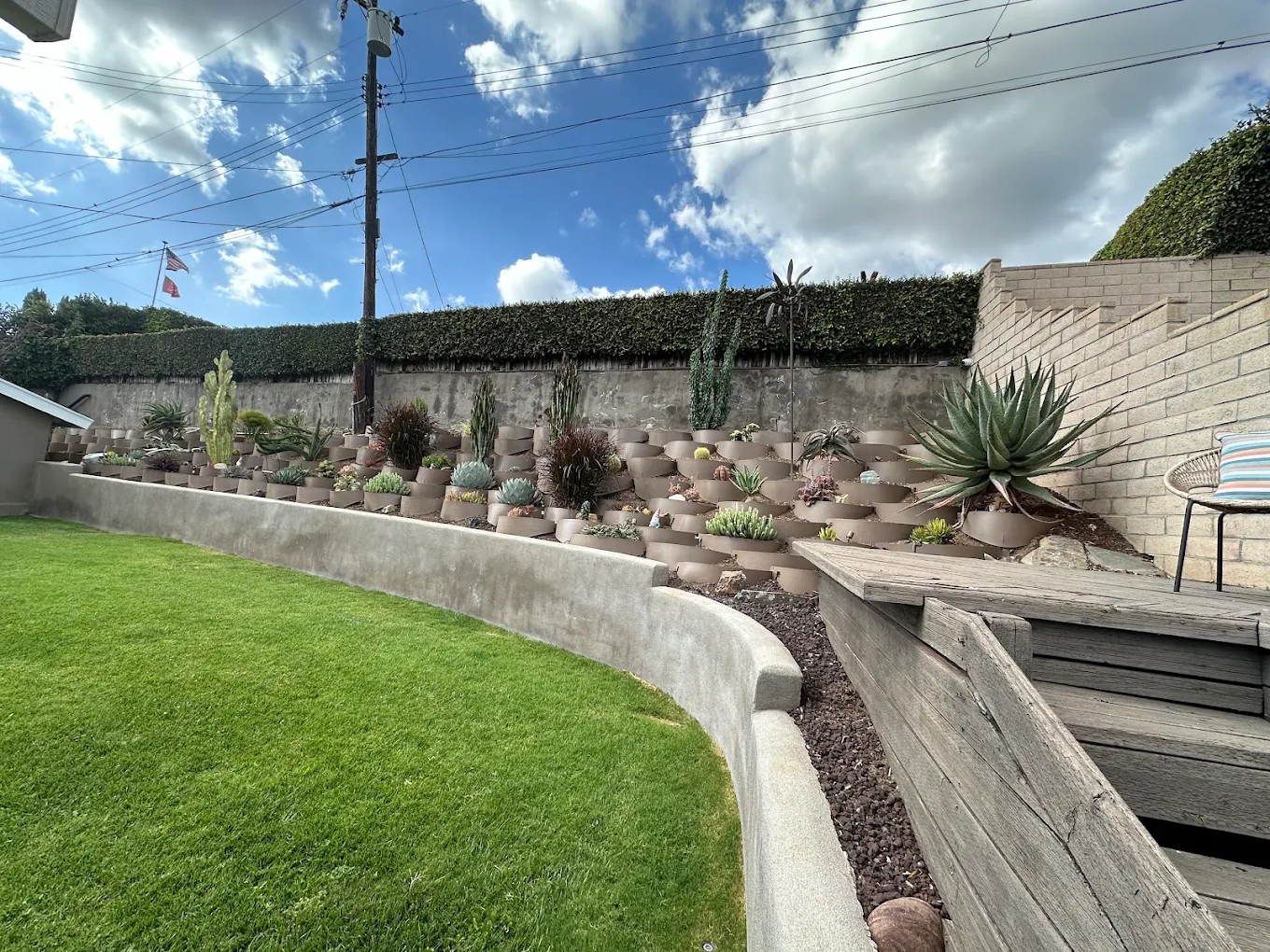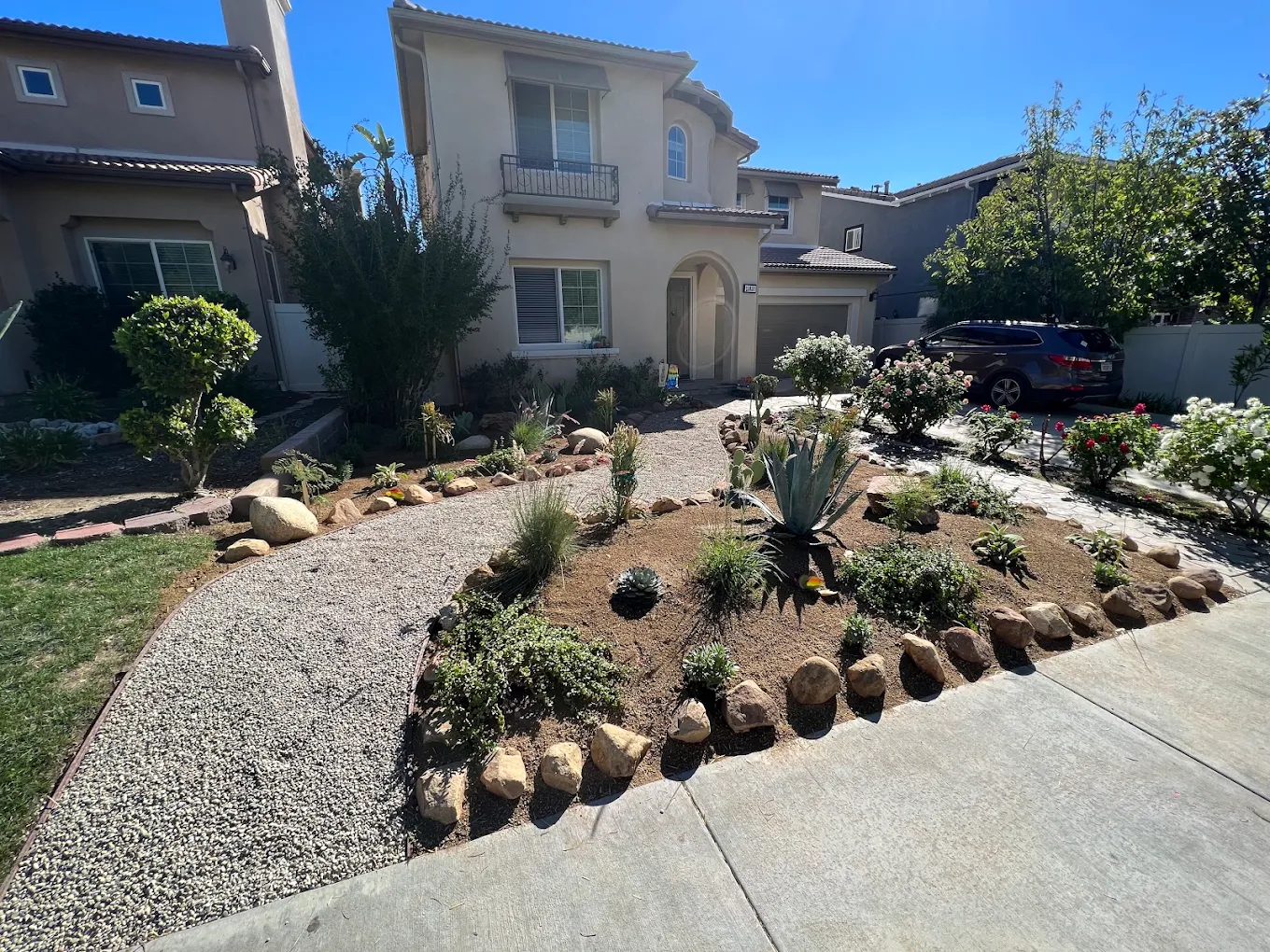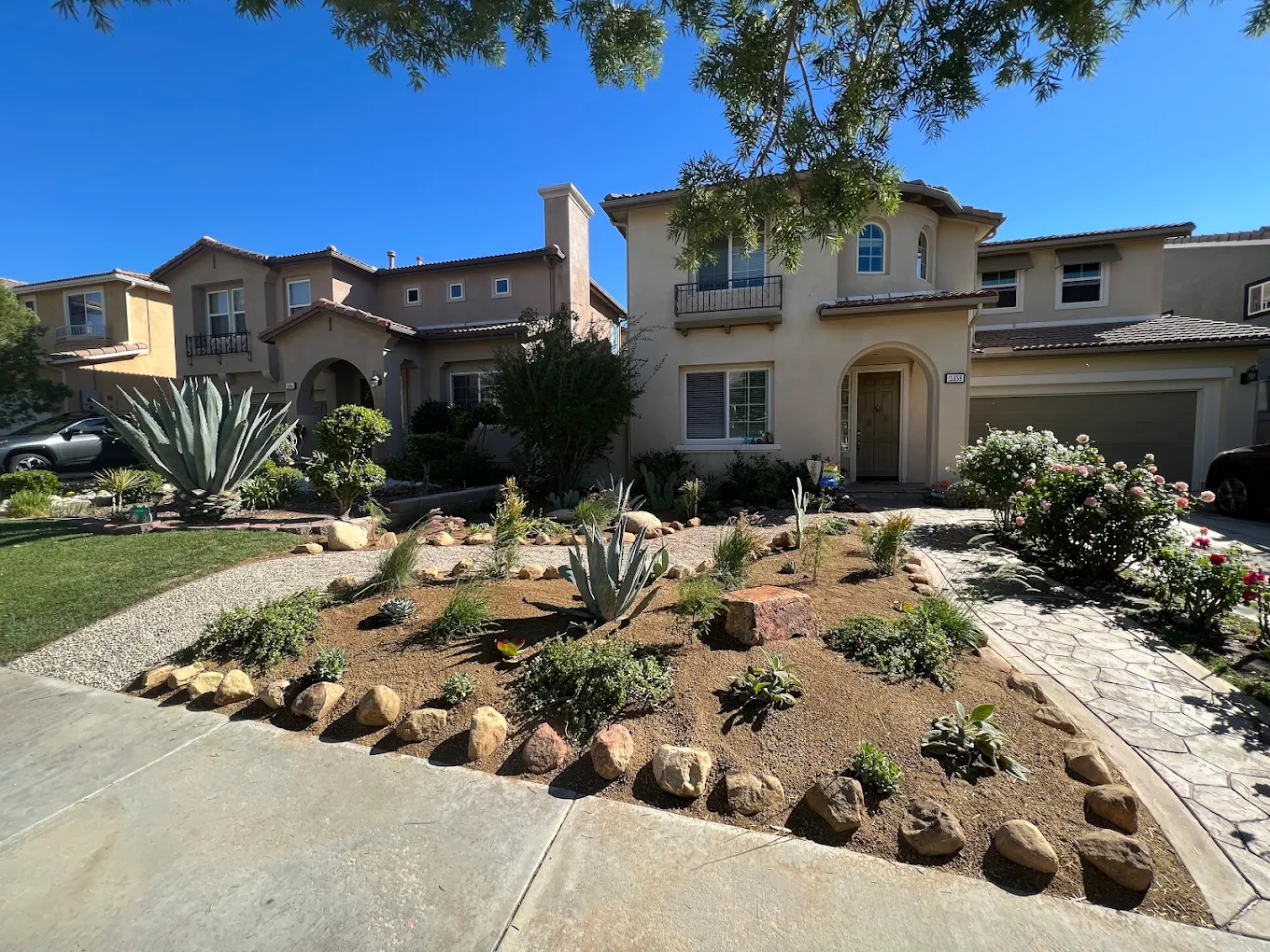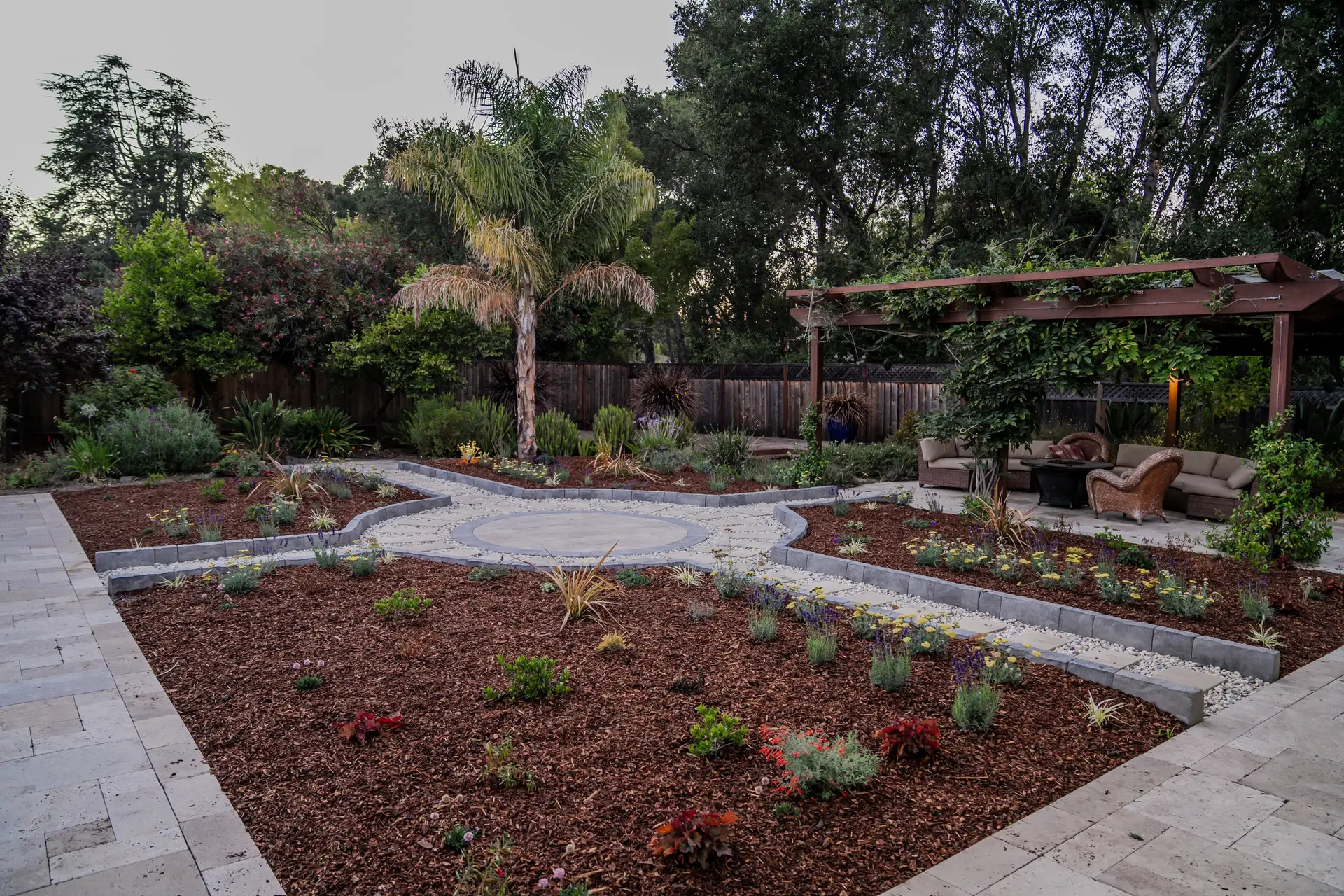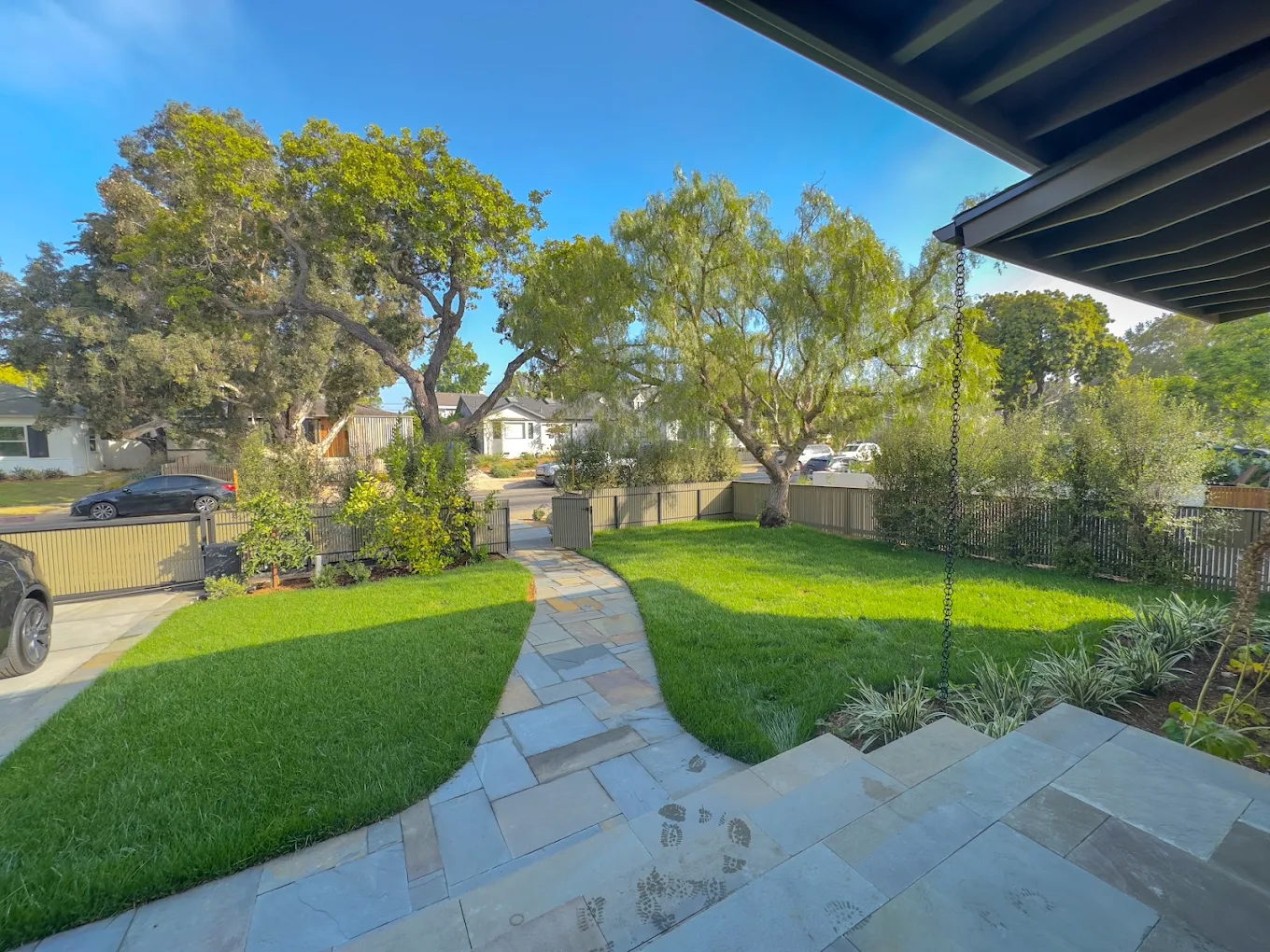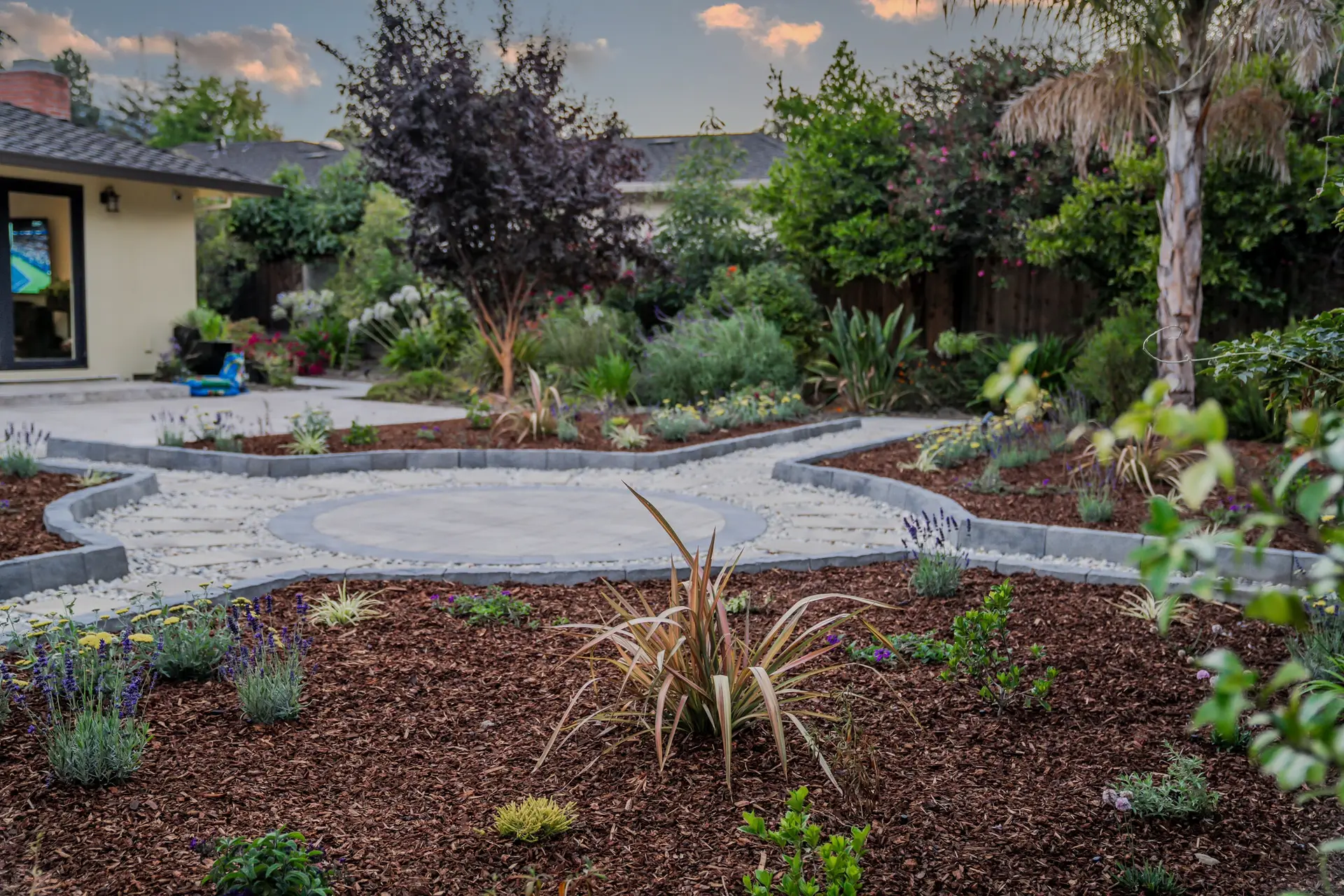
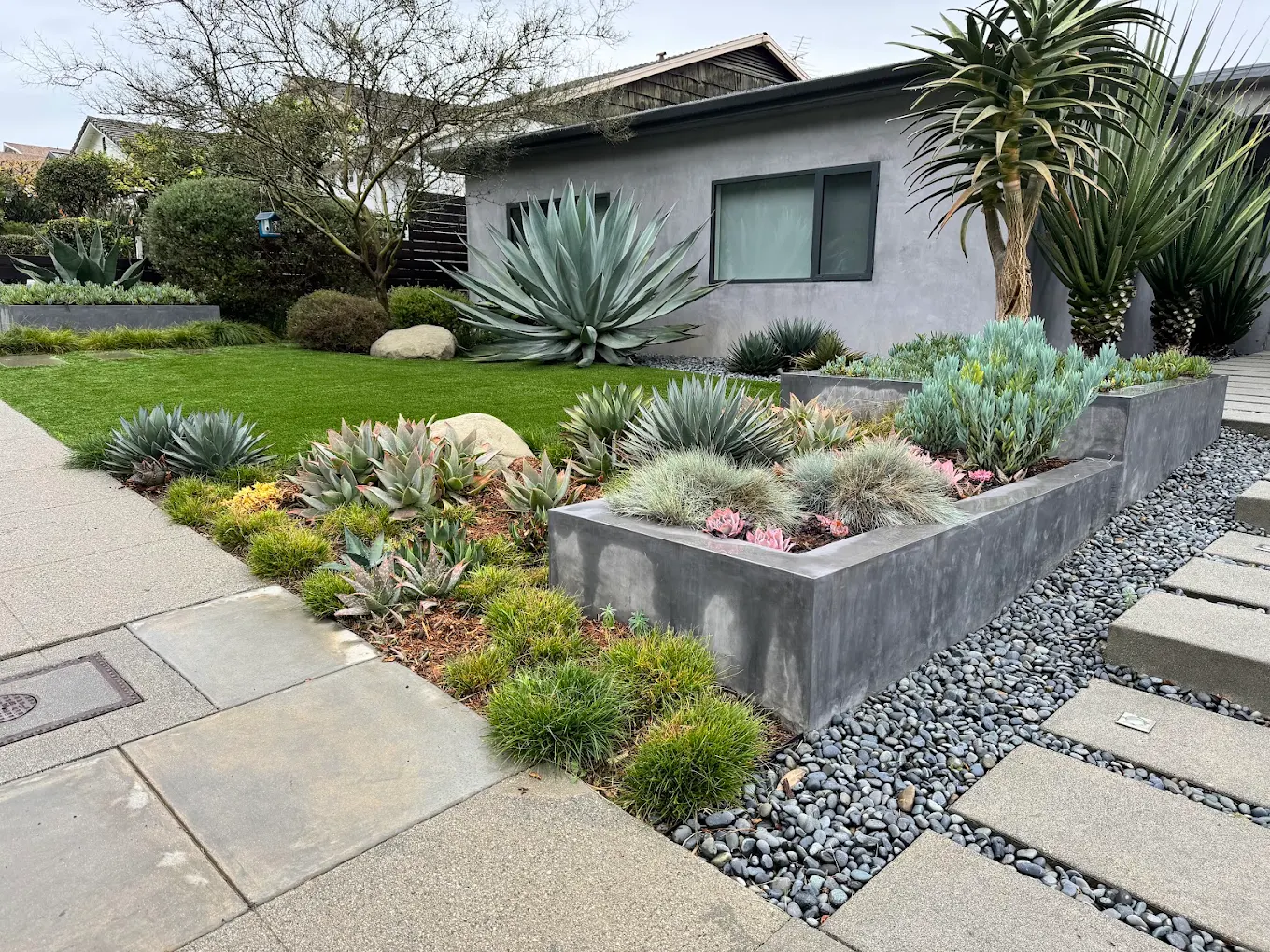
We design the plant palette, convert the irrigation to drip hydrozones and build the soil and mulch layers that make the whole thing hold up through summer.
What we build
- California native and Mediterranean plant palettes
- Lawn conversions to low-water planting
- Drip irrigation and hydrozoned valves
- Soil preparation, mulch and weed suppression
- Xeriscape planting with structure and year-round interest
- Rock, decomposed granite and dry-creek detailing
Plants chosen for your exposure
Coastal fog, inland heat and east county sun grow completely different gardens. We select from plants that thrive in your specific microclimate rather than a countywide list.
Low water still means irrigation
Native and drought-tolerant plantings need consistent water to establish, then far less. Drip on its own zone, run on a schedule that steps down over the first two years, is what gets them there.
Water-wise, native and xeriscape — what is different
California native landscaping uses plants that evolved in our region and supports local pollinators. Water-wise and Mediterranean planting widens the palette to anything that thrives on low summer water. Xeriscape leans hardest on gravel, boulders and sculptural succulents. Most yards we build blend the first two.
Converting a lawn to low-water landscaping
Lawn and root zone removal, soil preparation, converting spray heads to drip on hydrozoned valves, planting, then mulch or decomposed granite. If you plan to apply for a water agency rebate, apply before removing the grass — that is the most common disqualifier.
Designing so it still looks like a garden
Evergreen structure first, then flowering layers and grasses for movement, then boulders, dry-creek detailing and mulch. Density is what keeps a low-water yard from reading as a parking lot with plants in it.
Read first
Before you start your drought-tolerant landscape project
Planning and cost guides from our own build experience.
Plants, Trees & Drought
The Best Drought-Tolerant Plants for San Diego Yards
The low-water palette we actually specify, sorted by the job each plant does in a design.
3 min readPlants, Trees & Drought
California Native Plants That Thrive in San Diego Gardens
Natives that look intentional in a designed yard, organized by role — shrubs, groundcovers, grasses, pollinator and screening plants — and the summer-water mistake that kills most of them.
4 min readPlants, Trees & Drought
How to Build a Pollinator Garden in San Diego
Bloom succession, host plants and the small design moves that make a habitat garden look designed rather than wild.
3 min readServing San Diego County
We take on drought-tolerant landscape projects in La Jolla, Del Mar, Carmel Valley, Encinitas, Carlsbad, Poway, Scripps Ranch, Point Loma, Coronado, North Park, Chula Vista, El Cajon, La Mesa, Santee, Escondido, San Marcos, Rancho Santa Fe, Mission Hills, Clairemont, University City and surrounding communities. See all service areas.
Licensed C-27 Landscape Contractor — CSLB License #1159370
Common questions
- Will a drought-tolerant yard still look green?
- Yes, if it is designed that way. Layered Mediterranean and California native planting gives you evergreen structure, seasonal bloom and texture — the gravel-and-agave look is a design choice, not a requirement of low water.
- How much less water does a drought-tolerant landscape use?
- It varies with what is being replaced and how the irrigation is zoned. The savings come from two things together: the plant palette, and moving from spray to drip on hydrozoned valves scheduled correctly.
- Do you convert existing lawns to low-water planting?
- Yes. Lawn removal, soil preparation, drip conversion, planting and mulch are all part of the same scope, so the conversion is handled as one project.
- What is the difference between native and drought-tolerant landscaping?
- California native landscaping uses species from our own region and supports local wildlife. Drought-tolerant is broader — it includes Mediterranean, Australian and South African plants that also thrive on low summer water here.
- Is xeriscape the same as drought-tolerant?
- Xeriscape usually describes the gravel-and-succulent end of the spectrum. It is one style within low-water landscaping, not the only one.
- Can a low-water yard still have a lawn area?
- Yes, usually as a small, deliberate patch for kids or dogs rather than wall-to-wall grass, with the rest of the yard on drip.
- Are you licensed for drought-tolerant landscape work in San Diego?
- Yes. Staples Landscaping holds California contractor license #1159370, carries liability and workers' compensation coverage, and pulls permits on any work that requires them. You can verify the license directly with the CSLB.
- Do you serve my part of San Diego County?
- We work across San Diego County — coastal, central, inland, East County and South Bay. Each area has its own soil, climate and permitting reality, which is why we publish neighborhood-level pages rather than one generic service area list.