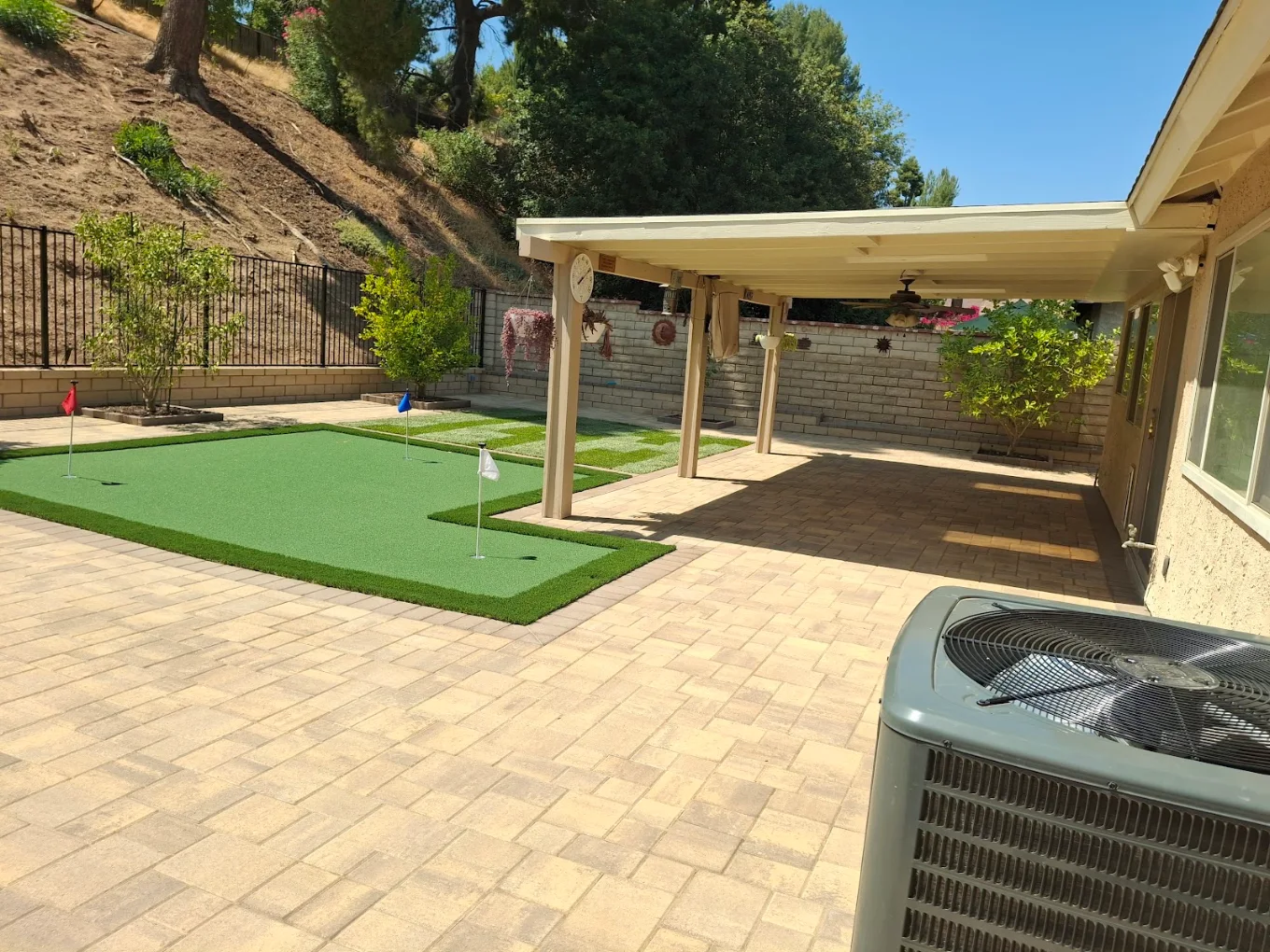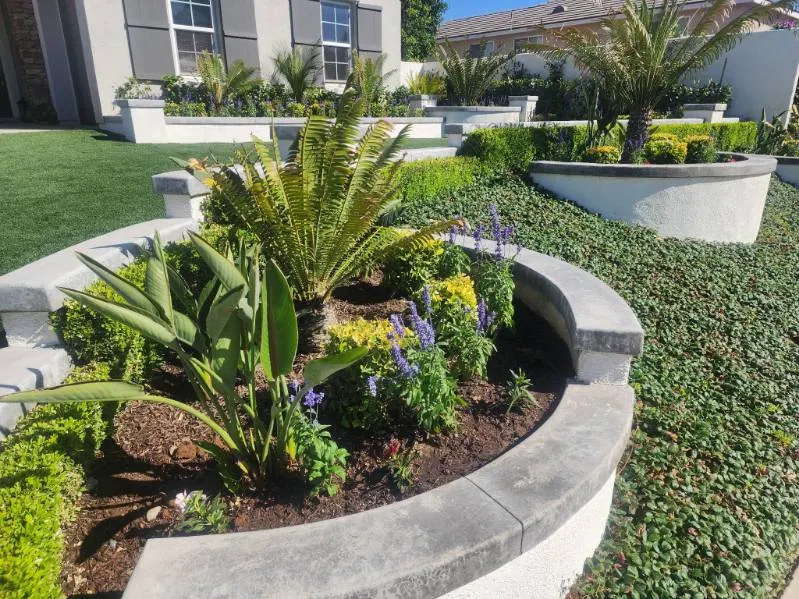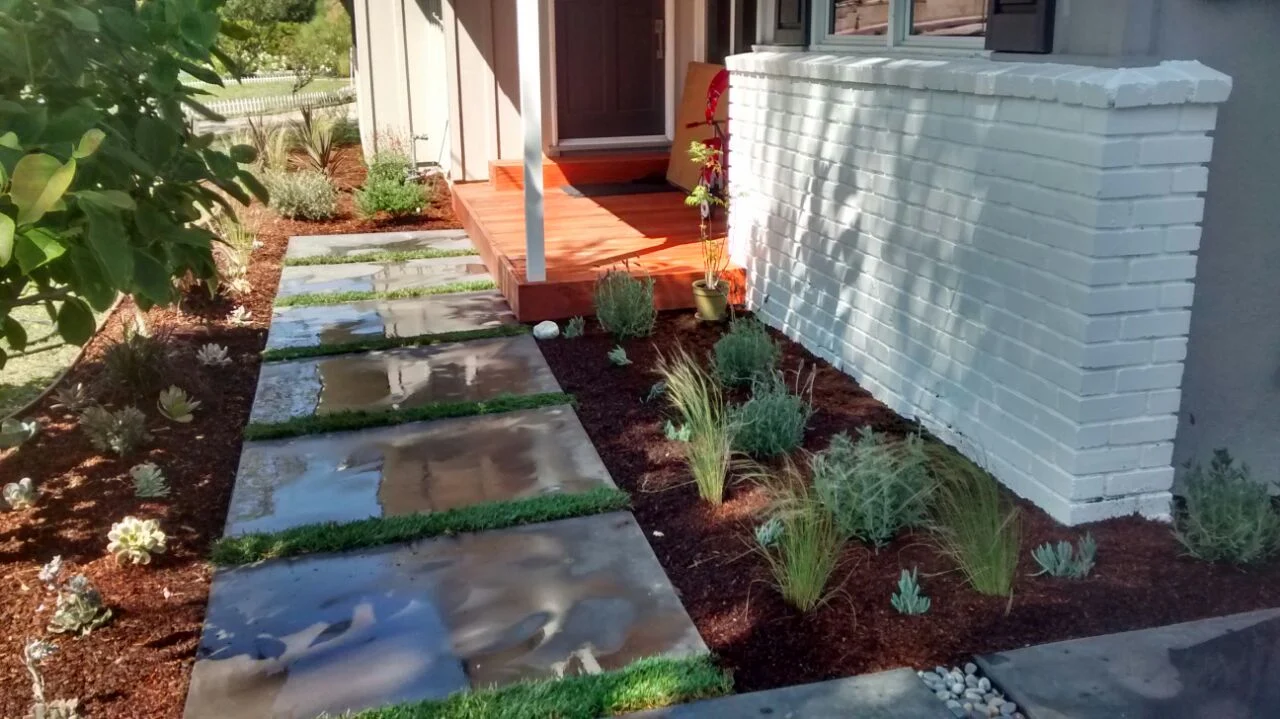
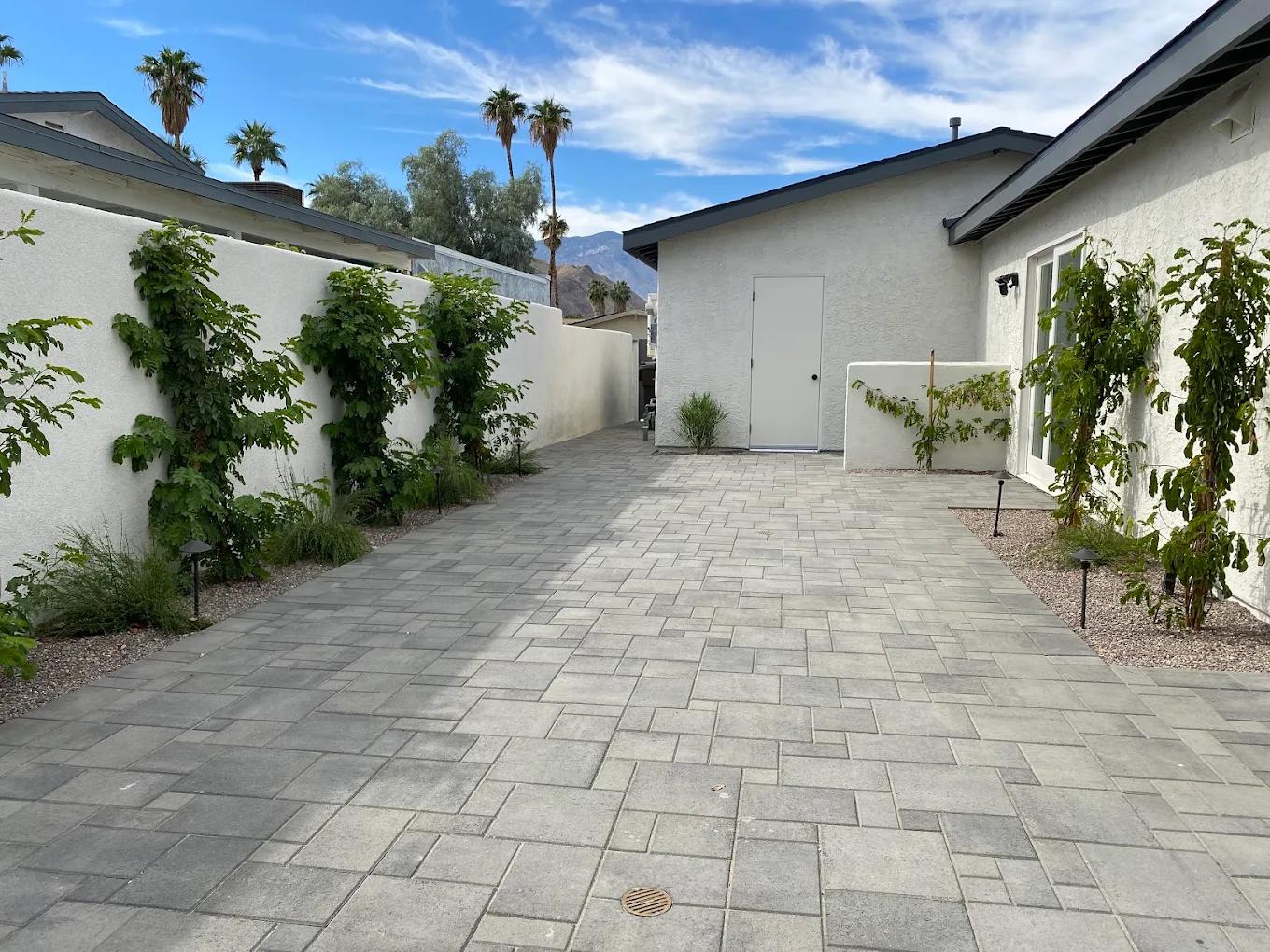
San Diego gets most of its rain in a handful of intense events, which is exactly when bad grading shows up as a lake against your foundation. Drainage is unglamorous and it is the single most important part of any hardscape build.
Diagnose before you dig
Walk the property during rain, or run a hose for twenty minutes and watch. Note where water arrives from, where it pools, and where it can legally exit. Roof downspouts, neighbor runoff and slab-adjacent planters cause more problems than rainfall on the yard itself.
The toolkit, in order of preference
Cheapest and most durable solutions come first.
- Regrading: 2% fall away from structures solves a surprising share of problems with no hardware
- Downspout extensions piped to daylight or a drain system
- Area drains and catch basins in low points, tied to a solid 4-inch line
- French drain: perforated pipe in clean gravel with filter fabric, for saturated soil zones
- Channel drains at garage doors, patio edges and gates
- Dry wells or infiltration chambers where there is no legal outlet
- Permeable hardscape to reduce runoff at the source
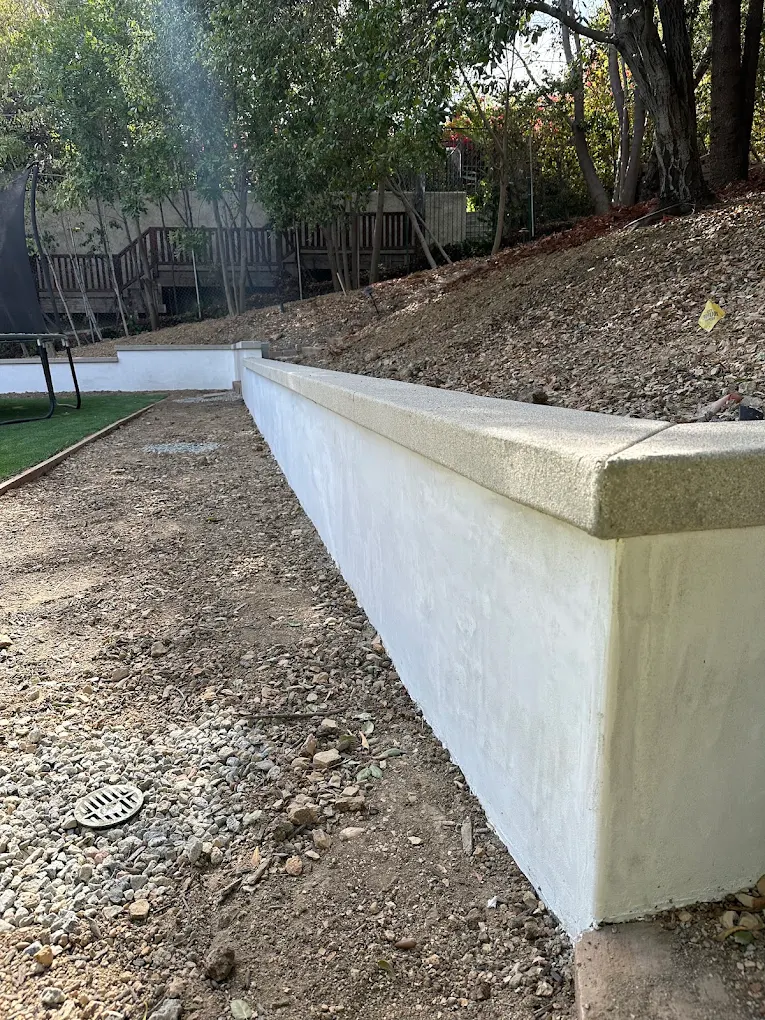
Where drainage projects go wrong
Fabric-wrapped 'EZ' corrugated pipe silts up and collapses; use solid SDR-35 or Schedule 40 for conveyance and reserve perforated pipe for the gravel trench. Every line needs continuous fall and cleanouts. And never discharge onto a neighbor's property — that is both a code and a lawsuit issue.
Matching the symptom to the fix
Most yards need two or three of these working together, not one heroic solution.
| Symptom | Likely cause | Typical fix |
|---|---|---|
| Water against the foundation | Negative grade or downspouts dumping at the wall | Regrade plus piped downspouts |
| Puddle that lingers for days | Low point with no outlet, compacted clay | Catch basin on solid pipe to daylight |
| Water sheeting across the patio | Surface pitched the wrong way | Channel drain, or re-set the surface |
| Soggy planting bed | Overwatering or a perched water table | Irrigation audit first, then subsurface drainage |
| Runoff from uphill neighbour | Off-site water crossing the property | Interceptor swale or drain along the high side |
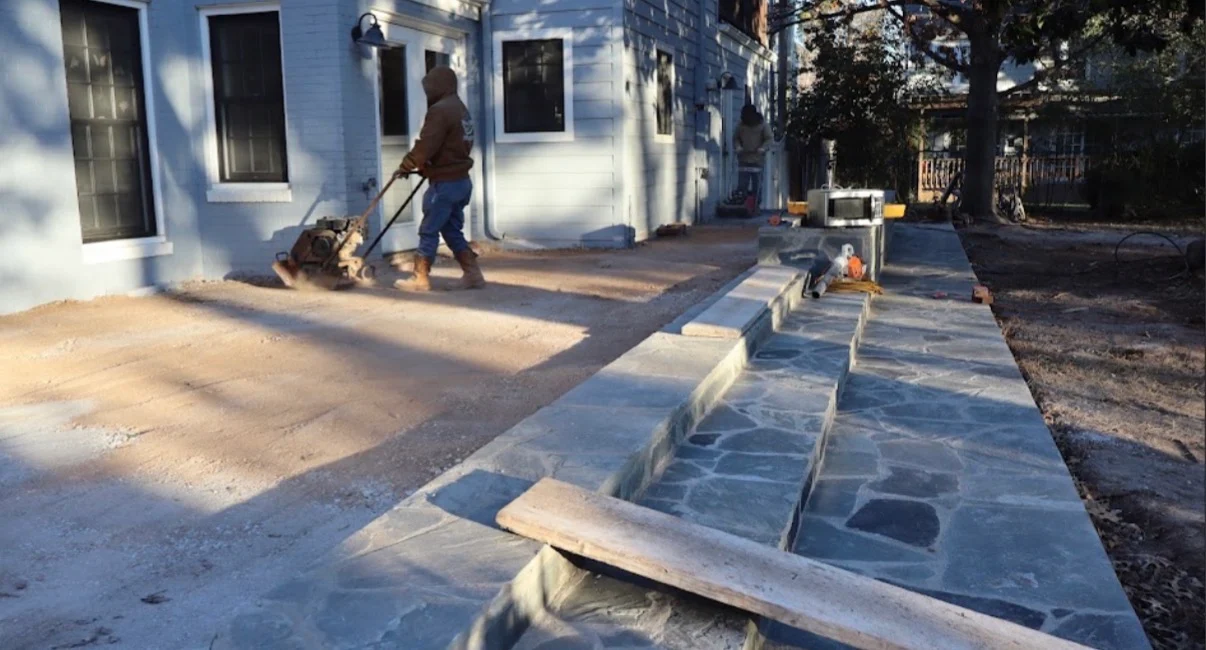
Drainage during hardscape construction
The cheapest drainage work happens while the yard is already open. Once a patio is set, adding a line under it means taking part of it back out.
On every hardscape build we set the finished grades, drain locations and outlet before a single paver is laid, because the surface is what forces water somewhere.
Frequently asked
- What does yard drainage cost?
- Typical residential systems run $2,500–$12,000 depending on linear footage, hardscape demo and outlet distance.
- Can drainage go under a patio?
- Yes, and it should be installed before the patio. Retrofitting means cutting your new hardscape.
- Do I need a permit?
- Usually not for private yard drainage, but discharge location, slopes and canyon-edge properties can trigger review.
- How do I stop water pooling in my backyard?
- Start with grade. Establishing 2% fall away from the house and piping downspouts to a real outlet solves a large share of San Diego pooling problems before any drain hardware is installed.
- Is a French drain always the answer?
- No. A French drain manages saturated soil. Surface water is usually better handled with grading, catch basins and solid pipe.