The lush-versus-low-water trade-off is mostly a myth. Water savings come from system design and soil, not from starving the plants people love.
Hydrozoning is the biggest lever
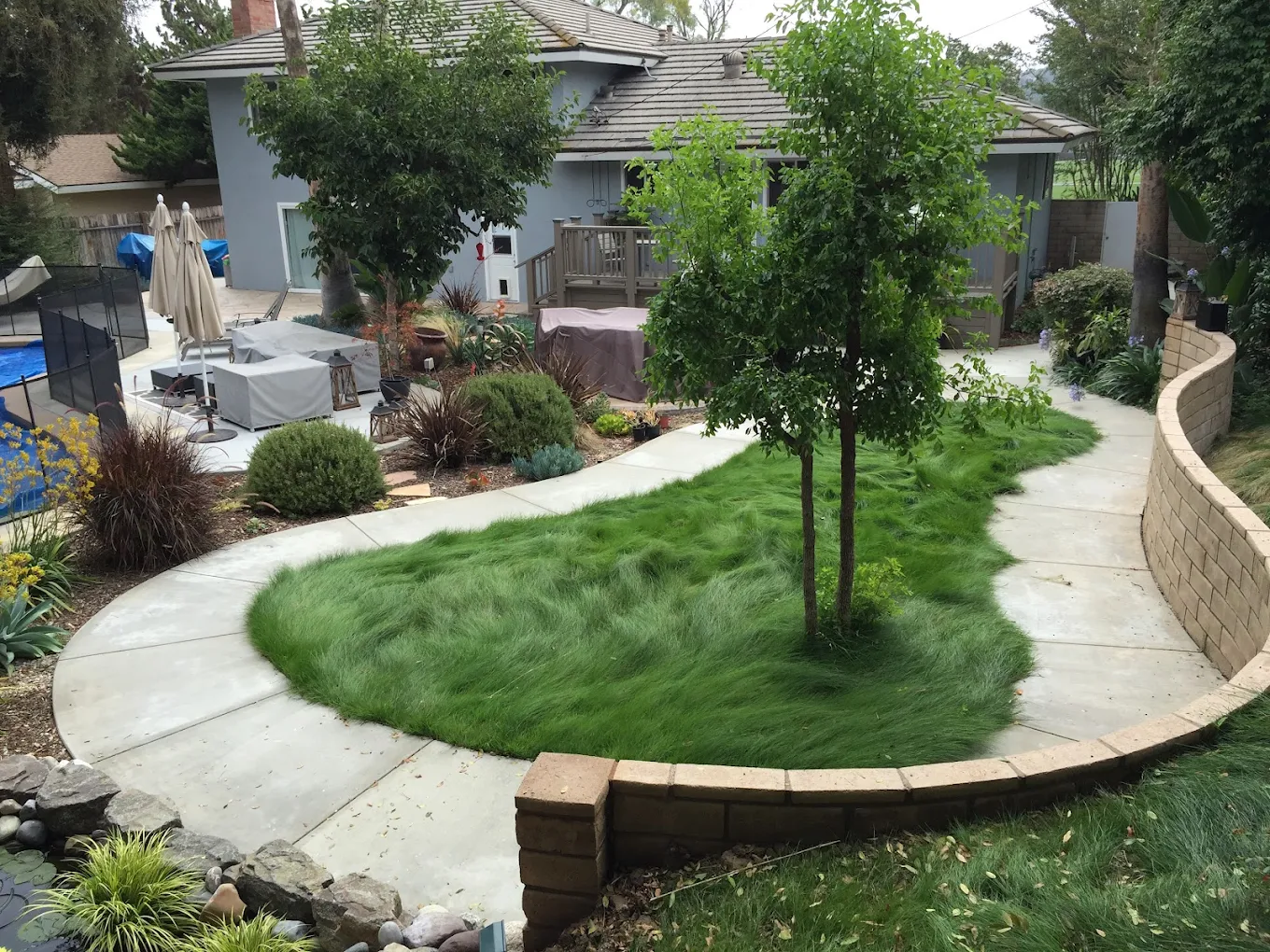
Grouping plants by water need and putting each group on its own valve routinely cuts usage 30–50% by itself. Most yards we inspect have roses, natives and turf on the same station, which means everything is watered at the thirstiest plant's schedule.
- Zone 1: entry and patio-adjacent lush planting (moderate water)
- Zone 2: mid-yard Mediterranean plants (low water)
- Zone 3: perimeter and slope natives (very low water)
Soil and mulch do the quiet work
Compost-amended soil holds far more plant-available water. Three inches of mulch reduces evaporation dramatically and cools root zones during Santa Ana events. Both are cheap compared to any irrigation hardware upgrade.
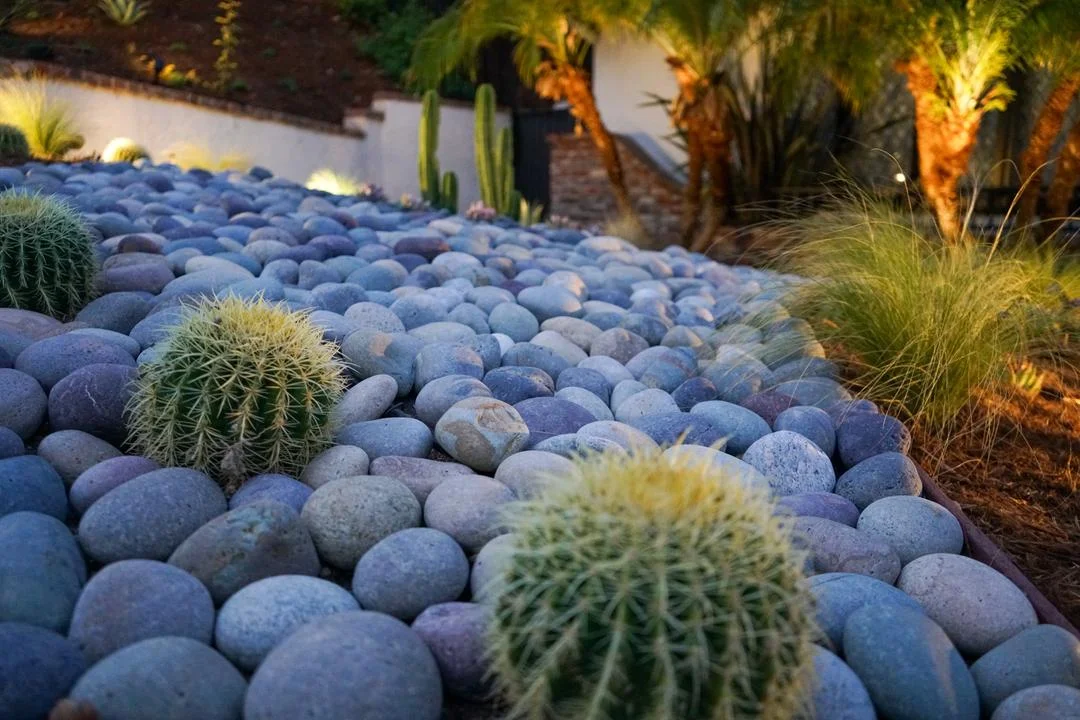
Get the hardscape ratio right
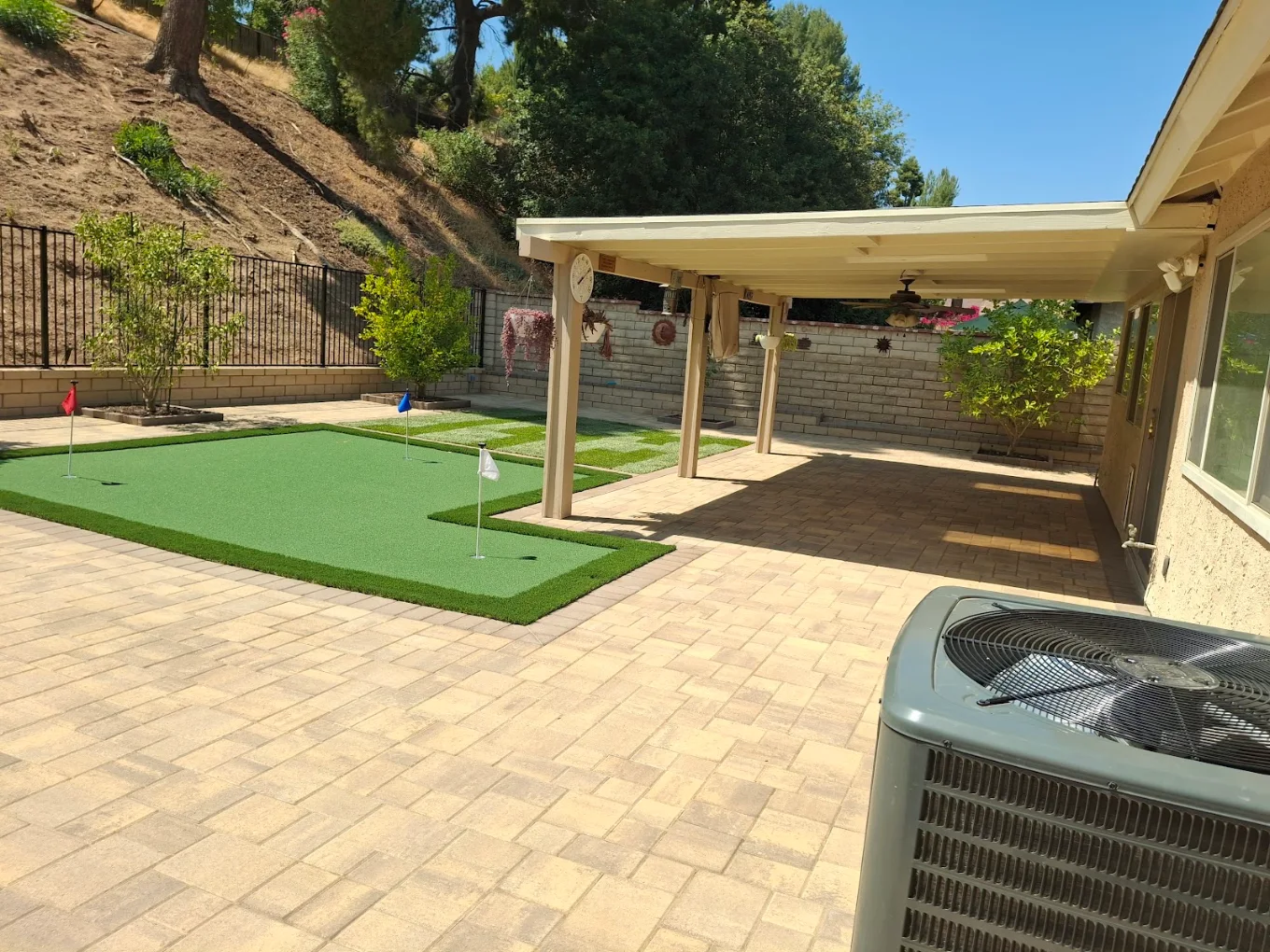
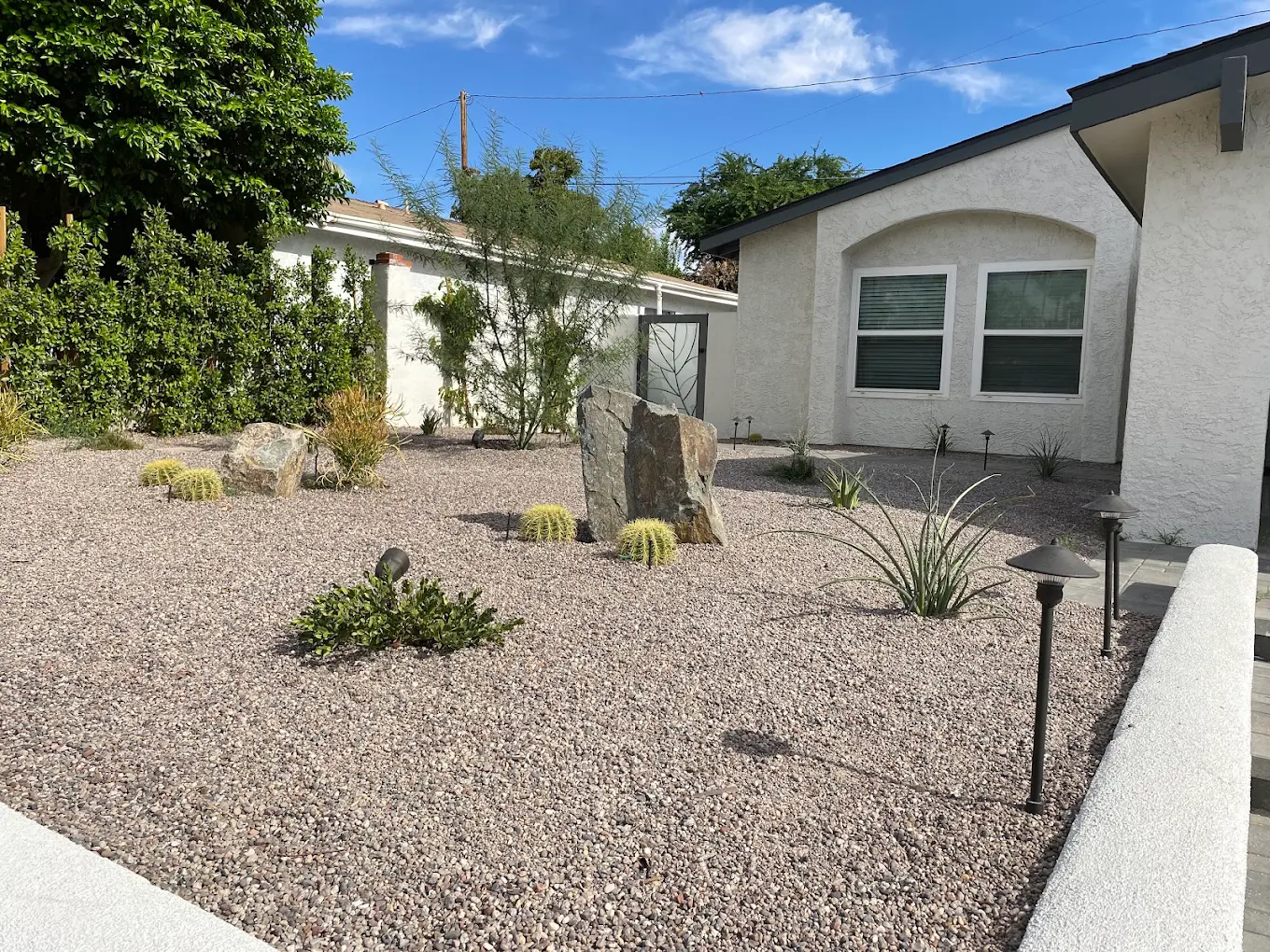
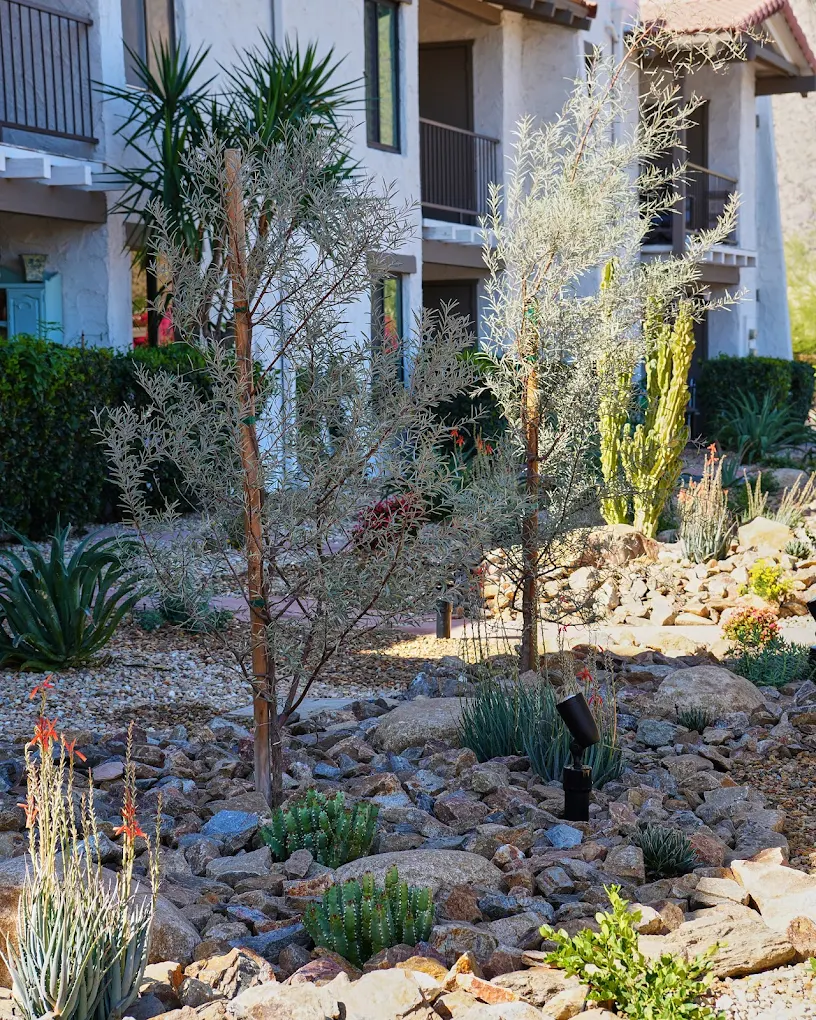
A well-designed yard at roughly 40–50% hardscape and permeable surface reads generous and uses a fraction of the water. Patios, DG courtyards, gravel gardens and paths carry the usable space while planting provides softness and shade in the places you actually see.
Frequently asked
- How much can I really save?
- Homes converting turf-heavy yards to hydrozoned low-water landscapes commonly cut outdoor use 50–70%.
- Are rebates available?
- Turf replacement and smart controller rebates come and go by agency — check with your local water district before buying.
- Will it look bare at first?
- For a season. Plant at correct spacing anyway; overplanting is the most expensive shortcut in landscaping.