Puddles that last more than 24 hours after rain are telling you something specific. The fix is cheap if you diagnose correctly and expensive if you guess.
The five causes, in order of frequency
Test in this order — the first two account for most cases.
- Negative or flat grade: water has nowhere to go. Fix with regrading.
- Compaction: construction traffic sealed the soil. Fix with decompaction and amendment.
- Clay lens or caliche layer: water perches on it. Fix with deeper drainage or raised planting.
- Irrigation leak: puddle persists in dry weather. Fix the valve or line.
- Hardscape damming: a patio, wall or curb built without a drainage path. Fix with channel drains or through-wall weeps.
The percolation test
Dig a hole one foot deep and one foot wide, fill with water, let it drain, then fill again and time it. Draining under 2 inches per hour means poor percolation — plan on conveyance drainage rather than infiltration, and mound your planting beds.
What it costs to fix
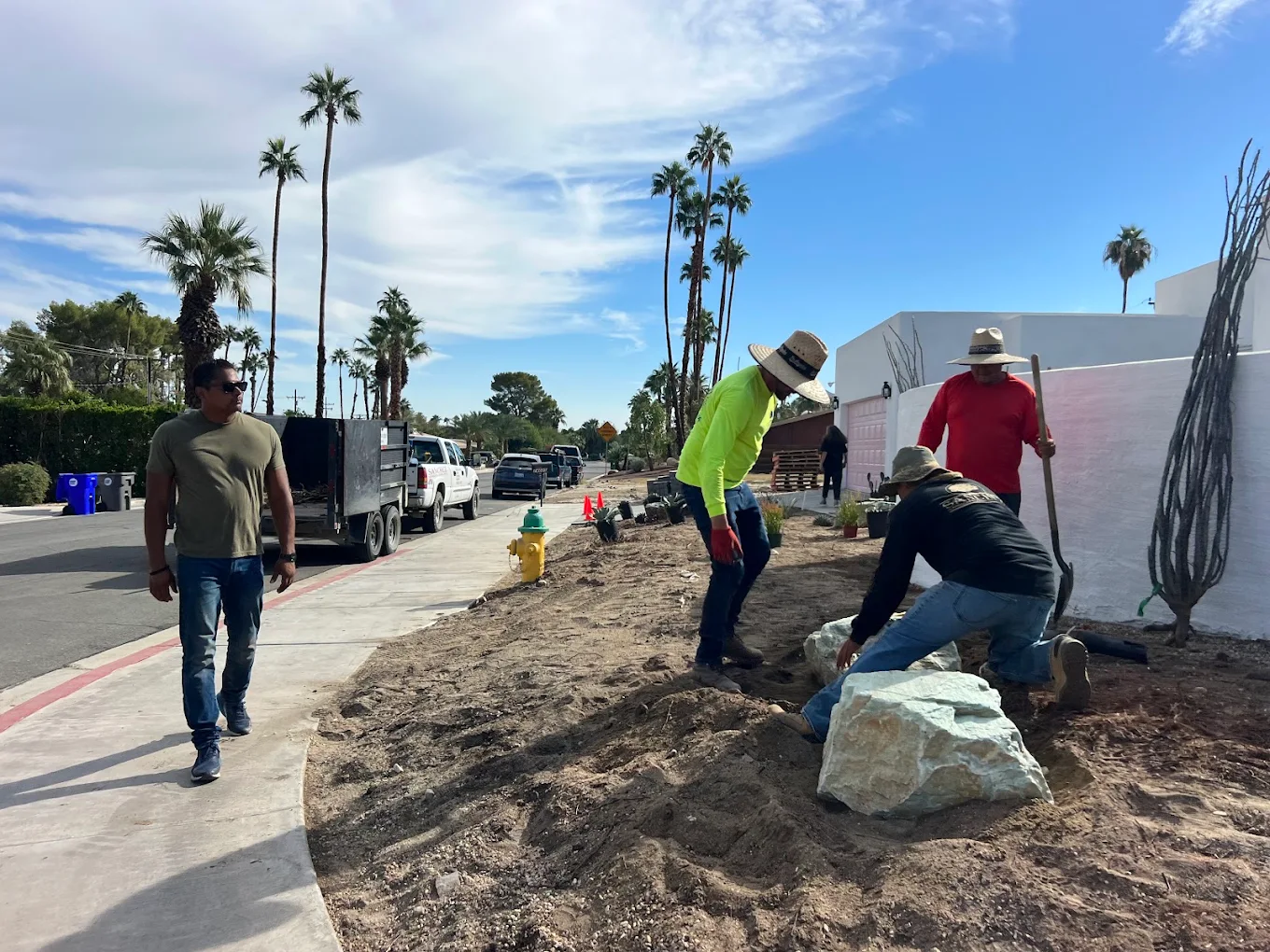
Regrading a problem area: $1,200–$4,000. Adding catch basins and a piped outlet: $2,500–$8,000. Full yard drainage with hardscape restoration: $8,000–$20,000. Fixing it during a landscape build costs a fraction of retrofitting later.
Frequently asked
- Is standing water bad for the foundation?
- Yes. Repeated saturation next to a slab causes soil movement, and expansive clay makes it worse. Treat it as urgent.
- Will a dry well fix it?
- Only where the surrounding soil actually percolates. In clay, a dry well becomes a bathtub.
- Mosquitoes?
- Standing water beyond 3–4 days can breed them. Another reason not to wait.