Style is not decoration applied at the end. It is the accumulation of a few decisions — what the paving is, how edges are handled, and which twenty plants keep repeating.
These are the directions that suit San Diego architecture and, just as importantly, a climate with a long dry summer.
Modern
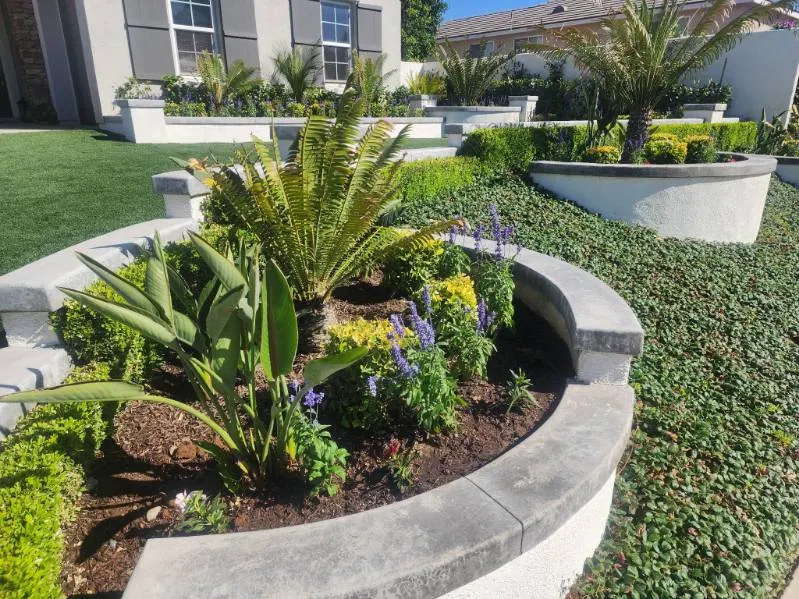
Clean geometry, large-format surfaces and restraint in the plant list. Modern yards live or die on execution: joint lines, edge details and level changes are all visible, so the tolerances have to be tight.
- Materials: large-format concrete or porcelain, board-formed or smooth concrete walls, steel edging
- Planting: repeated masses, sculptural accents, very few species
- Details: floating steps, linear channel drains, concealed lighting, deliberate negative space
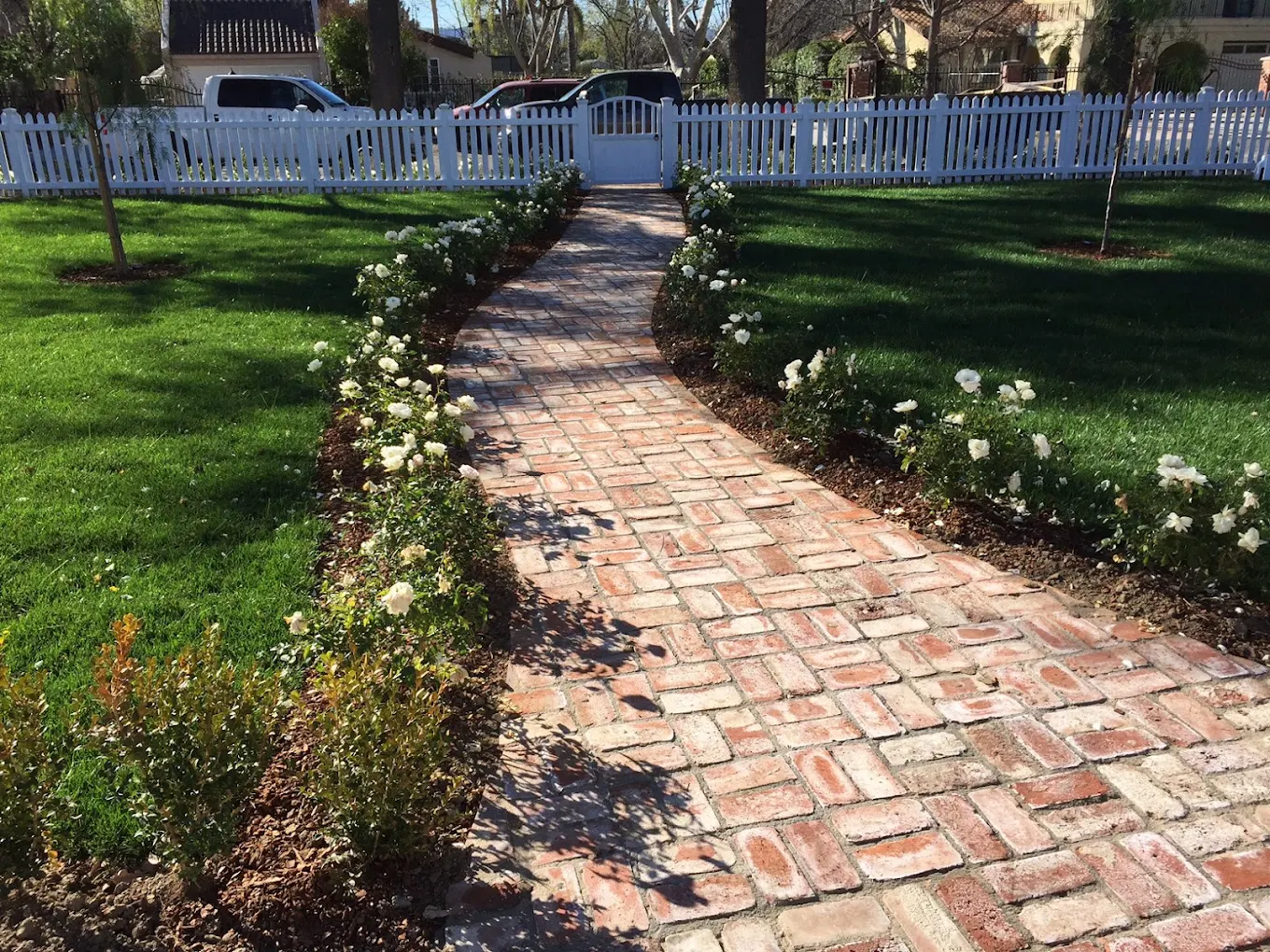
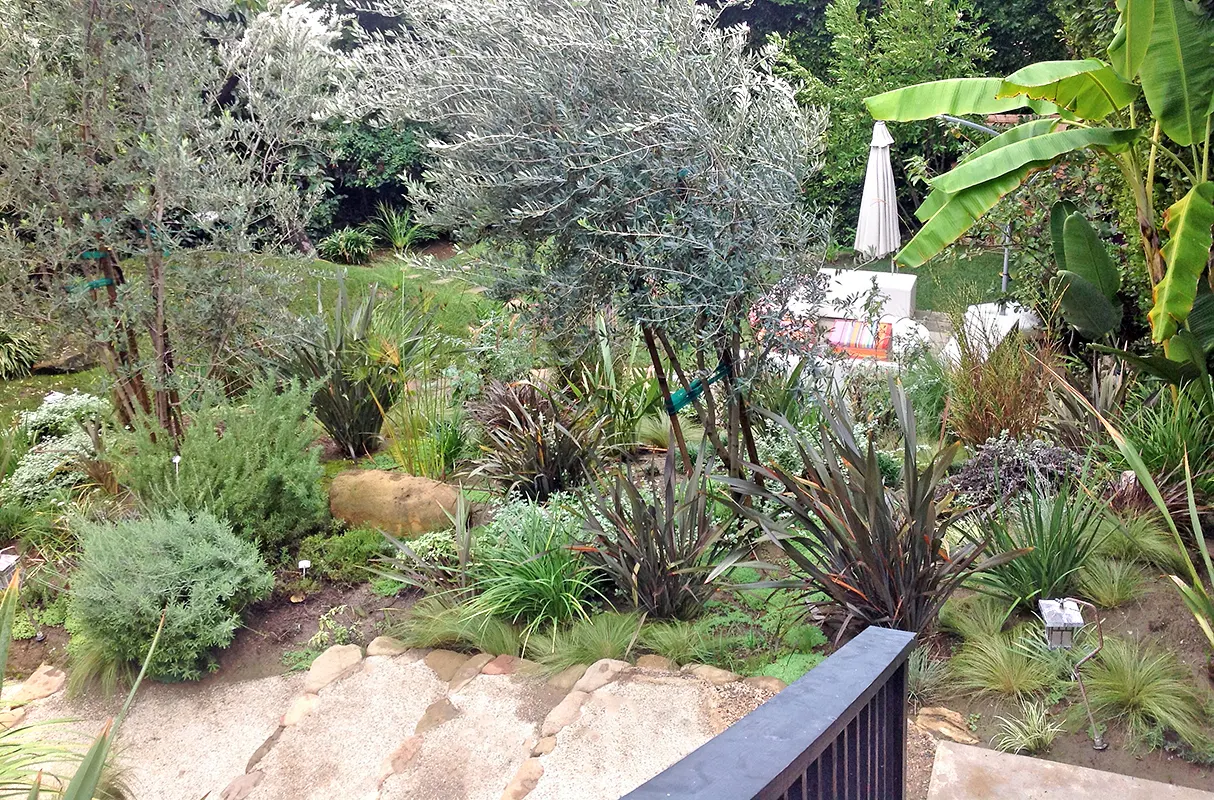
Mediterranean
The most natural fit for much of San Diego's Spanish and Mission-influenced housing stock, and for the climate itself. Warmer materials, more texture, more layering than modern.
- Materials: stucco walls, terracotta, flagstone, decomposed granite, gravel courtyards
- Planting: olive, rosemary, lavender, citrus, salvias, cypress accents
- Details: courtyard geometry, seat walls, a water feature as a focal point, tile inlay
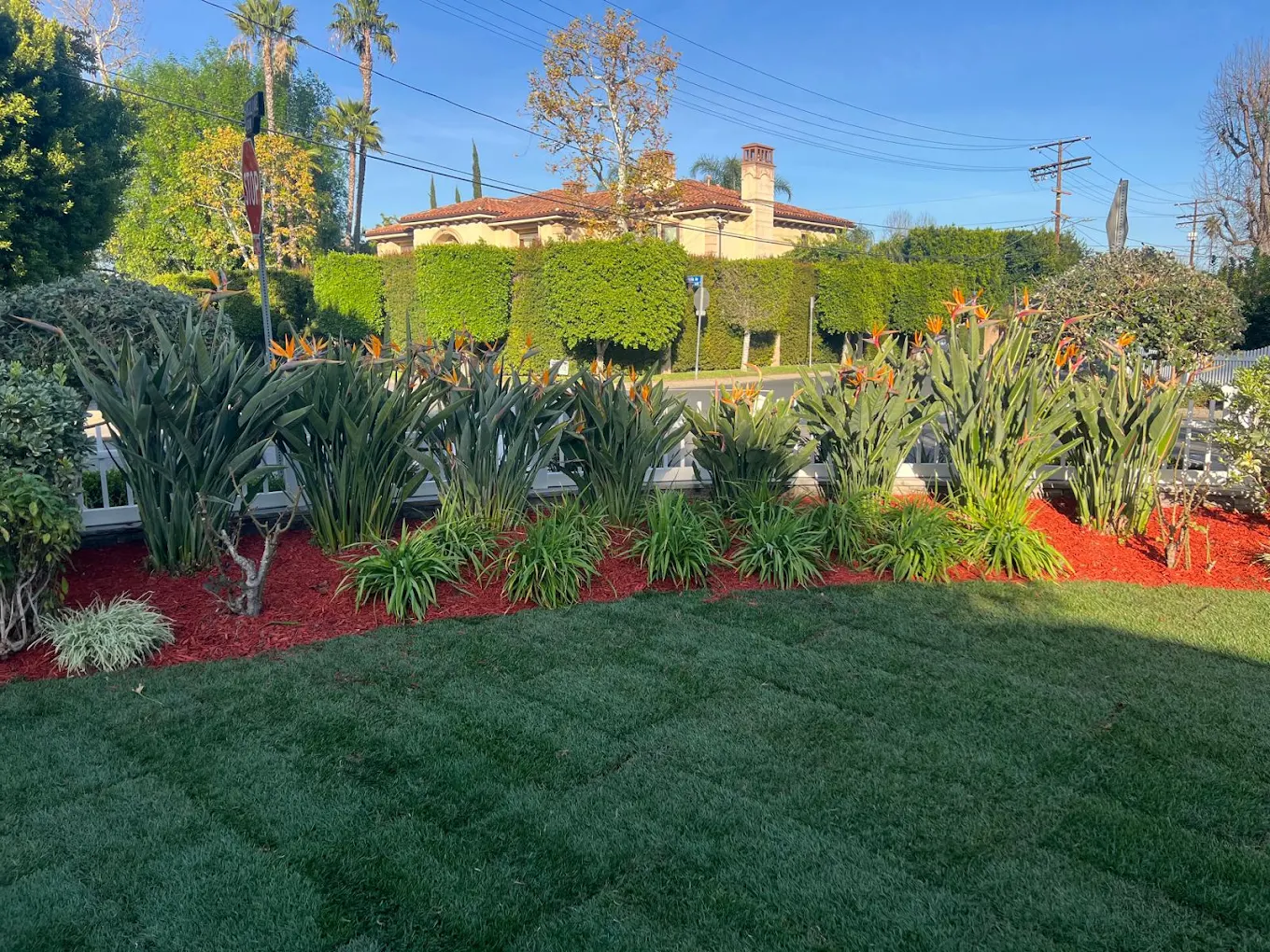
Coastal casual
Relaxed and salt-tolerant, suited to Point Loma, Ocean Beach, Pacific Beach and the North County beach towns. Less formal than Mediterranean, softer than modern.
- Materials: light-toned paving, timber decking, gravel, painted or slatted screens
- Planting: succulents, grasses, Westringia, coast-tolerant natives, informal masses
- Details: outdoor shower, weathered timber, brass fixtures that patina rather than corrode
California native
The lowest-water direction and the one most often executed badly. Done well, it is as refined as any other style; the discipline is repetition and clean edges rather than plant collecting.
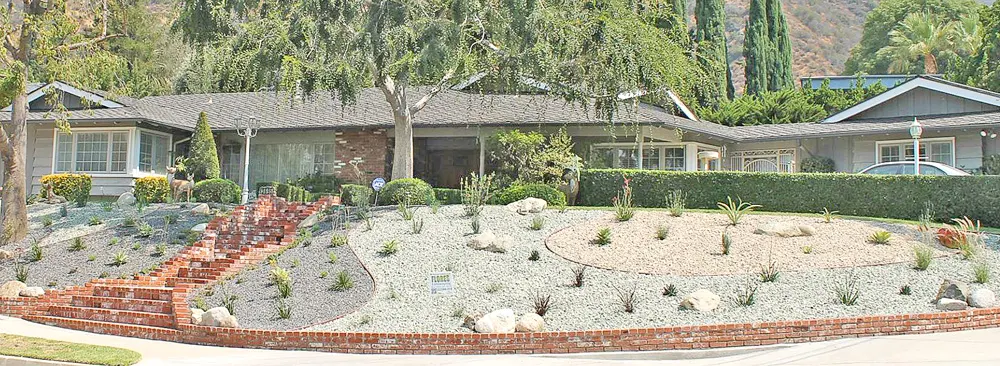
- Materials: decomposed granite, boulders sized to the site, steel or masonry edges
- Planting: ceanothus, manzanita, toyon, buckwheat, deergrass, California fuchsia
- Details: mass planting rather than specimens, separate irrigation valve, seasonal cut-back rather than shearing
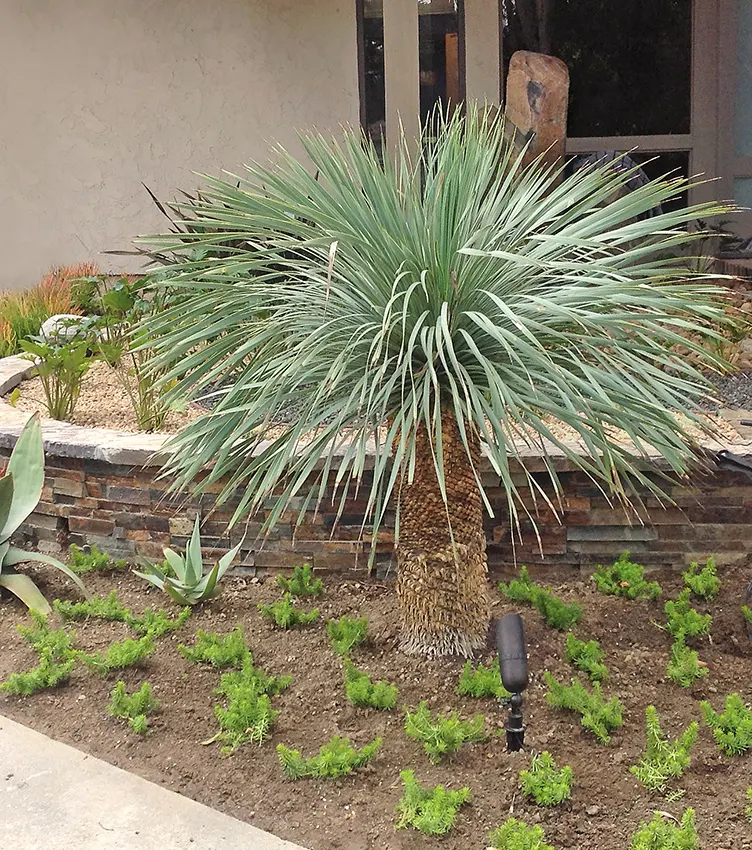
Desert-modern
Sculptural, high-contrast and extremely low water. It reads best on inland lots with strong sun, and it depends on gravel and boulder placement being deliberate rather than scattered.
- Materials: crushed rock in a limited palette, board-formed concrete, corten steel
- Planting: agave, yucca, dasylirion, aloe, ocotillo-scale accents used sparingly
- Details: strong shadows, uplighting on sculptural plants, generous space between specimens
Picking a direction for your house
Start with the architecture, then the exposure, then the way you use the yard. A style that fights the house rarely settles, and a style that ignores the sun rarely gets used.
| House | Usually suits | Why |
|---|---|---|
| Spanish, Mission, Mediterranean revival | Mediterranean | Stucco, tile and courtyard geometry already exist. |
| Mid-century | Modern or desert-modern | Clean planes and sculptural planting match the architecture. |
| Coastal cottage or bungalow | Coastal casual | Informal materials and salt-tolerant planting. |
| Contemporary new build | Modern | Large-format surfaces and restrained palettes. |
| Ranch on a large or sloped lot | Native or Mediterranean | Handles grade and dry summers without irrigation-heavy planting. |
The details that make any style convincing
Across every direction above, the same four things separate a designed yard from a collection of features: consistent material palette, deliberate edges, repetition in the planting, and lighting that reveals the good parts at night.
Styles fail when they are half-committed — two paving materials that nearly match, three planting ideas that do not resolve, and edges left to chance.
Frequently asked
- What landscape style suits San Diego best?
- Anything that tolerates a long dry summer: modern, Mediterranean, coastal casual, California native and desert-modern all work. The right one usually follows the architecture of the house.
- Can I mix landscape styles?
- Yes, if the material palette stays consistent. Mediterranean planting with modern hardscape works well; two competing paving materials rarely does.
- Which style is the lowest maintenance?
- Native and desert-modern use the least water, but all styles need seasonal pruning and cleanup to keep looking designed. Low water is not the same as no maintenance.
- Does a native garden have to look wild?
- No. Repetition, mass planting and clean edges make a native palette read as refined as any other. Scruffiness is a design problem, not a plant problem.
- Which style adds the most value?
- The one that matches the house and the way the yard is used. A well-executed yard in a coherent style reads better to buyers than an expensive one with mismatched parts.
- How do I choose materials for a style?
- Pick one primary paving material, one secondary, and one edge treatment, then repeat them everywhere. Most style problems are actually palette problems.