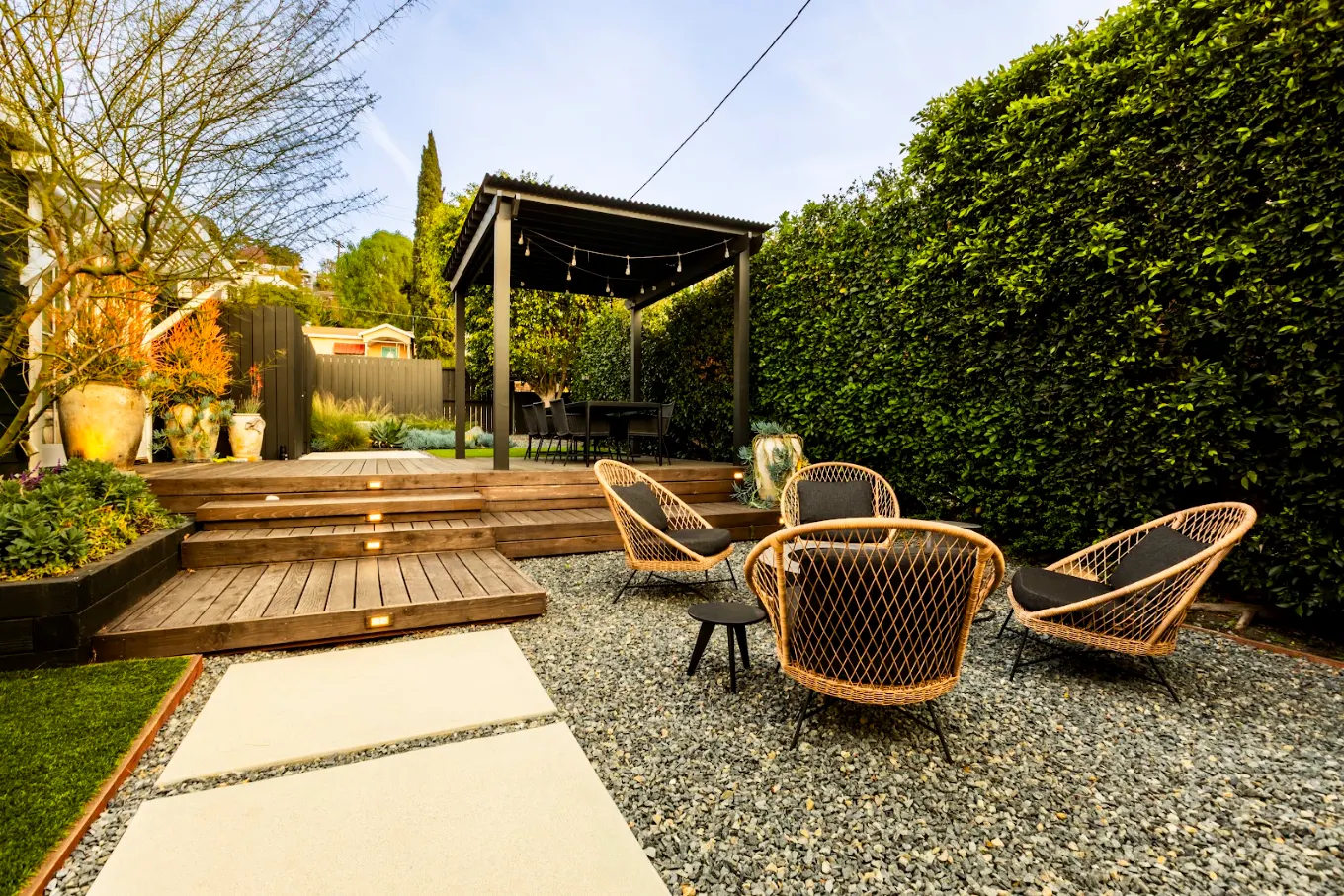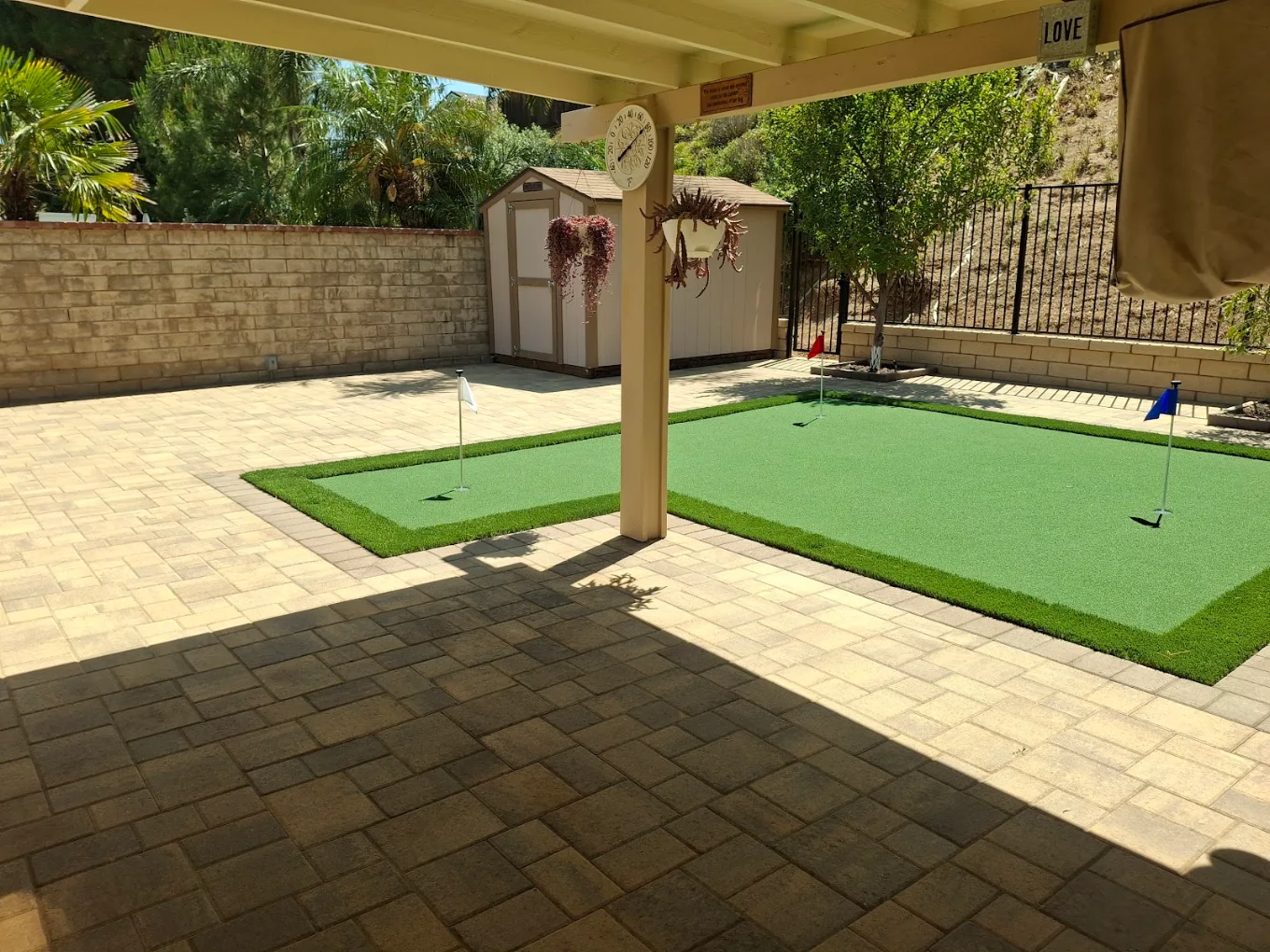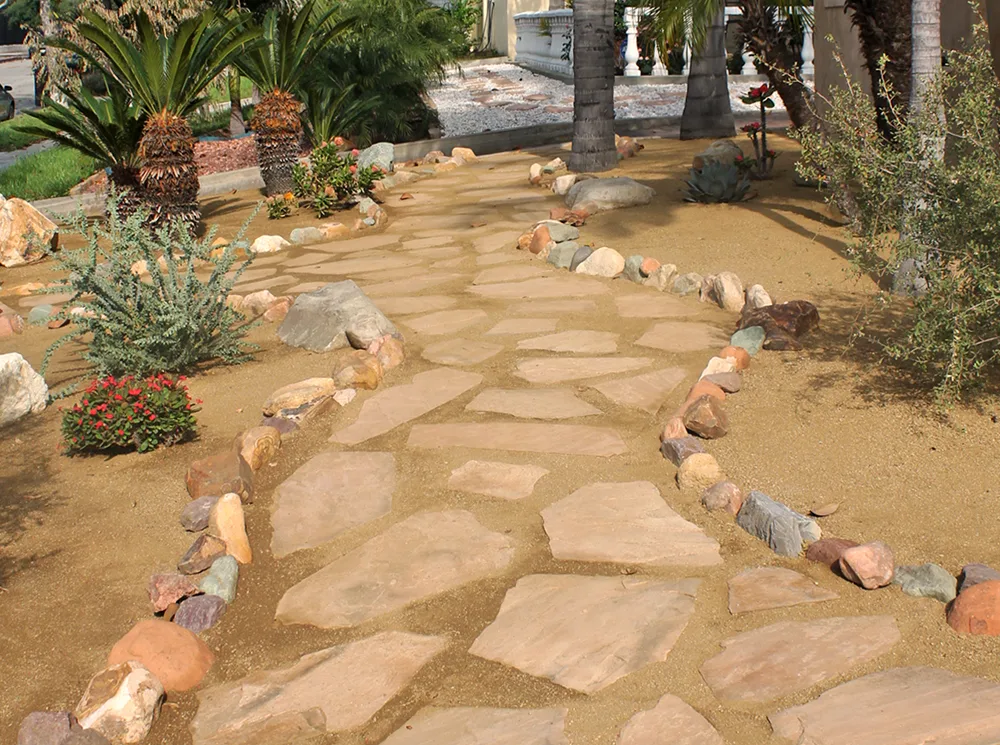
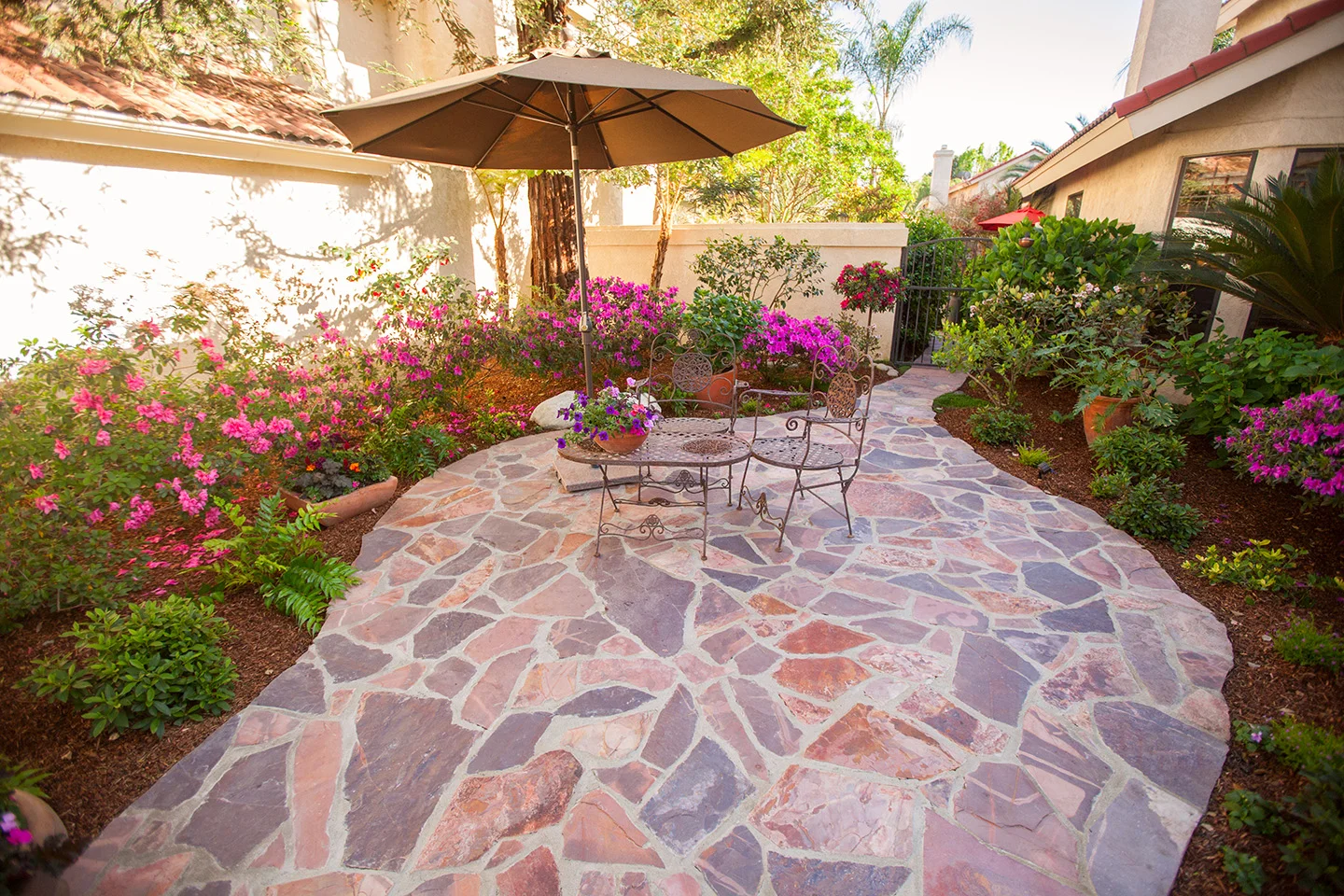
Almost every expensive fix we perform traces back to a decision made before anything was built. These are the ten that repeat.
The list
Each one is cheap to avoid and costly to correct.
- Undersized patios — a 10x10 pad cannot hold a dining table with pulled-out chairs. Plan 12x14 minimum for six.
- Designing around plants instead of around how you'll use the space
- Ignoring sun and wind — a west-facing patio with no shade is unusable from 3 to 7pm in summer
- Skipping drainage to afford nicer finishes
- Planting at nursery spacing instead of mature spacing
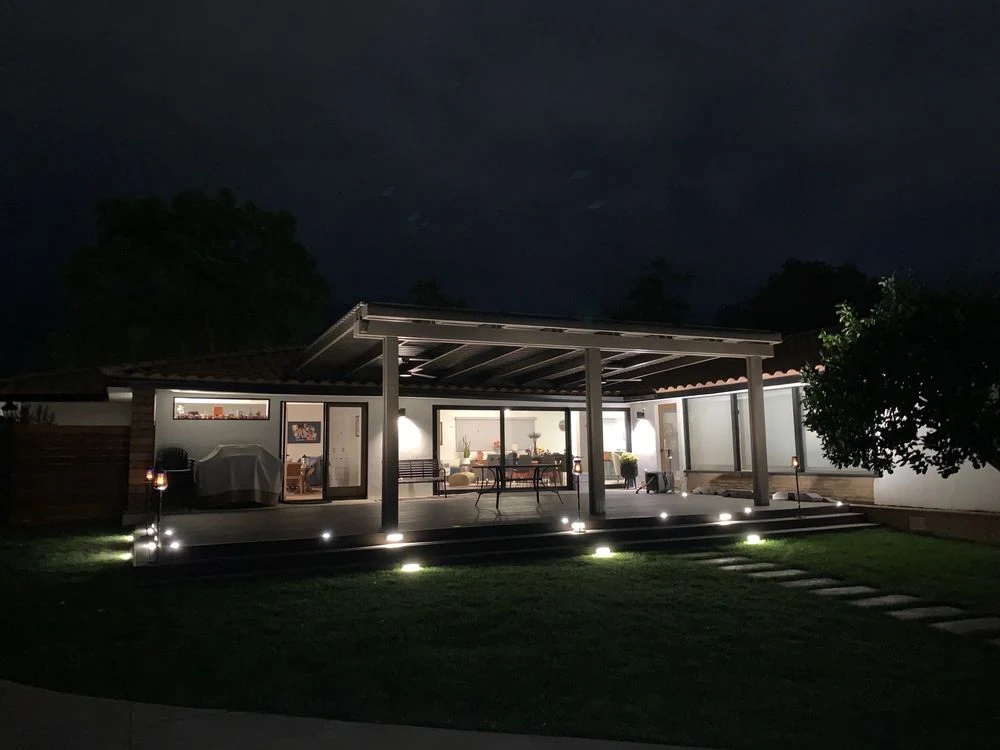
- No lighting plan, so the yard is dead after 6pm nine months a year
- Too many materials — three hardscape materials maximum reads intentional; five reads chaotic
- Forgetting utility access, hose bibs, trash path and side-yard storage
- Trees planted too close to structures, walls and sewer lines
- No conduit or sleeving under hardscape for future phases
The principle behind them
Design the way the yard will be used — where you sit at 7pm, where the dog goes, where you carry groceries and green waste — then choose materials. Most bad yards are collections of features with no plan connecting them.
How to test a plan before you build
Mark furniture footprints with paint or cardboard. Live with the layout for a week. Stand in the space at the time of day you would actually use it. This costs nothing and catches proportion errors that drawings hide.
Frequently asked
- How big should a dining patio be?
- Allow 3 feet of clearance beyond the table on all sides — 12x14 feet for a six-seat table.
- How many plant species?
- Repeat 7–12 species in drifts for a cohesive yard. Collections of one-offs look busy.
- Is a designer worth it?
- On any project over roughly $30k, design usually saves more than it costs in avoided rework.