If you live in Alpine, Ramona, Jamul, Poway's edges, Scripps Ranch or on a canyon rim anywhere in the city, defensible space is not optional — and it can be genuinely beautiful.
The zones
California defensible space is organized by distance from the structure.
- Zone 0 (0–5 ft): ember-resistant zone. Hardscape, gravel, non-combustible only. No bark mulch, no shrubs against walls, nothing stored under the deck.
- Zone 1 (5–30 ft): lean, clean and green. Irrigated, well-spaced, low-growing plants; trees limbed up and separated.
- Zone 2 (30–100 ft): reduced fuel. Mow grasses, break up continuous vegetation, maintain horizontal and vertical spacing.
Plant choices
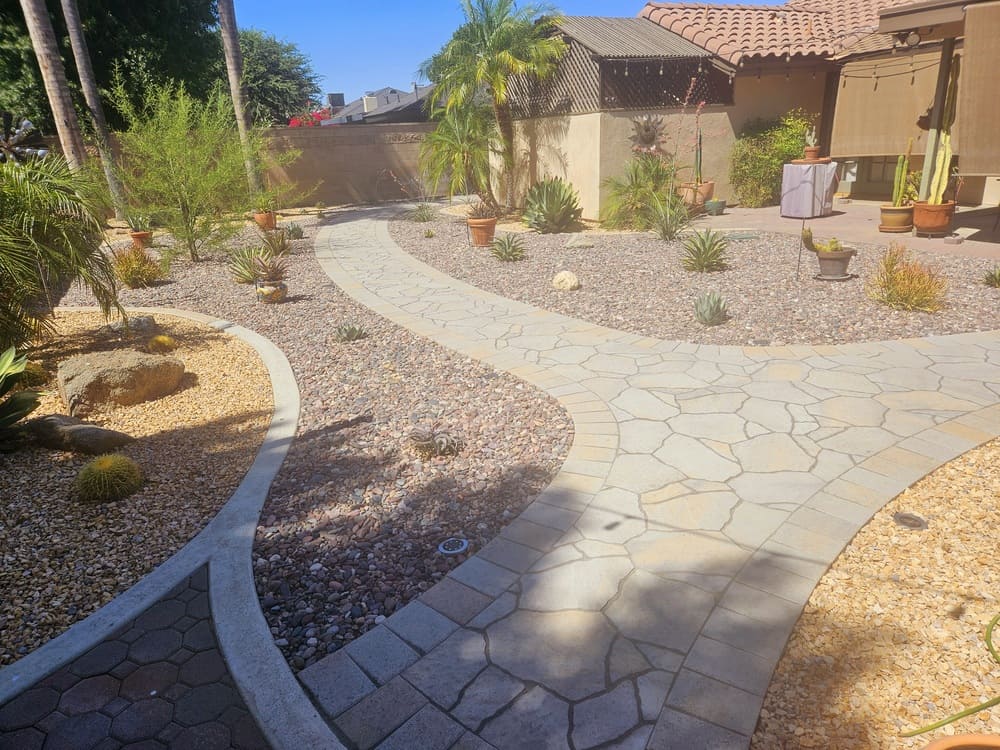
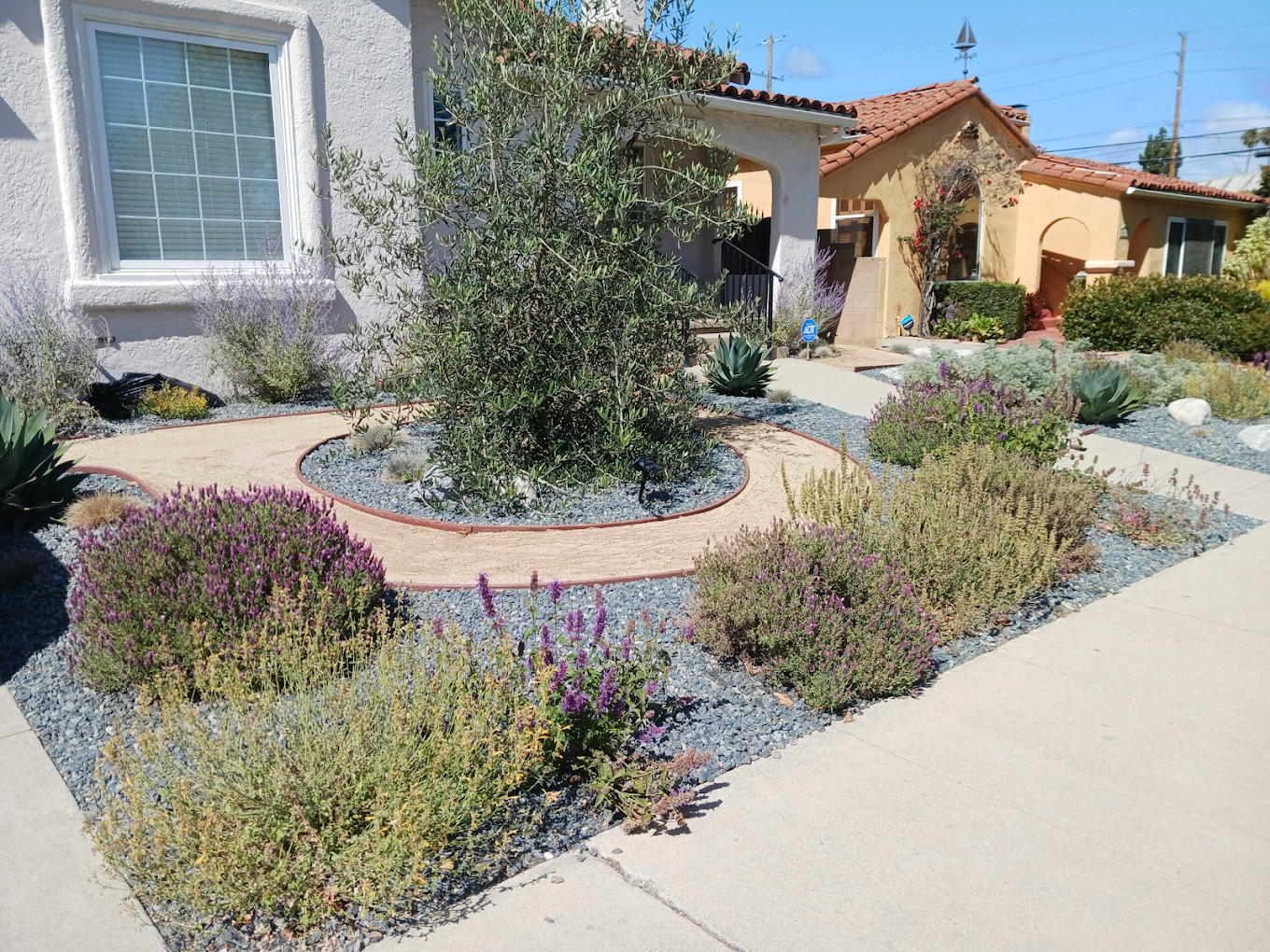
There are no fireproof plants, but high-moisture, low-resin, low-litter species are far safer: succulents and aloes, agave, dymondia, ceanothus maritimus and other low ceanothus, lavender kept pruned, rockrose, and irrigated groundcovers.
Avoid near structures: juniper, pampas grass, rosemary massed and unpruned, cypress, eucalyptus and unmaintained palms — all high-fuel and known ember catchers.
Hardscape as a firebreak
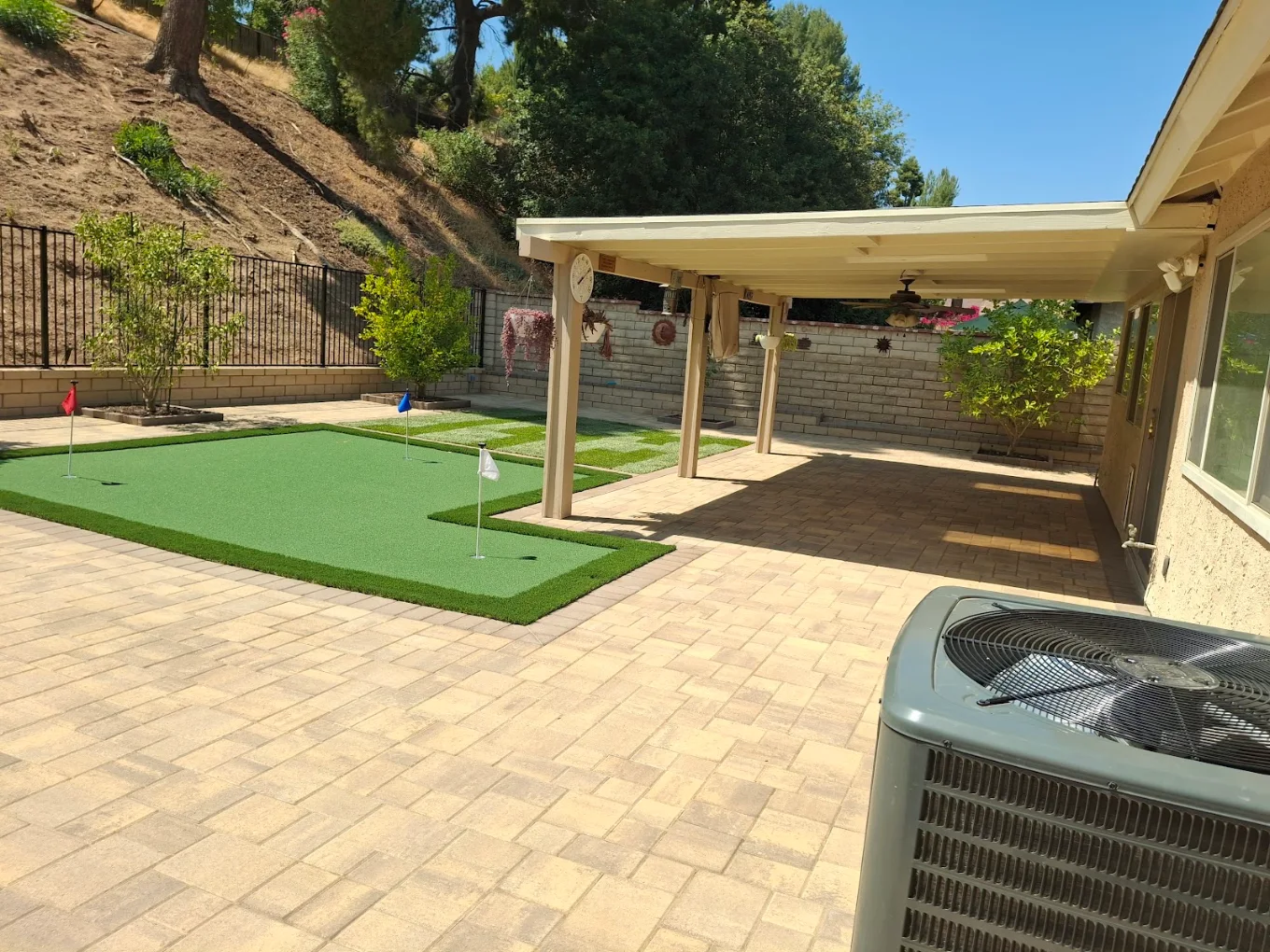
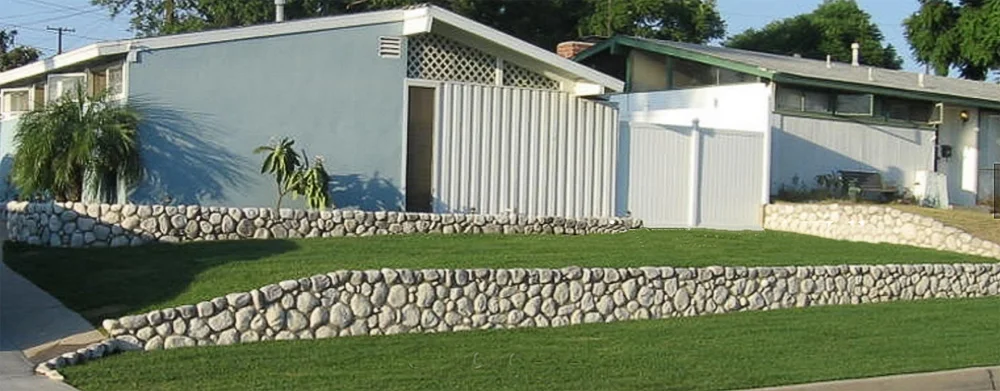
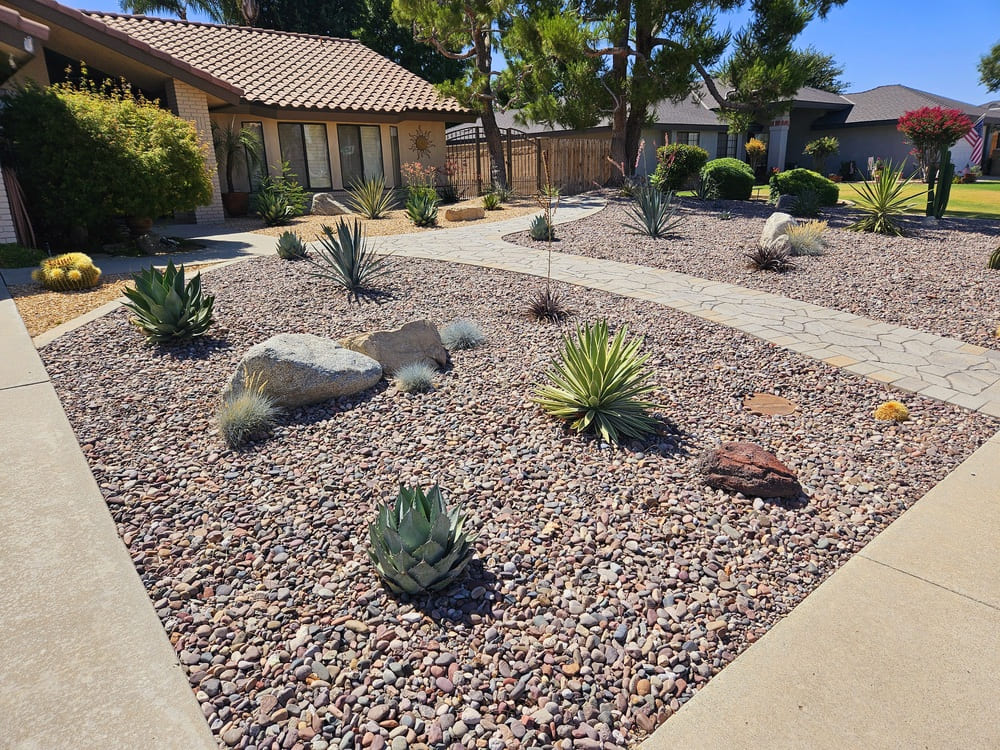
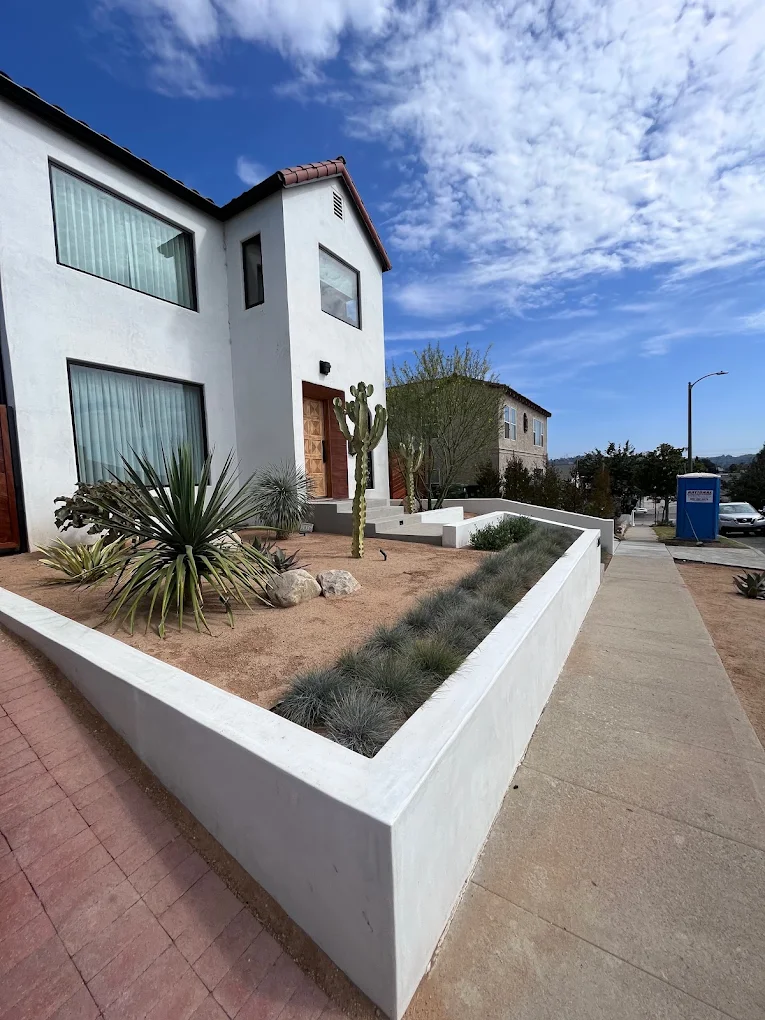
Patios, DG courtyards, gravel bands, masonry walls and stone paths all serve double duty as fuel breaks. Designing Zone 0 as a deliberate gravel-and-succulent band with a masonry edge is far better looking than the bare dirt many homeowners default to — and it satisfies inspection.
Frequently asked
- Does defensible space mean removing all plants?
- No. It means spacing, maintenance, moisture and material choice, especially in the first five feet.
- Is bark mulch banned?
- In Zone 0, avoid it entirely — use gravel or stone. Beyond that, coarse mulch is acceptable and maintained properly.
- Can defensible space affect insurance?
- Increasingly yes. Documented compliance can matter for coverage in high fire severity zones.