Pavers are the most repairable hardscape you can own, provided you know what routine care they need — which is less than people think, and different from what they assume.
The maintenance rhythm
Twice a year and a decade-scale item.
- Spring: sweep, rinse, spot-treat weeds, check joints for sand loss
- Fall: top up polymeric joint sand before the rainy season
- Every 3–5 years: consider a penetrating sealer if you want color enhancement and stain resistance
- Every 10+ years: reset any settled areas — a half-day job, not a rebuild
Fixing common problems
Settling or a low spot: lift the affected pavers, add and compact bedding sand, reset. If the area keeps settling, the base or a drainage line beneath is the real problem.
Weeds: they grow in the joint, not from below. Full joints of polymeric sand plus a spring pass handles it.
Efflorescence — that white haze on new pavers — is natural mineral migration. It usually clears within a year; an efflorescence cleaner accelerates it. Do not seal over it.
Oil stains: a poultice cleaner, not a pressure washer, which drives it deeper and blasts out joint sand.
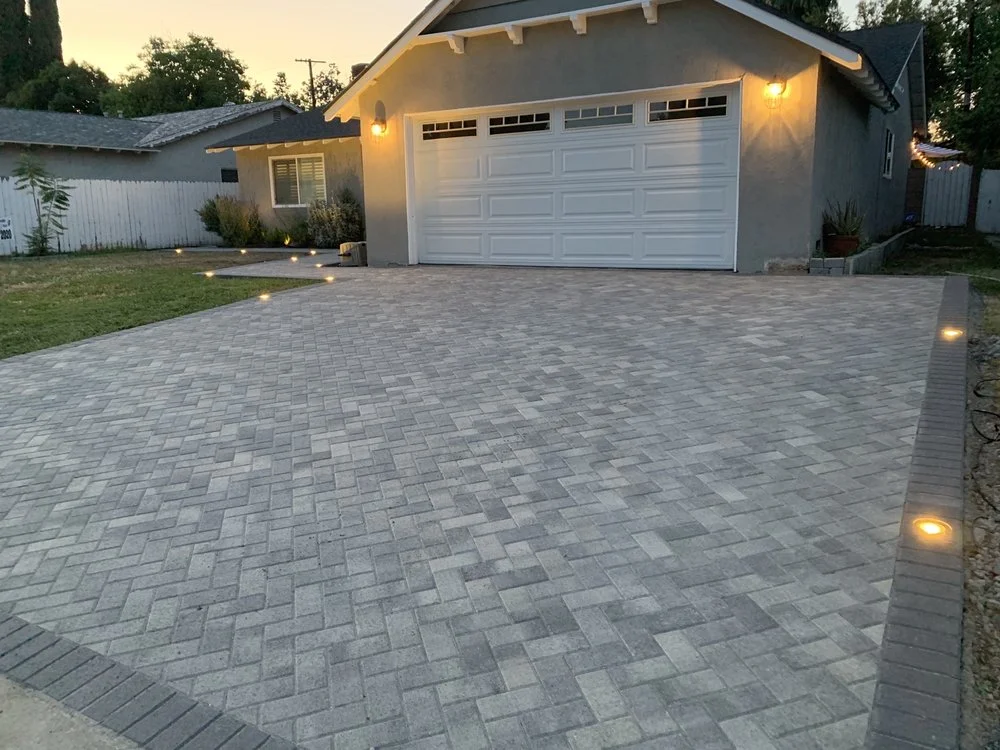
Pressure washing rules
Use a fan tip, keep the wand at least 8 inches off the surface, and re-sand joints afterward. Aggressive close-range washing strips the surface layer of concrete pavers permanently.
Frequently asked
- Should pavers be sealed?
- Optional. Sealing enhances color and eases stain cleanup but requires re-application. Unsealed pavers weather beautifully too.
- Why are some pavers sinking?
- Base failure, a leaking irrigation line, or a rodent void. Diagnose before resetting.
- Can individual pavers be replaced?
- Yes — keep a small stock of extras from the original pallet for color match.