Concrete is the most common patio surface in San Diego and the easiest one to underbuild, because everything that matters is buried before the finish goes on.
This breaks the number into its parts so you can read a concrete bid properly instead of comparing bottom lines.
Cost by finish
These are the ranges we work from for standard residential patio work.
- Broom or light finish: about $12–$22 per square foot installed
- Stamped and coloured: about $18–$30 per square foot installed
- Salt finish, exposed aggregate and sand-wash sit between the two depending on detail
- Saw-cut patterns, integral colour and banding add labour rather than material
What is under the finish
Two slabs with the same broom finish can be built completely differently. This is where the price difference lives and where the lifespan is decided.
- Subgrade preparation and compaction — the single biggest predictor of cracking
- Slab thickness, set for the load the surface will actually carry
- Reinforcement: rebar or mesh, and whether it is properly supported in the pour
- Control joints: spacing and depth, planned before the pour, not chased after
- Expansion joints where the slab meets the house, walls and other slabs
- Drainage: pitch away from structures and a place for water to go
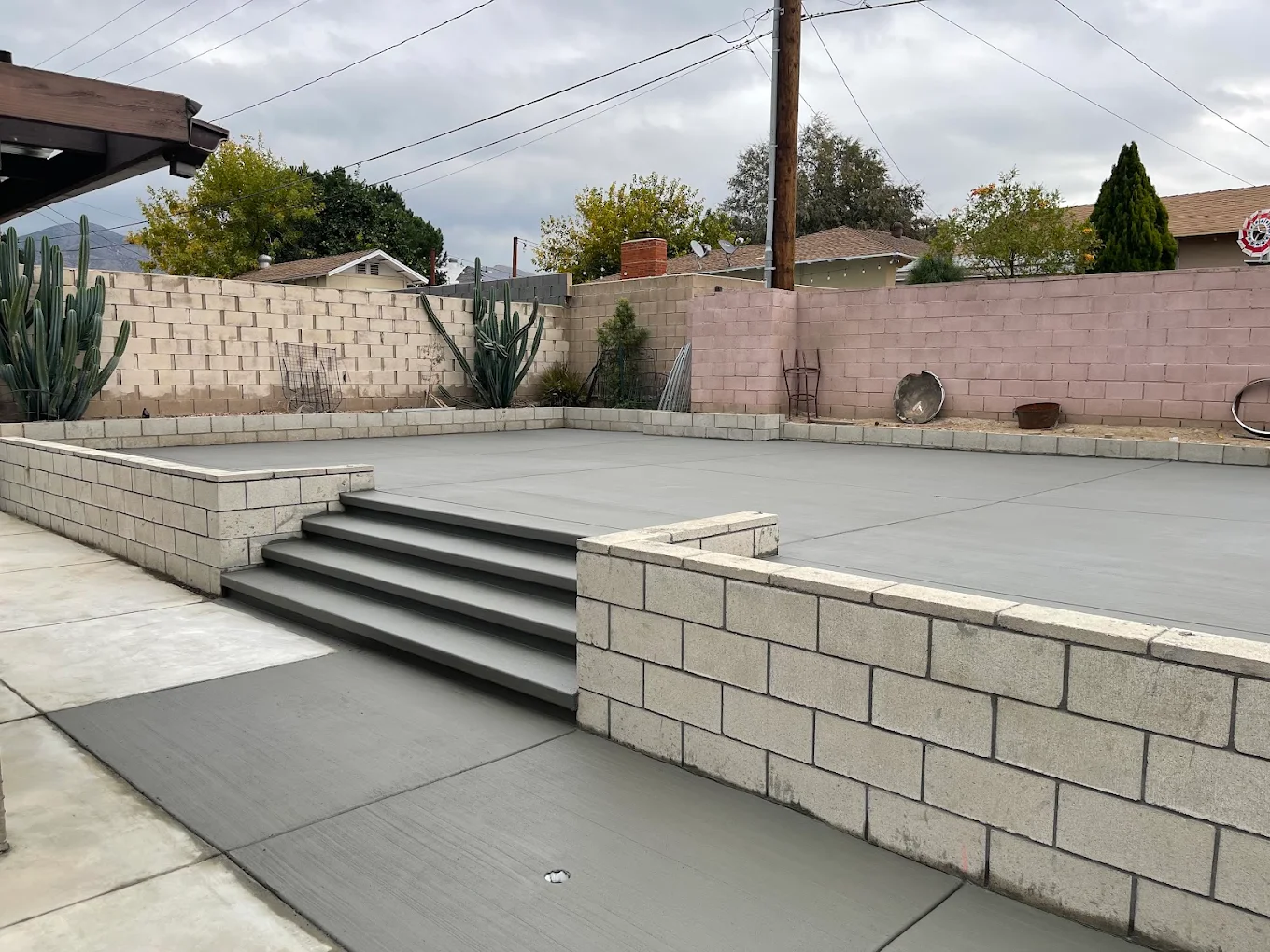
Concrete in San Diego soil
Much of inland San Diego sits on expansive clay that swells in the wet season and shrinks in the dry one. Concrete resolves that movement by cracking somewhere. Well-planned control joints decide where that crack goes; the absence of them lets the slab choose.
Coastal sandy soils are gentler on slabs, but coastal exposure is harder on decorative finishes — salt air and irrigation overspray etch a poorly sealed coloured surface faster than most homeowners expect.
Where concrete beats pavers, and where it does not
We install both and have no preference beyond what the site calls for.
| Situation | Better choice | Why |
|---|---|---|
| Budget-driven large patio | Concrete | Lowest cost per square foot for a clean, usable surface. |
| Modern flat aesthetic | Concrete | Uninterrupted plane, minimal joint lines. |
| Expansive clay, movement expected | Pavers | A jointed system absorbs movement instead of cracking. |
| Over irrigation, gas or electrical | Pavers | Lift and relay instead of cutting and re-pouring. |
| Curves and complex shapes | Pavers | No formwork cost; cutting labour only. |
| Heavy vehicle load, good subgrade | Concrete | Straightforward structural section. |
Comparing concrete bids
Ask every bidder to put these in writing. If two proposals differ by thousands, the answer is almost always in this list.
- Slab thickness and reinforcement type
- Subgrade preparation and compaction method
- Control joint layout and spacing
- Demolition and haul-off of the existing surface
- Finish, colour and sealer — and who reseals, and when
- Where surface water goes once the slab changes the grade
- Restoration of irrigation and planting disturbed by the work
Making a slab look designed
Plain concrete does not have to look plain. The details that lift it cost far less than upgrading the whole surface.
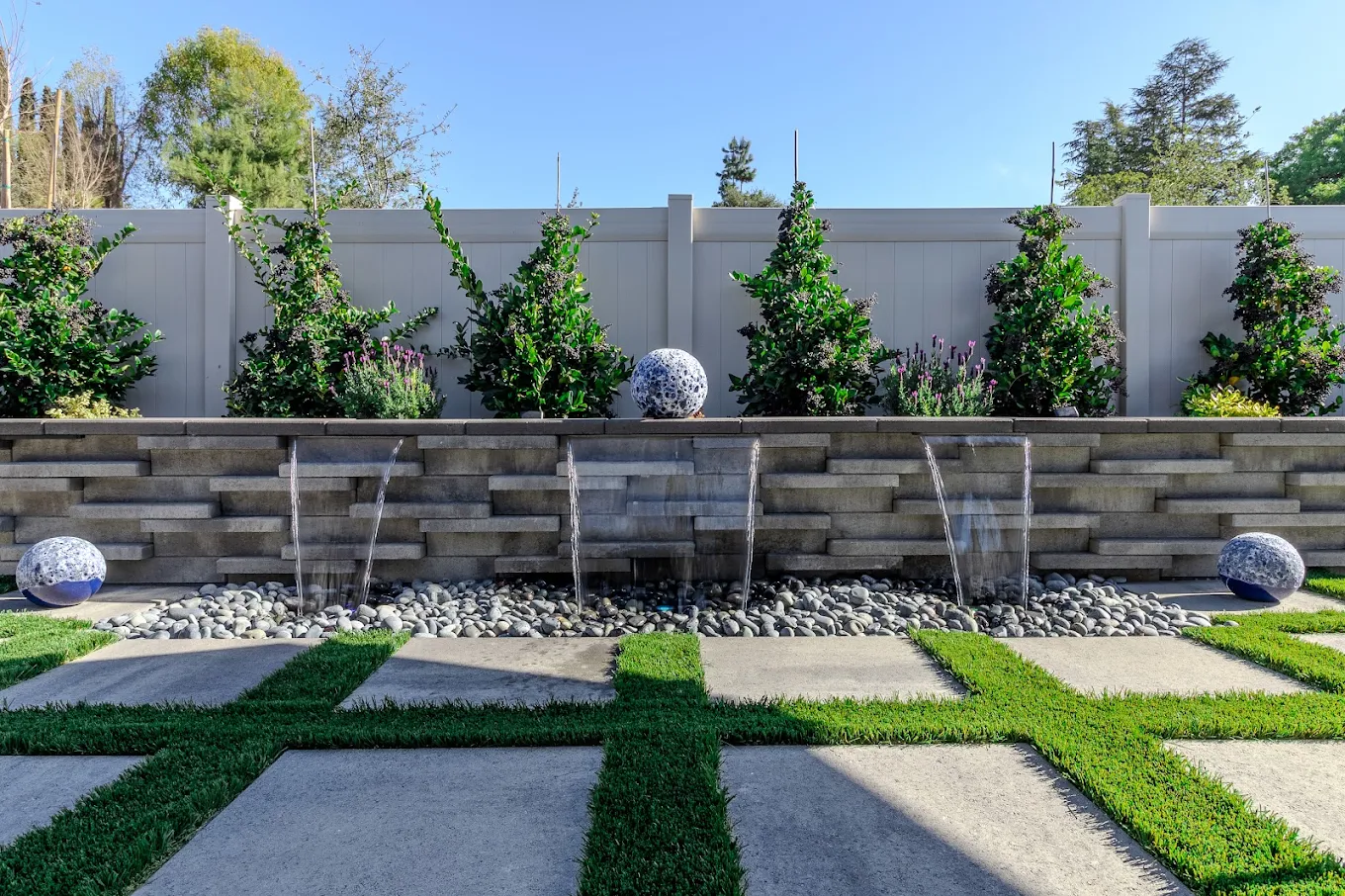
- Large-format pads with gravel, paver or groundcover joints
- A contrasting border in brick, stone or a different finish
- Saw-cut geometry aligned to the architecture, not applied randomly
- Integral colour instead of a surface-applied finish that wears at edges
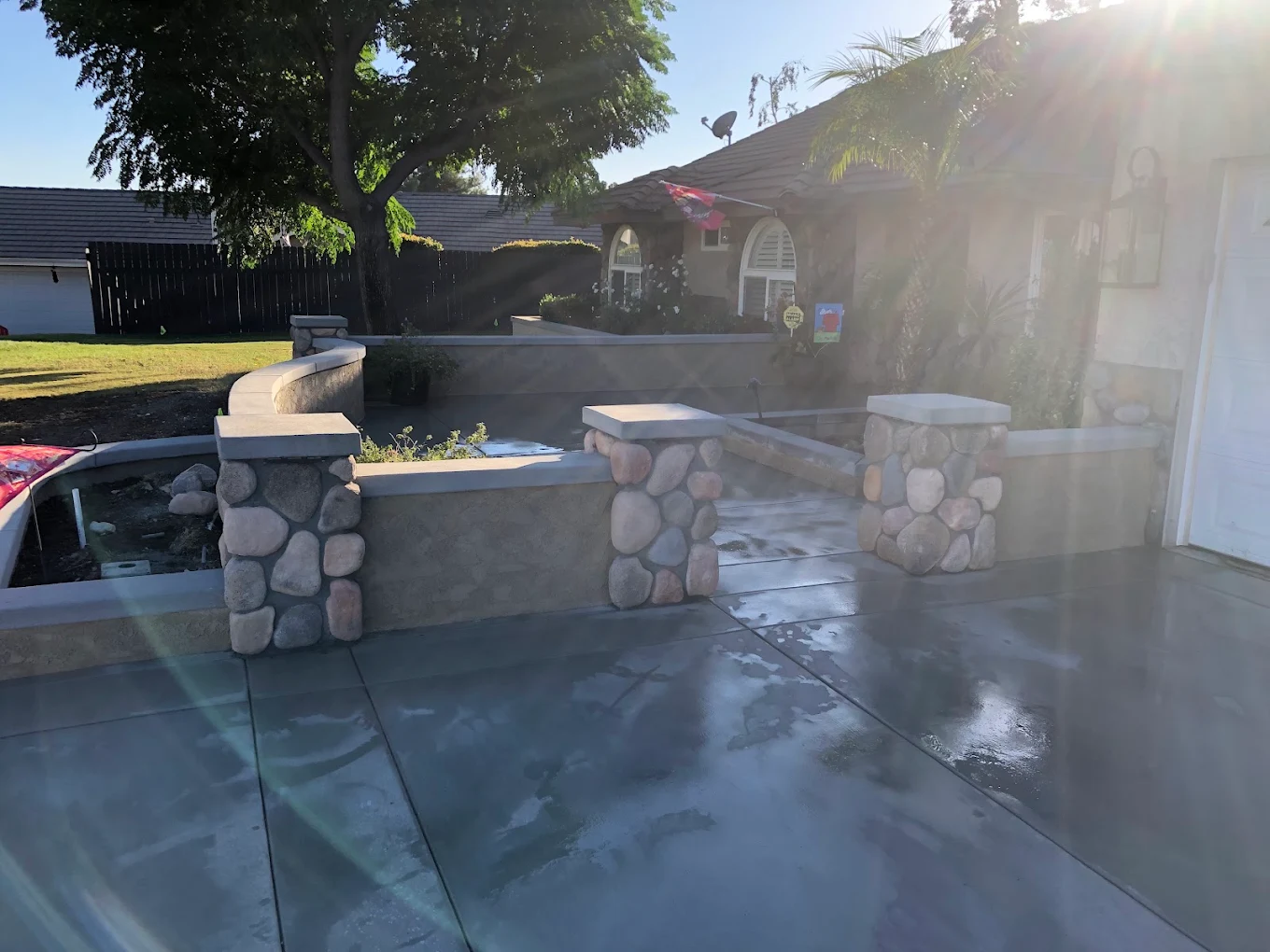
- A seat wall or planter in the same masonry family as the house
Frequently asked
- How much does a concrete patio cost in San Diego?
- Broom-finished concrete generally runs about $12–$22 per square foot installed, with stamped and coloured work around $18–$30. Demolition, access, thickness and reinforcement move the number.
- Why is one concrete bid so much cheaper?
- Usually a thinner slab, less reinforcement, minimal subgrade prep or no demolition included. Those choices are invisible on day one and decisive by year five.
- Will a concrete patio crack?
- Some cracking is normal, especially in expansive clay. Correct control joint layout determines where it happens so it reads as a joint rather than a failure.
- Stamped concrete or pavers?
- Stamped concrete is cheaper up front and gives a continuous surface. Pavers cost more initially and are repairable unit by unit, which usually wins over twenty years.
- Do I need a permit for a concrete patio?
- Most at-grade patios do not, but raised slabs, structural walls and work affecting drainage or setbacks often do. Requirements vary by jurisdiction, so we confirm before starting.
- How long before I can use a new concrete patio?
- Concrete is walkable well before it reaches full strength, and your contractor should give you specific timelines for foot traffic, furniture and vehicles for the mix used on your job.
- Does concrete need sealing in San Diego?
- Decorative and coloured finishes benefit from sealing, especially near the coast where salt air and overspray attack the surface. Plain broom finish is more forgiving.