Coastal evenings are the reason nearly every backyard we design ends up with a fire feature. The difference between one that gets used nightly and one that sits cold is mostly layout.
Gas or wood
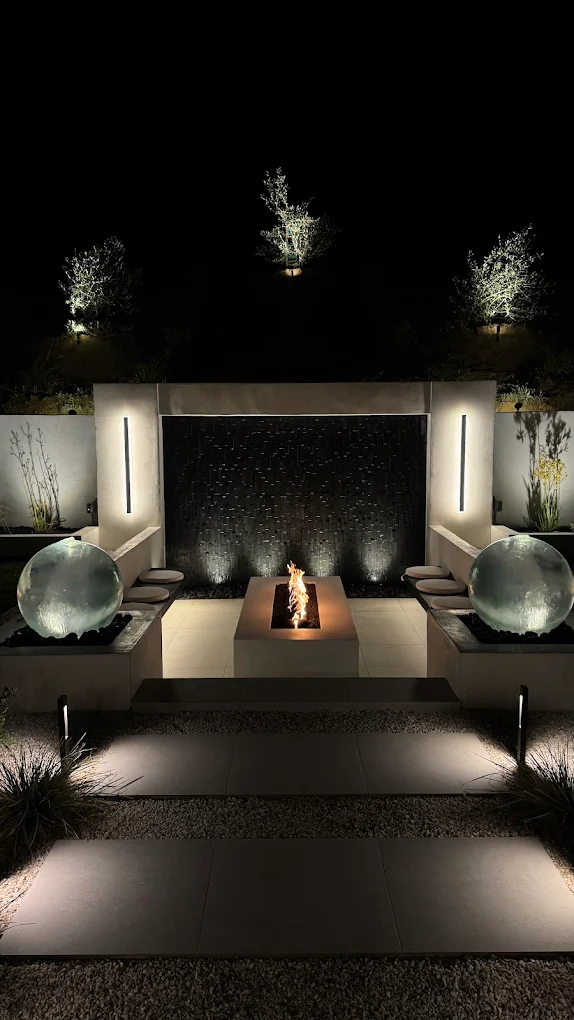
Gas wins on convenience, air quality and neighbor relations, and it is the only realistic option on most small urban lots in North Park, Golden Hill or Mission Beach. Budget $4,500–$12,000 installed for a custom masonry gas feature including the line and controls.
Wood delivers the smell and heat people remember. It needs clearance, storage and a tolerant neighborhood — better suited to Alpine, Jamul, Ramona and larger East County lots. A masonry wood pit runs $2,500–$7,000.
Seating geometry
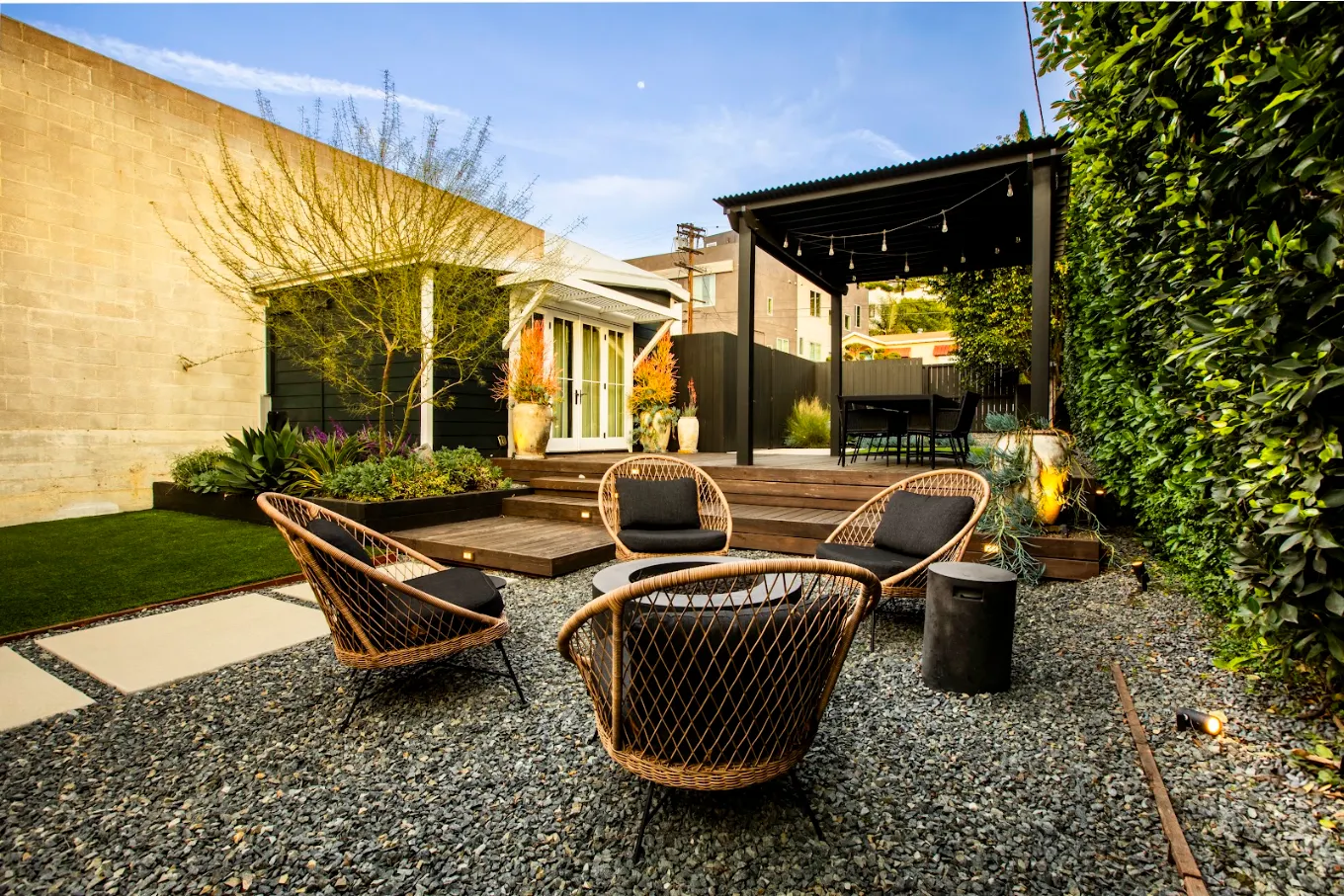
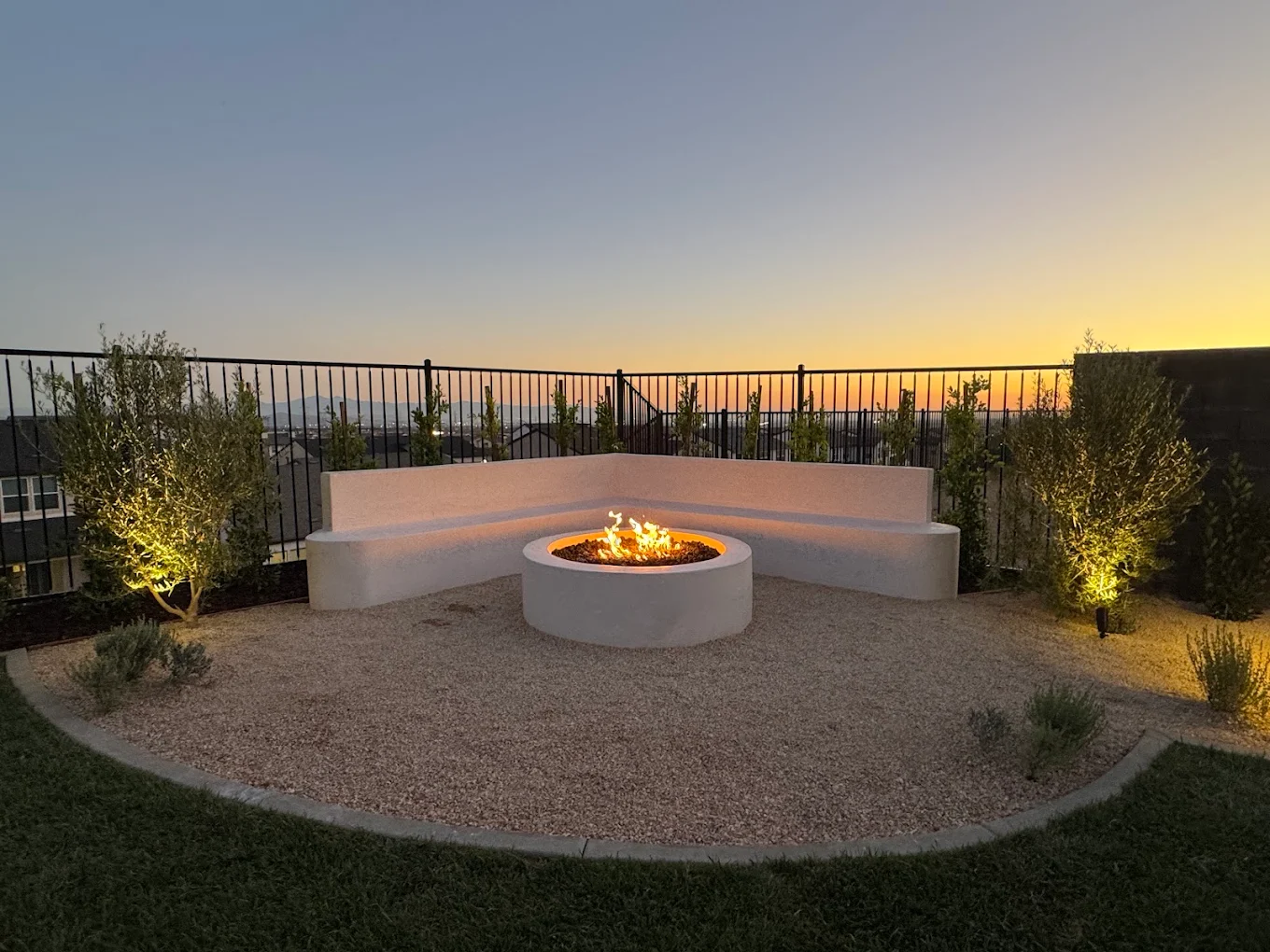
The number people miss: seat faces should be 4 to 6 feet from the fire edge — closer feels crowded, farther kills the warmth. Seat height 18 inches, seat depth 16–18 inches, and a fire pit height of 14–18 inches for a sunken lounge feel.
- Circle of built-in seat wall for 6–8 people: 12–14 ft diameter patio minimum
- Leave one open side for traffic flow and views
- Allow 36 inches of walking clearance behind seating
Code and safety
Keep fire features away from structures, eaves, fences and overhanging canopy per local requirements, and never place one under a solid patio cover without engineered ventilation. Gas features need an accessible shutoff. In high fire severity zones, wood-burning features carry additional restrictions — check before design.
Frequently asked
- Can I convert a wood pit to gas?
- Usually yes, if a gas line can reach and the pit is sized for a proper burner pan and air gap.
- What about fire tables?
- Great low-commitment option; just verify the surface below can handle heat and the unit is wind-shielded.
- Do fire pits need drainage?
- Yes — a weep or drain in the base keeps water from sitting on the burner and rusting components.