
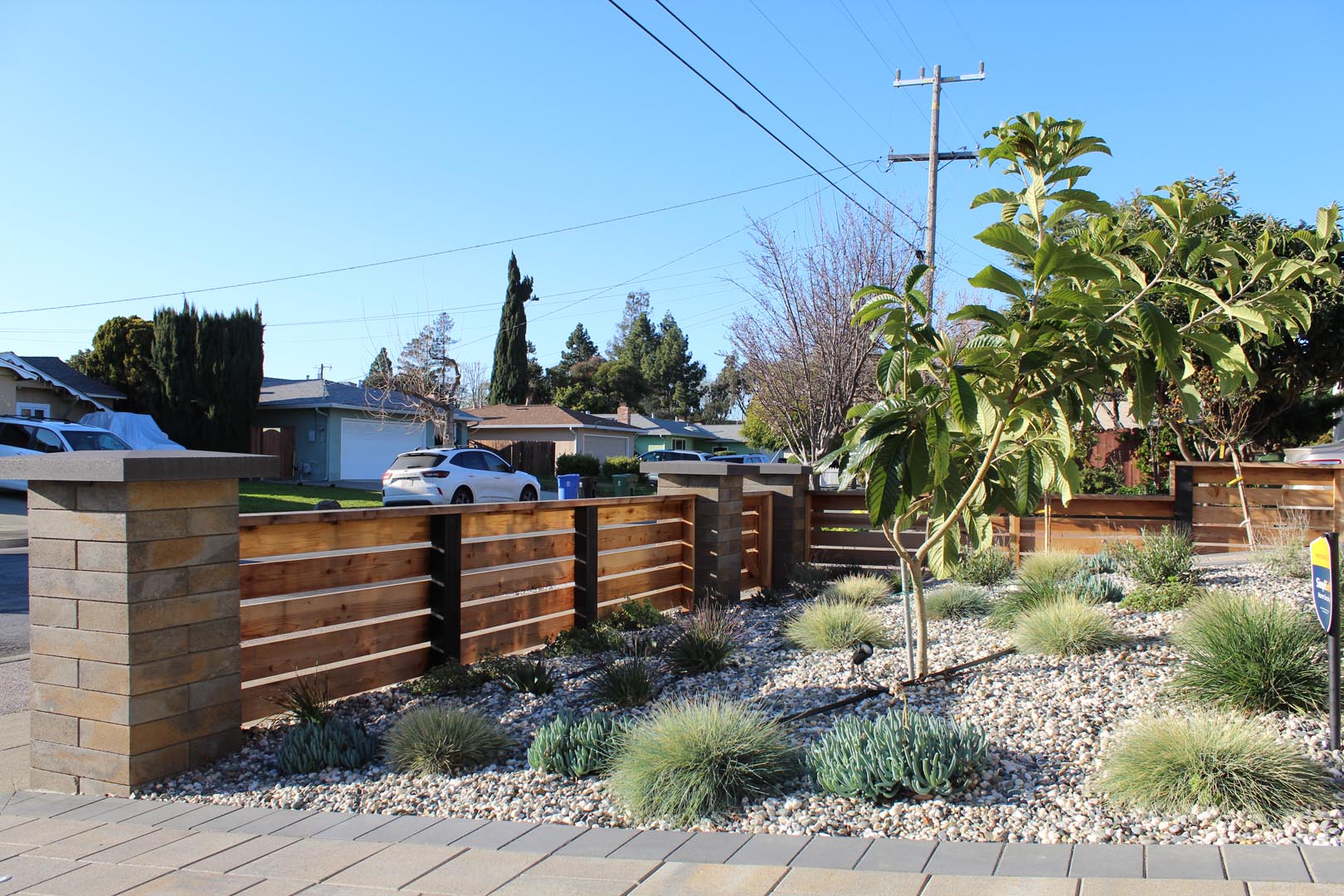
San Diego is not one climate — it is at least six
Drive from Ocean Beach to El Cajon and you cross roughly forty degrees of summer afternoon temperature difference in under twenty miles. Add the marine layer, the canyon wind patterns and a soil map that changes from sand to expansive clay within a few blocks, and you get a county where a single standard landscape detail is guaranteed to fail somewhere.
This is the reference we use internally when scoping a project, organized by the zones that actually behave differently.
| Zone | Typical soil | Climate driver | What it changes |
|---|---|---|---|
| Beach / bluff (Coronado, OB, Del Mar) | Deep sand, sandy loam | Salt wind, constant humidity, no frost | Corrosion-resistant hardware, salt-tolerant plants, heavy soil amendment |
| Coastal ridge (La Jolla, Point Loma) | Shallow soil over sandstone and shale | Marine layer, strong afternoon wind | Rock excavation, wind-firm planting, view-corridor design |
| Central urban (North Park, Clairemont) | Clay loam over old fill | Warm days, cool nights, deep tree shade | Subgrade verification, shade-tolerant palettes |
| South Bay (Chula Vista, Eastlake) | Expansive clay | Hot afternoons, mild bay influence | Deeper base sections, engineered footings, drainage first |
| Inland valley (Poway, Scripps Ranch) | Decomposed granite over granite bedrock | Hot dry summers, winter frost | Erosion control, trenching difficulty, fire-wise planting |
| East County (El Cajon, La Mesa) | Alluvial clay, hardpan, rocky slopes | Extreme summer heat, real frost | Percolation testing, shade design, heat-safe surface tones |
Expansive clay: the most expensive soil in the county
Expansive clay swells when it takes on water and shrinks when it dries. Over a wet winter and a dry summer that cycle can move the ground several inches vertically, and anything rigid sitting on top of it either flexes or cracks.
This is why concrete patios in the eastern South Bay develop cracks that the homeowner assumes came from a bad pour. Usually the pour was fine — the subgrade moved. The correct responses are a deeper compacted base section, control joints placed on a proper grid, reinforcement sized for the condition, and above all keeping water away from the slab edge so the moisture content under the surface stays stable.
Segmental pavers have a real advantage here. Because they are a flexible system of individual units over a compacted base, they accommodate minor movement without cracking, and a settled area can be lifted and reset rather than demolished.
Decomposed granite: drains beautifully, erodes instantly
Inland Poway, Scripps Ranch and much of East County sit on decomposed granite. Water disappears through it, which is excellent for plant health and terrible for any unplanted slope.
Every winter storm moves unstabilized DG downhill and into the street. The fix is not more DG — it is stabilizing binder on pathway surfaces, planted slope cover with a real root system, and check dams or terracing on longer grades.
Trenching is the other consideration. Irrigation and lighting runs that take a day in Clairemont can take three in Poway once you hit competent granite. We scope that honestly upfront.
Coastal sand: fast drainage, no nutrition, relentless salt
On the sand of Coronado and the beach blocks of Del Mar and Ocean Beach, irrigation water and nutrients drop straight through the root zone. Plants that thrive three miles inland starve here.
The strategy is soil building — compost incorporation at planting, mulch depth maintained annually, and drip irrigation scheduled in shorter, more frequent cycles rather than long soaks that simply run past the roots.
Salt is the other half. Onshore wind carries salt aerosol that burns the leaf margins of sensitive plants and corrodes hardware. Stainless or coated fasteners, brass lighting fixtures and a genuinely salt-tolerant plant palette are what make a coastal yard still look good in year five.
Sun exposure matters more than the plant tag
A west-facing wall in El Cajon and a west-facing wall in Ocean Beach are entirely different growing environments. Radiant heat off masonry, hardscape and stucco can push local afternoon conditions well above the ambient air temperature, which is why the same plant thrives on one side of a yard and scorches on the other.
When we design, we walk the property and note exposure per zone rather than per property. That is also why our plant reference splits coastal tolerance and inland heat tolerance into separate filters — plenty of plants have one and not the other.
How to read your own yard in fifteen minutes
You can learn most of what matters without a lab. Dig a hole about a foot deep and fill it with water. If it drains in an hour or two, you have sand or decomposed granite. If it is still holding water six hours later, you have clay and drainage design has to come first.
Squeeze a handful of damp soil. If it ribbons and holds its shape, that is clay. If it crumbles apart, that is sand or DG. Then walk the yard at 8am, noon and 5pm on a clear day and note where the sun actually lands. Those two exercises will tell you more about what belongs in your yard than any generic plant list.
Common questions
- How do I know if I have expansive clay soil?
- Dig down a foot and wet a handful of the soil. If it ribbons between your fingers and stays sticky, and if a test hole holds water for many hours, you likely have expansive clay. Deep summer cracks in bare soil are another strong indicator.
- Why does my concrete patio keep cracking?
- In most San Diego cases the concrete is not the problem — the subgrade is. Expansive clay moving seasonally under a rigid slab, combined with inadequate base depth or missing control joints, produces exactly that failure pattern.
- What is the hardest San Diego soil to build on?
- Expansive clay in the eastern South Bay and inland valleys, because it moves. Rocky hillside soil in La Mesa and La Jolla is harder to excavate but far more stable once you are through it.
Related services
- Concrete Contractors in San Diego
- Paver Installation in San Diego
- Retaining Wall Contractors in San Diego
Licensed C-27 Landscape Contractor — CSLB #1159370